
Getting up from a chair might seem like a small, everyday movement, but for many older adults, it becomes one of the most challenging parts of daily life. That’s why sit to stand exercises for seniors have become one of the most recommended movements by physical therapists, geriatric care specialists, and mobility experts across the USA. This simple yet powerful exercise strengthens the muscles used every single day — for standing up from a chair, getting out of a car, or rising from the toilet — while also improving balance and reducing the risk of falls.
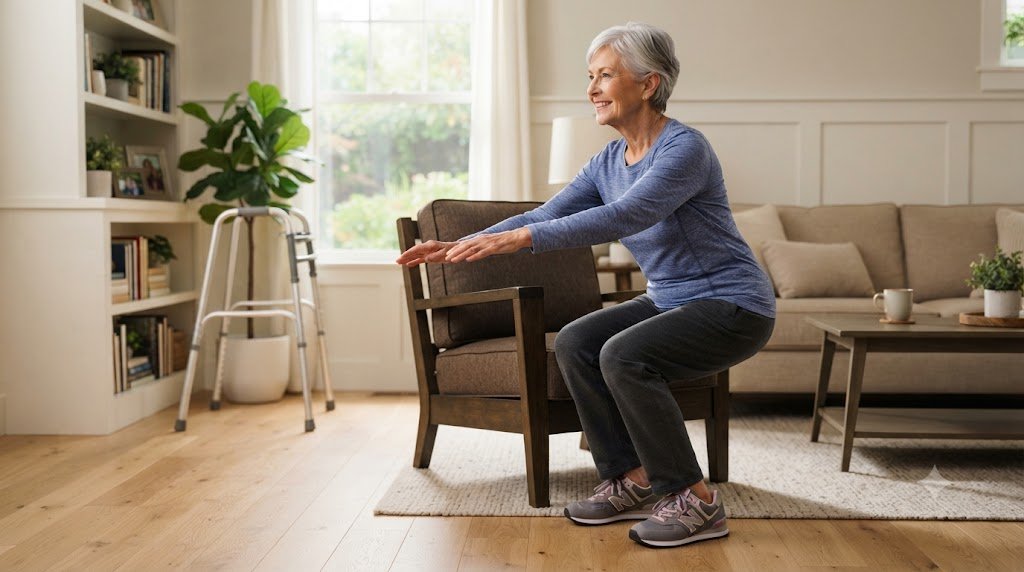
In this guide, we’ll break down exactly what sit to stand exercises are, why they matter, how to do them safely, and how they fit into a broader routine of senior mobility exercises. Whether you’re a senior looking to stay independent longer, or a caregiver helping a loved one build strength, this article will give you a clear, practical roadmap.
What Are Sit to Stand Exercises for Seniors?
Sit to stand exercises involve rising from a seated position to a full standing position, then returning to sitting, in a slow and controlled manner. It’s a functional movement, meaning it mimics something you already do dozens of times a day — which is exactly what makes it so valuable.
Unlike gym-based workouts that isolate a single muscle, sit to stand exercises engage multiple muscle groups at once, including the:
- Quadriceps (front of the thigh)
- Hamstrings (back of the thigh)
- Glutes (buttocks)
- Core muscles (abdomen and lower back)
Because this movement pattern is so closely tied to real-life independence, it’s often one of the first exercises recommended in senior mobility exercises programs, whether at home, in physical therapy clinics, or in community wellness classes.
What Are Sit to Stand Exercises for Seniors?
Sit to stand exercises involve rising from a seated position to a full standing position, then returning to sitting, in a slow and controlled manner. It’s a functional movement, meaning it mimics something you already do dozens of times a day — which is exactly what makes it so valuable.
Unlike gym-based workouts that isolate a single muscle, sit to stand exercises engage multiple muscle groups at once, including the:
- Quadriceps (front of the thigh)
- Hamstrings (back of the thigh)
- Glutes (buttocks)
- Core muscles (abdomen and lower back)
Because this movement pattern is so closely tied to real-life independence, it’s often one of the first exercises recommended in senior mobility exercises programs, whether at home, in physical therapy clinics, or in community wellness classes.
What Are Sit to Stand Exercises for Seniors?
Sit to stand exercises involve rising from a seated position to a full standing position, then returning to sitting, in a slow and controlled manner. It’s a functional movement, meaning it mimics something you already do dozens of times a day — which is exactly what makes it so valuable.
Unlike gym-based workouts that isolate a single muscle, sit to stand exercises engage multiple muscle groups at once, including the:
- Quadriceps (front of the thigh)
- Hamstrings (back of the thigh)
- Glutes (buttocks)
- Core muscles (abdomen and lower back)
Because this movement pattern is so closely tied to real-life independence, it’s often one of the first exercises recommended in senior mobility exercises programs, whether at home, in physical therapy clinics, or in community wellness classes.
Benefits of Sit to Stand Exercises for Seniors
The benefits of this exercise go far beyond simply making it easier to get out of a chair. Regular practice can create meaningful, long-term improvements in overall health and quality of life.
1. Builds Lower Body Strength
One of the most well-documented benefits is the ability to improve leg strength after 60, a time when muscle mass naturally begins to decline due to a process called sarcopenia. Stronger legs mean more stability, more confidence, and less strain on the joints during daily movement.
2. Supports Better Balance
Because the movement requires controlled shifting of body weight, it naturally trains balance and coordination — two factors that decline with age but can be improved through consistent practice.
3. Reduces Fall Risk
Weak legs and poor balance are two of the leading contributors to falls among older adults. By strengthening the muscles used to stand and sit, this exercise directly supports fall prevention.
4. Improves Everyday Confidence
Many seniors report feeling more confident moving around their homes, running errands, and staying socially active once they build strength through consistent practice — a key part of any senior mobility exercises routine.
5. Requires No Equipment
This is one of the most accessible senior mobility exercises available. All that’s needed is a sturdy chair, making it ideal for home practice.
How to Perform Sit to Stand Exercise Safely
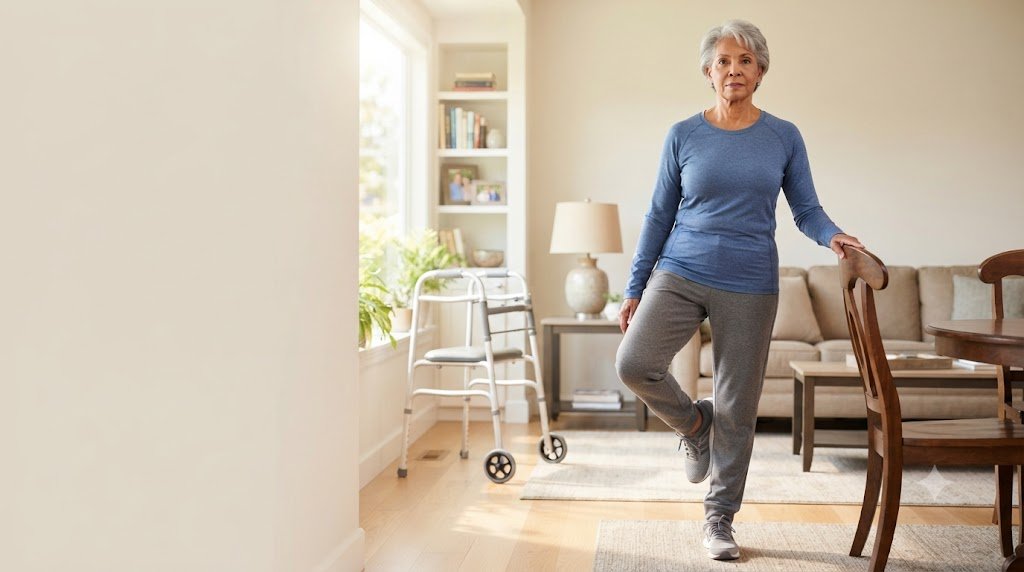
Proper form is essential to get the full benefit of this exercise while avoiding strain or injury. Here’s a simple, step-by-step approach:
- Choose a sturdy chair. Select a chair with a firm seat and no wheels. Avoid soft couches or recliners.
- Sit toward the front edge of the chair. Keep your feet flat on the floor, hip-width apart.
- Lean slightly forward from the hips. This shifts your weight over your feet.
- Push through your heels to stand. Use your leg muscles, not momentum, to rise.
- Stand fully upright. Pause for a moment to steady your balance.
- Lower back down slowly. Bend your knees and hips, controlling the movement rather than dropping into the seat.
- Repeat for 8–10 repetitions, or as comfortable, resting between sets as needed.
Tip: If standing without assistance is difficult at first, place hands on the armrests or thighs for light support, and gradually reduce reliance on your hands as strength improves.
Chair Exercises for Older Adults That Improve Mobility
Sit to stand exercises pair well with other chair exercises for older adults, especially for those who are just beginning a mobility routine or have limited standing tolerance. A few complementary movements include:
- Seated marches – Lifting knees alternately while seated to activate hip flexors and improve circulation.
- Seated leg extensions – Straightening one leg at a time to strengthen the quadriceps.
- Ankle pumps – Flexing and pointing the feet to maintain ankle mobility and blood flow.
- Seated torso twists – Gently rotating the upper body to maintain spinal flexibility.
These movements can be done before or after sit to stand exercises as a warm-up or cool-down, creating a well-rounded, low-impact routine that supports overall mobility.
Balance Training and Fall Prevention Exercises for Seniors
Balance is a skill, and like any skill, it improves with practice. Alongside sit to stand exercises, incorporating dedicated fall prevention exercises for seniors can further reduce risk and build stability.
Some effective balance-focused movements include:
- Standing weight shifts – Slowly shifting weight from one foot to the other while holding onto a counter or sturdy chair.
- Heel-to-toe walking – Walking in a straight line placing one foot directly in front of the other.
- Single-leg stands – Briefly balancing on one leg near a wall or countertop for support.
For those focused on exercises for elderly balance, consistency matters more than intensity. Even five to ten minutes of balance practice a few times a week can lead to noticeable improvements over time.
Safety Tips Before Starting Mobility Exercises
Before beginning any new exercise routine, keep the following safety guidelines in mind:
- Consult a healthcare provider first, especially if you have joint pain, a history of falls, or chronic health conditions.
- Wear supportive, non-slip footwear rather than socks or slippers.
- Exercise on a stable, non-slippery surface.
- Keep water nearby and avoid exercising in extreme heat.
- Start slow. Begin with fewer repetitions and gradually increase as strength and confidence build.
- Stop immediately if you feel dizzy, short of breath, or experience sharp pain.
- Have support nearby, such as a wall, countertop, or another person, especially in the early stages.
Safety isn’t about avoiding movement — it’s about making movement sustainable for the long term.
How Exercise Supports Independent Living
The ability to move confidently — from standing up, to walking, to maintaining balance — is closely tied to how independently a person can live. Seniors who maintain functional strength are often better able to manage daily tasks like cooking, cleaning, dressing, and getting around the community without relying heavily on others.
Consistent practice of senior mobility exercises, including sit to stand movements and balance training, can help reduce dependence on mobility aids, lower the likelihood of hospital visits related to falls, and support a greater sense of autonomy at home. For many families, this translates into peace of mind, knowing their loved one can safely manage everyday movement.
Related Mobility Resources
For readers looking to build a more complete mobility routine, consider exploring additional resources on:
- Gentle stretching routines for seniors
- Walking programs for older adults
- Home safety modifications to prevent falls
- Strength training basics for beginners over 60
These related topics work hand-in-hand with sit to stand practice to create a well-rounded approach to healthy aging.
Conclusion
Sit to stand exercises for seniors are a simple, accessible, and highly effective way to build strength, improve balance, and support long-term independence. Because this movement mirrors something we do naturally every day, it offers real, practical benefits that extend far beyond the exercise itself — from safer transfers around the home to greater confidence during everyday activities.
By starting slowly, focusing on proper form, and pairing this exercise with other chair-based and balance-focused movements, seniors can take meaningful steps toward safer, more independent living. As always, consulting a healthcare provider before beginning any new exercise routine ensures the approach is safe and appropriate for individual needs.
This article is for educational purposes only and is not a substitute for professional medical advice. Please consult a healthcare provider before starting any new exercise program.