
Your legs do more work than you might realize. They carry you up the stairs, help you get out of bed, and keep you steady when you reach for something on a high shelf. As we get older, it’s easy to overlook how much daily life depends on leg strength until it starts to feel harder than it used to.
Weak leg muscles are one of the biggest hidden contributors to falls in older adults. A stumble that used to be easy to catch can suddenly turn into a fall when the muscles around your hips, knees, and thighs aren’t strong enough to react quickly. That’s why leg strength isn’t just about fitness—it’s about staying independent, confident, and safe in your own home.
The 30 Second Chair Stand Test is a simple, well-known screening tool that lets you check your leg strength from the comfort of your living room. The 30 Second Chair Stand Test takes just half a minute, requires no special equipment, and provides a quick snapshot of your lower body strength, functional mobility, and potential fall risk.
It’s important to understand what the 30 Second Chair Stand Test is—and what it isn’t. The 30 Second Chair Stand Test is a screening tool, not a medical diagnosis. It can highlight areas worth paying attention to, but it can’t tell you why your muscles feel weaker or whether an underlying condition is involved. Think of the 30 Second Chair Stand Test as a starting point for a conversation with your doctor or physical therapist rather than a final answer.
In this guide, you’ll learn how to perform the 30 Second Chair Stand Test, what your results may mean, and practical exercises that can help improve your leg strength, balance, and independence over time.
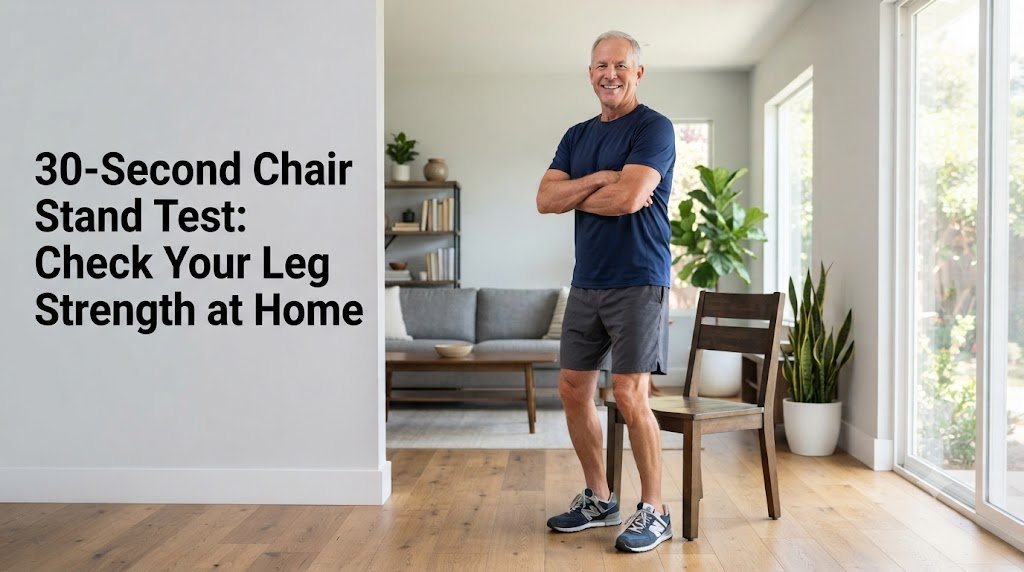
Table of Contents
- What Is the 30-Second Chair Stand Test?
- Why Leg Strength Matters After Age 55
- Benefits of Taking the Test
- Who Should Take This Test?
- Equipment Needed
- How to Perform the 30-Second Chair Stand Test
- Understanding Your Results
- What If Your Score Is Low?
- Exercises That Can Improve Your Score
- Common Mistakes During the Test
- Safety Tips
- Frequently Asked Questions
- Conclusion
What Is the 30-Second Chair Stand Test?
The 30-Second Chair Stand Test measures how many times you can stand up fully from a seated position and sit back down again within 30 seconds, without using your arms for support.
The test was developed as part of a larger set of physical performance measures used to evaluate strength and function in older adults. It has since become a core part of the Centers for Disease Control and Prevention’s STEADI initiative (Stopping Elderly Accidents, Deaths & Injuries), which helps healthcare providers assess and reduce fall risk in patients aged 65 and older.
Physical therapists, geriatricians, and primary care providers use this test because it’s fast, requires no special equipment, and reflects a movement people perform many times a day — getting up from a chair, a couch, a toilet, or a car seat.
- Lower body (leg) muscle strength and endurance
- Functional mobility — how well your body performs real-world movements
- Dynamic balance and coordination during a sit-to-stand motion
Because the sit-to-stand movement is something almost everyone does dozens of times daily, the test connects directly to functional mobility and fall prevention. If your legs struggle to complete this simple motion repeatedly, it may also be harder to recover your balance if you trip or stumble.
Why Leg Strength Matters After Age 55

Leg strength is the foundation for nearly every movement you make throughout the day. Here’s why it becomes especially important as we age.
Walking
Strong thigh and hip muscles help you maintain a steady, confident stride. Weak legs can lead to a shuffling gait, which increases the risk of tripping.
Standing Up Safely
Rising from a chair, bed, or toilet requires a burst of strength from your quadriceps and glutes. When these muscles weaken, people often push off with their arms or use momentum — habits that can lead to instability.
Climbing Stairs
Stairs demand more strength than walking on flat ground. Weak legs can make stairs feel exhausting or even unsafe, leading many people to avoid them altogether.
Balance
Your leg muscles work constantly to make tiny adjustments that keep you upright. Weakness in these muscles can make balance feel less secure, especially on uneven surfaces.
Independence
Simple daily tasks — getting dressed, doing laundry, gardening, or carrying groceries — all rely on functional leg strength. Maintaining it helps you continue doing the things you enjoy without needing assistance.
Muscle Loss With Aging (Sarcopenia)
Beginning around age 30, adults gradually lose muscle mass and strength, a process known as sarcopenia. This loss tends to accelerate after age 60 if muscles aren’t regularly challenged through activity. Sarcopenia is a natural part of aging, but staying active can significantly slow its progression and help preserve mobility and independence for years to come.
Benefits of Taking the Test
Taking the 30-Second Chair Stand Test regularly offers several practical advantages:
- Detect declining leg strength early — before it starts affecting daily activities
- Monitor progress over time as you build strength or recover from illness or inactivity
- Identify potential mobility issues that may be worth discussing with a healthcare provider
- Encourage early intervention, such as starting a strength or balance program sooner rather than later
- Support healthy aging by giving you a concrete, motivating way to track your physical function
Because the test is quick and repeatable, it works well as an occasional check-in — similar to how you might track blood pressure or weight over time.
Who Should Take This Test?
This test is designed to be simple and accessible, making it appropriate for a wide range of people, including:
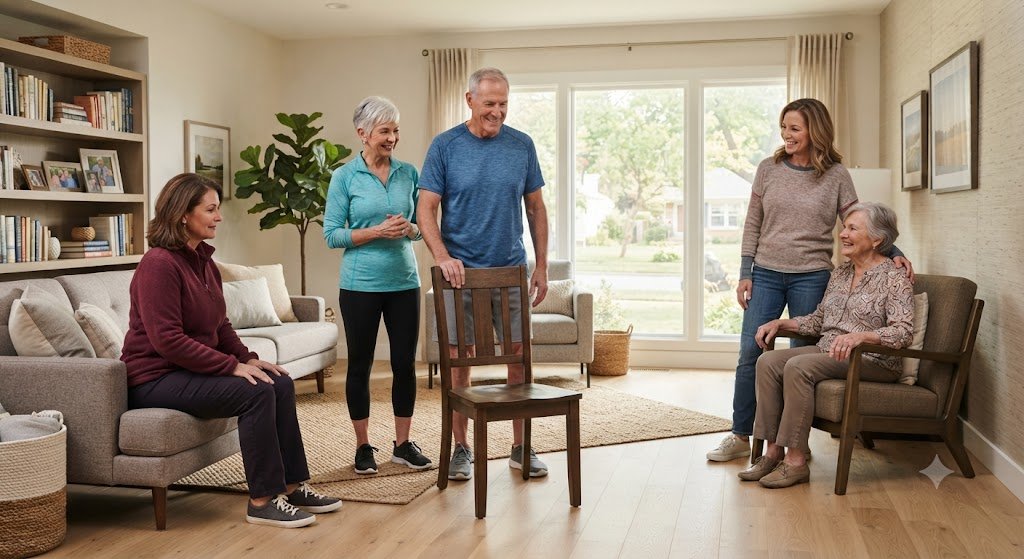
- Adults 55 and older who want a general sense of their leg strength
- Seniors living independently who want to stay ahead of mobility changes
- People recovering from inactivity, illness, or a period of reduced movement
- Caregivers who want a simple way to monitor a loved one’s physical function over time
When to Consult a Healthcare Provider First
Some people should check with a doctor or physical therapist before attempting this test, including those who:
- Have unstable heart conditions or uncontrolled high blood pressure
- Have had a recent fracture, joint replacement, or surgery
- Experience dizziness, fainting, or significant balance problems
- Have severe joint pain that limits standing or sitting
- Are recovering from a recent fall or hospitalization
If any of these apply to you, a healthcare professional can help determine whether the test is appropriate and how to perform it safely.
Equipment Needed
One of the best things about this test is how little you need to do it.
- A stable, sturdy chair without wheels, ideally with a straight back and no armrests (placing it against a wall adds extra stability)
- A flat, clear floor with no rugs or clutter nearby
- A stopwatch or timer (a phone timer works well)
- Comfortable, supportive shoes — avoid socks or slippers
- An optional helper to stand nearby for safety and to help with counting or timing
How to Perform the 30-Second Chair Stand Test
Follow these steps carefully, and don’t rush. The goal is safe, controlled movement — not speed at all costs.
Step 1: Set Up
Place the chair against a wall so it can’t slide backward. Sit down in the middle of the seat with your feet flat on the floor, roughly hip-width apart.
Step 2: Position Your Arms
Cross your arms over your chest, placing each hand on the opposite shoulder. Keeping your arms folded prevents you from pushing off with your hands, which would make the test inaccurate.
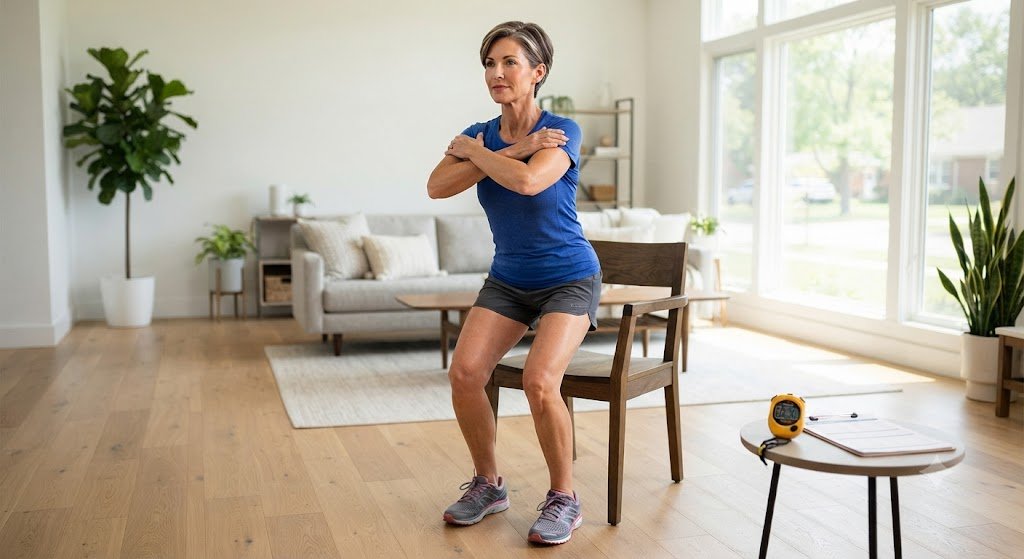
Step 3: Prepare Your Posture
Sit up tall with your back straight. Keep your feet firmly planted on the floor throughout the test.
Step 4: Start the Timer
When you (or your helper) say “go,” rise to a full standing position — hips and knees fully straightened — then sit back down with control.
Step 5: Repeat for 30 Seconds
Continue standing up and sitting down at a steady, controlled pace for the full 30 seconds. If you’re more than halfway to standing when time runs out, that repetition still counts.
Step 6: Count Your Repetitions
Count only full stands — moments when your body is completely upright with hips and knees straightened.
Common Mistakes to Avoid
- Using your arms or hands to push off the chair or your legs
- Only partially standing up before sitting back down
- Rushing so quickly that your form breaks down
- Using a chair that’s too low, too soft, or unstable
- Losing count of repetitions — having a helper count is often easier
Understanding Your Results

Once you’ve completed the test, you’ll have a simple number: the total number of full stands you completed in 30 seconds.
Generally speaking:
- A higher number of repetitions tends to reflect better lower-body strength and endurance
- A lower number of repetitions may suggest reduced leg strength, which could be worth discussing with a healthcare provider
Results are typically compared to general reference ranges that vary by age and sex, since strength naturally differs across these groups. A score that’s considered typical for someone in their 80s, for example, would look different from a typical score for someone in their 50s or 60s.
Several factors can influence your results, including:
- Recent illness, surgery, or hospitalization
- Joint pain or arthritis
- Medications that affect energy or balance
- Overall activity level
- Time of day and fatigue
Because so many factors can affect performance, this test should be viewed as one piece of information — not a diagnosis. If your results concern you, or if you notice a significant change from a previous test, it’s worth bringing this up with your doctor or a physical therapist, who can evaluate your overall health and mobility more thoroughly.
What If Your Score Is Low?
If your number feels lower than you expected, take a breath — this is common, and it’s not a cause for alarm.
- Don’t panic. A single test result is just a snapshot, not a life sentence. Many people improve their scores with consistent, gentle effort.
- Practice safely. Continue to move throughout your day — walking, standing, and light activity all support leg strength.
- Speak with a healthcare professional if needed. If you have underlying health conditions, joint pain, or concerns about falling, a doctor or physical therapist can create a plan tailored to you.
- Expect gradual improvement. Strength builds over weeks and months, not days. Be patient with your progress.
- Focus on consistency rather than intensity. Regular, moderate activity is far more effective — and safer — than occasional bursts of strenuous exercise.
Exercises That Can Improve Your Score
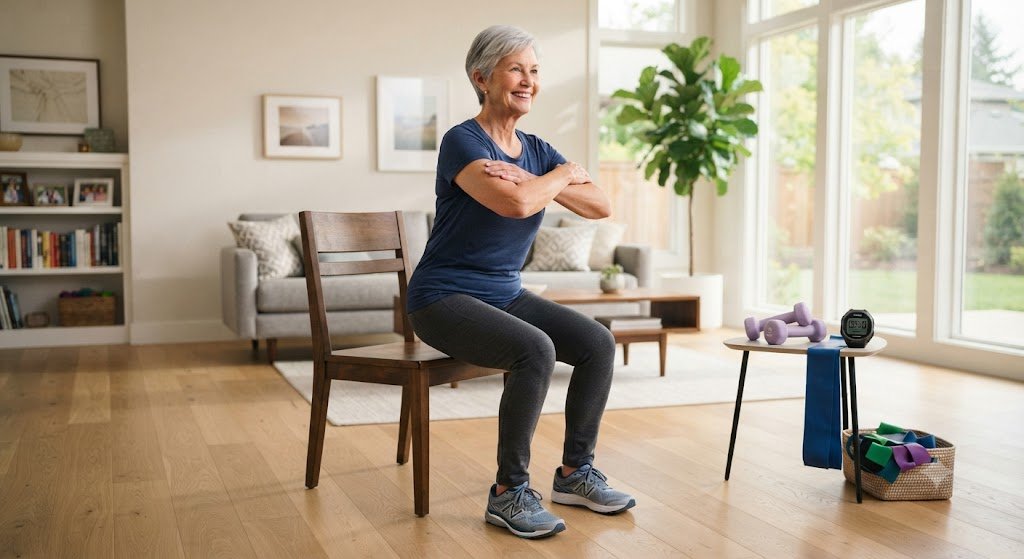
Building leg strength doesn’t require a gym membership. These simple, low-impact exercises can be done at home and may help improve your chair stand performance over time.
American Physical Therapy Association
Sit-to-Stand Exercise
The same movement used in the test doubles as a great strengthening exercise. Practice standing up and sitting down slowly from a sturdy chair, using your hands for support if needed, and gradually reducing your reliance on them as you get stronger.
Mini Squats
Holding onto a counter or sturdy chair back, bend your knees slightly as if beginning to sit down, then rise back up. Small, controlled movements are safer and just as effective as deep squats.
Heel Raises
While holding onto a counter for balance, rise onto your toes and slowly lower back down. This strengthens your calves, which support balance and walking.
Step-Ups
Using a low, stable step, practice stepping up and down with control, holding a railing or sturdy surface for support.
Seated Marches
While sitting in a chair, lift one knee at a time in a marching motion. This is a gentle way to activate hip and thigh muscles, especially useful for those just starting out.
Standing Balance Exercises
Practice standing on one foot (near a counter or wall for support) or shifting your weight side to side. Better balance complements leg strength and further reduces fall risk.
Safety Tips for Exercising
- Always have a stable surface nearby to hold onto
- Start with fewer repetitions and increase gradually
- Stop if you feel sharp pain, dizziness, or excessive fatigue
- Wear supportive shoes, even at home
- Consider working with a physical therapist to create a personalized plan, especially if you have existing health conditions
Common Mistakes During the Test
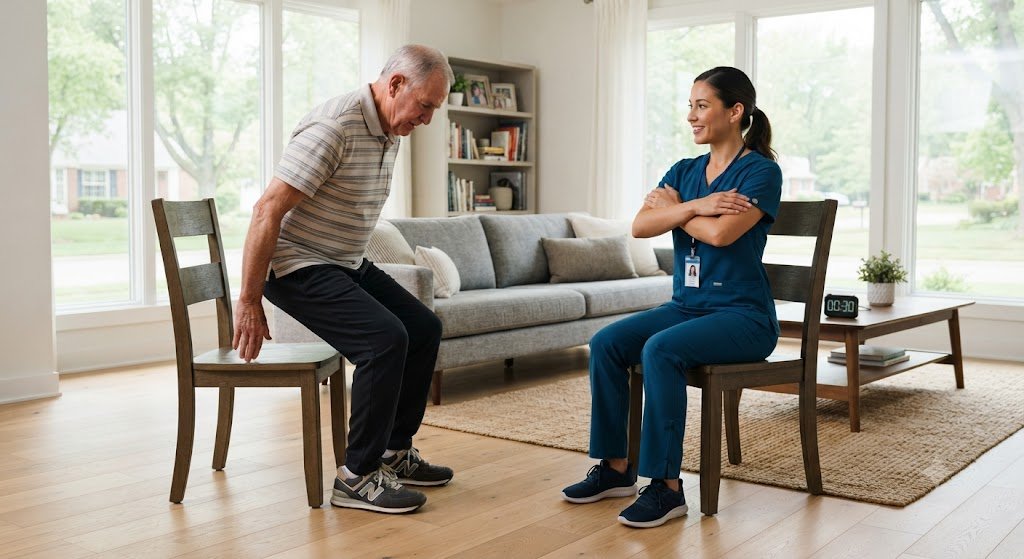
Avoiding these mistakes will help ensure your results are as accurate as possible:
- Using your hands to push off the chair or your knees
- Poor posture, such as leaning too far forward or slouching
- Rushing through the movement instead of maintaining control
- Incorrect chair height — too low or too high can skew results
- Counting incorrectly, such as counting partial stands or losing track of repetitions
Safety Tips
- Know when to stop. If you feel dizzy, short of breath, or experience pain, stop immediately and rest.
- Wear proper footwear. Supportive, closed-back shoes provide better stability than socks, slippers, or bare feet.
- Choose a safe environment. Clear the area of rugs, cords, or clutter, and make sure the chair is on a flat, non-slip surface.
- Have someone nearby if needed, especially if you have a history of falls, dizziness, or balance concerns.
- Take medical precautions. If you have heart conditions, recent surgeries, or joint issues, check with your doctor before testing.
Frequently Asked Questions
Is the test safe? For most healthy older adults, yes. However, people with certain health conditions — such as unstable heart disease, recent fractures, or severe balance issues — should consult a healthcare provider first.
What is a good score? “Good” varies by age and sex, since strength naturally differs across these groups. Rather than comparing yourself to a single universal number, it’s more useful to track your own results over time and discuss them with a healthcare provider.
How often should I repeat it? Many people find it helpful to repeat the test every few months to track changes in strength, especially if they’re working on an exercise routine. Avoid testing too frequently, as results can vary day to day.
Can I use my hands? No. The standard version of the test requires you to keep your arms crossed over your chest. Using your hands to push off changes the results and doesn’t accurately reflect leg strength.
Can people with arthritis perform it? Many people with arthritis can perform the test, but joint pain may affect results or make the test uncomfortable. Speak with your doctor or physical therapist about whether it’s appropriate for you and how to modify it if needed.
Does this test measure balance? It primarily measures leg strength and endurance, though the sit-to-stand motion does require some dynamic balance. For a more complete balance assessment, other tools — such as a standing balance test — are typically used alongside this one.
What chair should I use? A sturdy, straight-backed chair without wheels or armrests works best. Placing it against a wall adds extra stability and prevents it from sliding.
Should I see a doctor if my score is low? If your score is lower than expected, seems to be declining over time, or you have concerns about your mobility or fall risk, it’s a good idea to talk with your doctor or a physical therapist. They can evaluate your overall health and recommend next steps.

Conclusion
Leg strength plays a central role in how safely and independently you move through daily life — from standing up off the couch to climbing a flight of stairs. The 30-Second Chair Stand Test offers a quick, accessible way to check in on that strength from home, without any special equipment or training.
Remember, this test is a screening tool, not a diagnosis. If your results raise questions, a healthcare provider or physical therapist can offer a more complete picture and guide you toward the right next steps.
Whatever your score today, the most important thing is what you do next. Staying active, practicing safe strengthening exercises, and rechecking your progress every few months can help you build — and maintain — the leg strength that supports a confident, independent lifestyle for years to come