
Introduction
Knowing how to measure for a walker correctly can make the difference between a mobility aid that supports safe, confident movement and one that quietly puts a person at risk of falling. A walker that sits too high or too low forces the body into awkward angles, straining the shoulders, wrists, and lower back. Over time, this poor fit can affect posture, balance, and even a person’s willingness to stay active and independent.
The good news is that measuring for a walker is simple and takes only a few minutes with the right approach. This guide walks you through every step, from the tools you need to a full walker height chart, so you or a loved one can adjust a walker with confidence. Whether you’re a first-time user, a caregiver, or someone recovering from surgery, understanding correct walker height is one of the easiest ways to support long-term mobility and safety at home.

Table of Contents
- What Is the Correct Walker Height?
- Why Measuring a Walker Properly Is Important
- Who Needs to Measure Their Walker?
- Tools You’ll Need
- Step-by-Step: How to Measure for a Walker
- Walker Height Chart
- How to Adjust a Walker Correctly
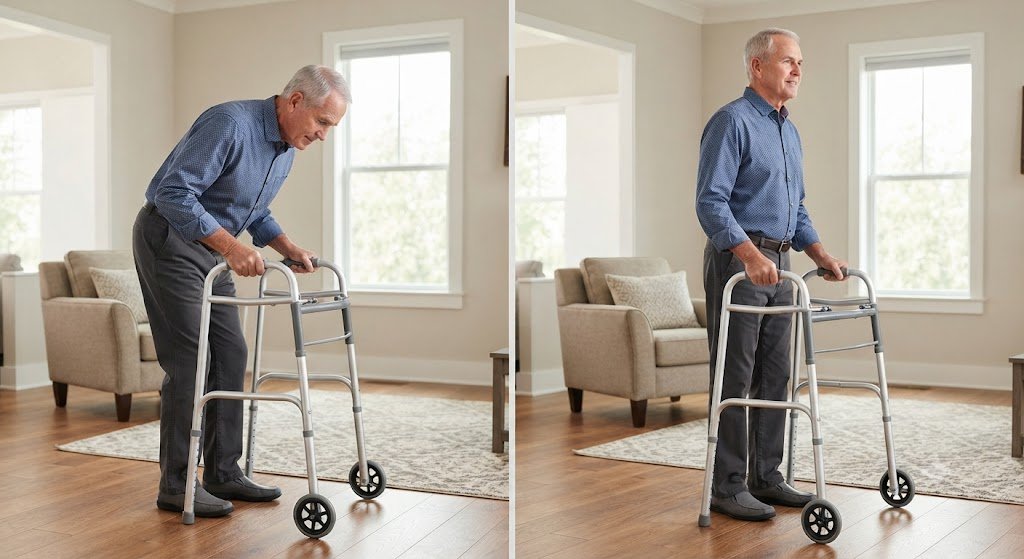
- Signs Your Walker Is Too High
- Signs Your Walker Is Too Low
- Common Walker Measuring Mistakes
- Safety Tips
- Frequently Asked Questions
- Conclusion
What Is the Correct Walker Height?
The correct walker height positions the hand grips at wrist level while the user stands upright with arms relaxed at their sides. When the hands rest naturally on the grips, the elbows should be bent at roughly a 15 to 20 degree angle, similar to a slight, comfortable bend rather than a sharp fold.
This positioning matters because it allows the arms to bear weight efficiently without forcing the shoulders to hunch or the back to round forward. A properly sized walker lets the user stand tall, look forward instead of down at their feet, and distribute effort evenly between the arms and legs. Getting this detail right is the foundation of every other benefit a walker is meant to provide.
Why Measuring a Walker Properly Is Important
Correct walker height directly affects posture, balance, joint comfort, and long-term mobility. When a walker is fitted properly, the body maintains a natural, upright alignment that supports steady, even steps. This reduces strain on the wrists, shoulders, and spine, which is especially important for people managing arthritis or recovering from surgery.
An improperly sized walker can quietly undermine balance. If the handles sit too low, users tend to lean forward and hunch, shifting their center of gravity in a way that increases fall risk. If the handles sit too high, users may need to shrug their shoulders or stand on their toes to reach the grips, which is both tiring and unstable. Over weeks and months, an ill-fitting walker can contribute to chronic joint pain, fatigue, and reduced confidence in walking, sometimes leading people to avoid using their walker altogether. Taking a few minutes to measure correctly protects both immediate safety and long-term physical health.
Who Needs to Measure Their Walker?
Correct sizing matters for a wide range of walker users, including:
- First-time walker users who are still learning what proper positioning should feel like
- Seniors whose height, posture, or bone density may change over time
- Caregivers who are helping a family member or client select or adjust a walker
- People recovering from surgery, such as hip or knee replacement, who need extra stability during healing
- Individuals with arthritis or balance issues, who benefit most from a walker that minimizes joint strain and supports steady weight distribution
Anyone who is new to a walker, has recently changed footwear habits, or has noticed changes in posture or comfort should re-check their walker height.
Tools You’ll Need
Before you begin, gather the following:
- A measuring tape (a flexible fabric or metal tape works well)
- The flat shoes you normally wear, since shoe height changes overall standing height
- A flat, hard floor, rather than carpet, for an accurate and stable measurement
- A helper (optional), which can make the process easier and more accurate, especially for those with balance concerns
Step-by-Step: How to Measure for a Walker
Step 1: Wear Your Normal Walking Shoes
Put on the shoes you wear most often for daily activities, not slippers or socks. Shoe height, especially heel thickness, changes your standing height and will affect the final measurement.
Step 2: Stand Naturally
Stand on a flat, hard floor in your usual, comfortable posture. Avoid slouching or standing unusually tall. If you typically stand with slight support from a counter or wall, that’s fine, but try to keep your normal, everyday alignment.
Step 3: Relax Your Arms
Let both arms hang loosely at your sides, the way they would rest if you were simply standing and waiting. This relaxed position is essential, since tensing the arms or holding them at an angle will lead to an inaccurate reading.
Step 4: Measure Wrist Height
With arms relaxed, measure the distance from the floor to the crease of the wrist, where the hand meets the forearm. This measurement is the target height for the walker’s hand grips.
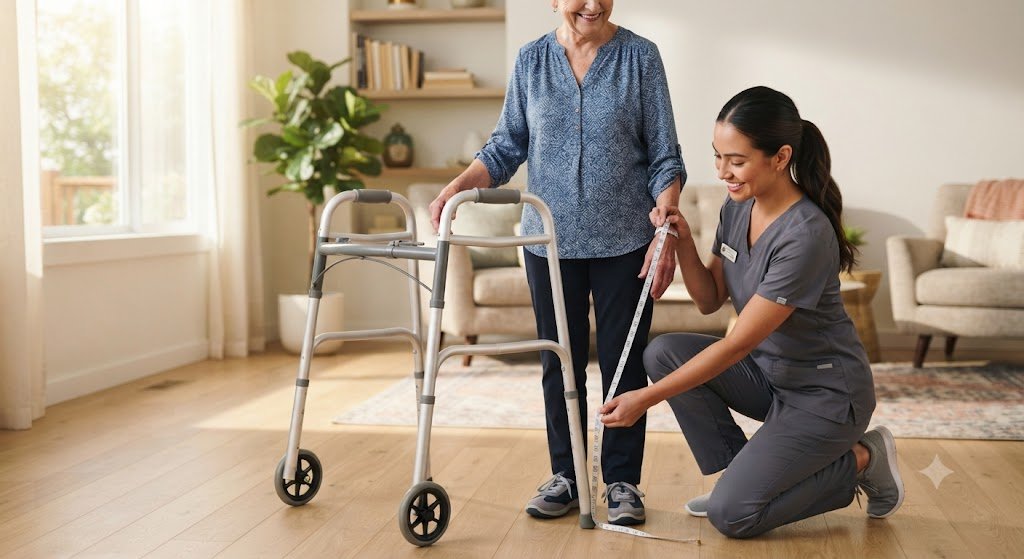
Step 5: Adjust the Walker Legs
Using the walker’s adjustment buttons or locking pins, raise or lower each leg until the hand grips align with the wrist-height measurement. Adjust all four legs evenly so the walker sits level.
Step 6: Test the Fit
Stand inside the walker and place your hands on the grips. Your elbows should bend at approximately 15 to 20 degrees, your shoulders should feel relaxed rather than raised, and your posture should feel upright and natural.
Step 7: Walk Safely and Recheck
Take a few slow, supported steps in a clear, open area to see how the height feels in motion. If anything feels off, such as shoulder tension or a forward lean, readjust and test again before regular use.
Walker Height Chart
The chart below offers general starting-point estimates based on user height. Because arm length and posture vary, always confirm with the wrist-height measurement method above.
| User Height | Approximate Walker Handle Height |
|---|---|
| 4’10” – 5’0″ | 30″ – 32″ |
| 5’1″ – 5’3″ | 32″ – 34″ |
| 5’4″ – 5’6″ | 34″ – 36″ |
| 5’7″ – 5’9″ | 36″ – 38″ |
| 5’10” – 6’0″ | 38″ – 40″ |
| 6’1″ – 6’3″ | 40″ – 42″ |
These figures are approximate. Individual wrist-height measurement is always the most accurate method.
How to Adjust a Walker Correctly
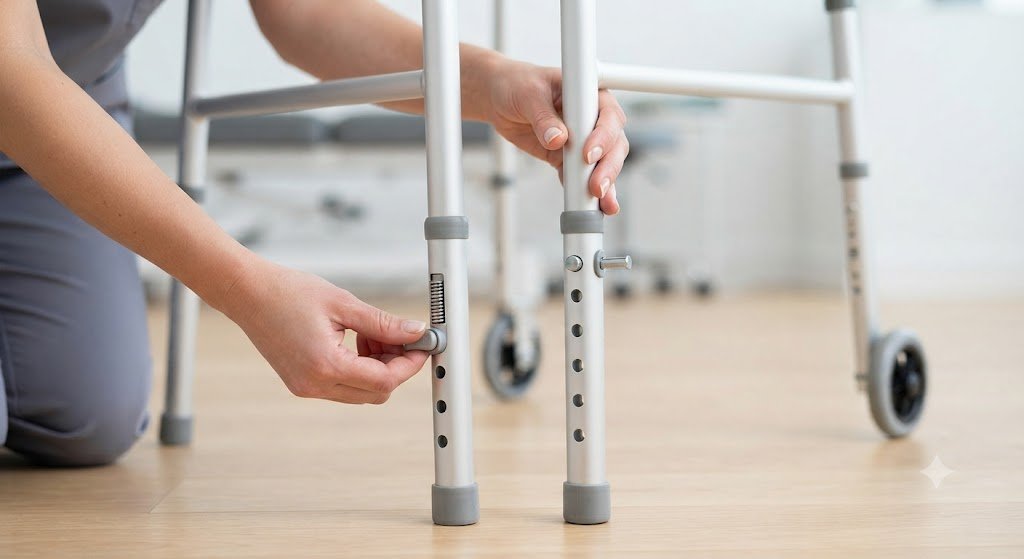
Most standard and folding walkers use one of two adjustment systems: push-button locking pins or twist-lock mechanisms. To adjust height:
- Locate the adjustment button or lever on each leg, usually near the bottom section of the tubing.
- Press the button and slide the leg up or down to the desired hole or marking.
- Release the button and confirm you hear or feel a firm click, indicating the pin is fully locked in place.
- Repeat on all legs, checking that each leg is set to the exact same height.
- Gently press down on the walker to confirm it feels sturdy and doesn’t wobble or shift before use.
Never use a walker with a leg that isn’t fully locked, even temporarily, as this can cause the walker to collapse unexpectedly.
Signs Your Walker Is Too High
- Shoulders feel raised, hunched, or tense while gripping the handles
- Arms need to reach upward rather than resting naturally
- The user feels like they’re being pulled onto their toes
- Wrists bend at an awkward upward angle
- Increased fatigue in the upper arms and shoulders after short use
Signs Your Walker Is Too Low
- The back and shoulders round forward while walking
- The user feels the need to stoop or bend at the waist
- Increased pressure or strain in the lower back
- Elbows are bent much more than 20 degrees
- Head tends to tilt downward instead of facing forward
Common Walker Measuring Mistakes
- Measuring while wearing socks or slippers instead of regular walking shoes
- Standing unnaturally straight or unnaturally slouched during measurement
- Tensing the arms instead of letting them relax fully
- Measuring on carpet or an uneven surface
- Adjusting only one or two legs instead of all four evenly
- Forgetting to recheck height after a change in footwear
- Not testing the fit by walking a few steps before regular use
- Assuming a walker is sized correctly simply because it “looks about right”
- Skipping reassessment after weight change, surgery, or a change in posture
- Leaving a leg only partially locked instead of fully secured
Safety Tips
- Recheck walker height any time you change your typical footwear
- Inspect rubber tips or wheels regularly for wear and replace them as needed
- Make sure all four legs are locked securely before each use
- Walk in a clear, open path when testing a new height adjustment
- Ask a caregiver or family member to double-check your measurement and fit
- Avoid using a walker on uneven, wet, or cluttered surfaces
- Revisit your walker height periodically, especially after any change in health or mobility

Frequently Asked Questions
How high should my walker be? Your walker should be set so the hand grips align with the crease of your wrist when your arms hang relaxed at your sides.
Should my elbows bend when using a walker? Yes. Your elbows should bend at approximately 15 to 20 degrees when your hands rest on the grips, which allows for comfortable, controlled support.
Can a walker be too tall? Yes. A walker that is too tall forces the shoulders to lift and the wrists to bend upward, which can cause fatigue and reduce stability.
How do I know if my walker fits correctly? You should be able to stand upright with relaxed shoulders, slightly bent elbows, and a natural, forward-facing posture while gripping the handles.
How often should I check my walker height? It’s a good idea to recheck walker height whenever footwear changes, after any surgery or health change, and at least once every few months as a general habit.
Does walker height affect balance? Yes. Incorrect height can shift your center of gravity forward or upward, which may reduce stability and increase fall risk.
Can two people share the same walker if they are close in height? It’s best to individually measure and adjust the walker for each user, since arm length and posture can differ even between people of similar height.
What if my arms feel tired after using my walker? Tired arms can be a sign the walker is set too high. Recheck the wrist-height measurement and readjust if needed.
Is it normal for walker height to change over time? Yes. Posture, footwear, and physical condition can change, so periodic rechecking helps maintain a safe, comfortable fit.
Can I adjust a walker myself, or do I need help? Many people can adjust their own walker following the steps above, but having a caregiver or family member assist, especially for testing the fit, can add an extra layer of safety and accuracy.
Conclusion
Learning how to measure for a walker properly is a simple but essential step toward safer, more comfortable mobility. By wearing your normal shoes, standing naturally, and measuring to wrist height, you can find the correct walker height in just a few minutes. Regularly rechecking this fit, especially after changes in footwear, health, or posture, helps protect your posture, balance, and independence over the long term. Taking this small amount of time now can make everyday movement safer and more comfortable for years to come.