
Introduction
If you’re wondering how to choose a walking cane, you’re not alone. Selecting the right cane is one of the most important decisions for maintaining balance, confidence, and independence as you age. The right cane can improve stability, reduce the risk of falls, and make everyday activities safer and more comfortable.
This Walking Cane Buying Guide explains how to choose a walking cane by covering the different types of walking canes, proper sizing, handle styles, materials, weight capacity, and essential safety features. Whether you’re searching for the best walking cane for seniors or buying one for a loved one, understanding these factors will help you make an informed decision.
By the end of this Senior Walking Cane Guide, you’ll know exactly what to look for when choosing a walking cane that matches your mobility needs, lifestyle, and comfort preferences. With the right support, walking canes for seniors can provide greater confidence, improved safety, and increased independence every day.

Table of Contents
- What Is a Walking Cane?
- Types of Walking Canes
- Key Features to Consider When Choosing a Cane
- How to Choose the Correct Cane Height
- Who Can Benefit From a Walking Cane?
- Possible Limitations of Using a Cane
- Safety Tips for Using a Walking Cane
- Maintenance and Care
- Conclusion
- Related Articles
What Is a Walking Cane?
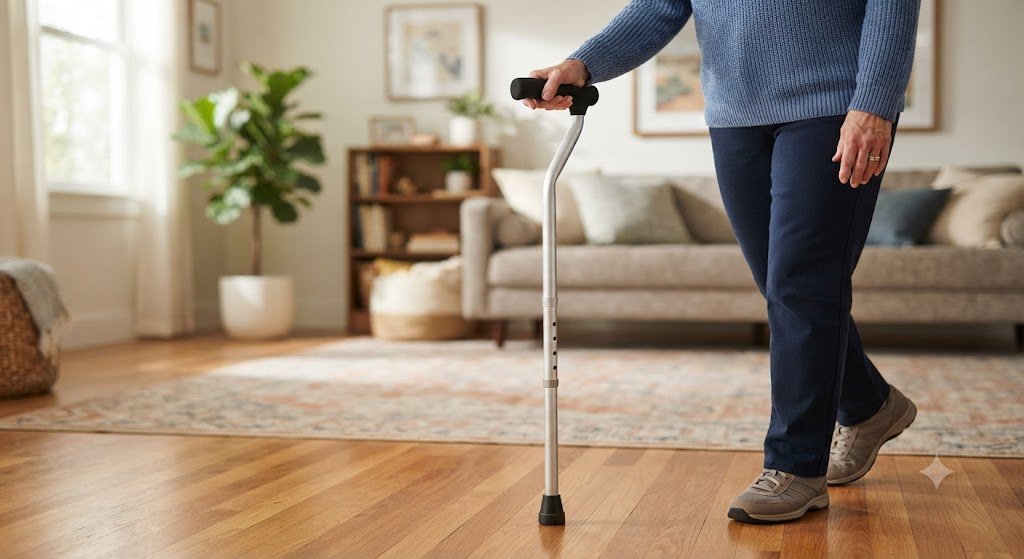
A walking cane is a simple, handheld walking assistance device designed to provide extra support and balance while standing or walking. It shifts a portion of body weight away from the legs and onto the arm and cane, reducing strain on joints and muscles.
Canes differ from other mobility aids, like walkers or rollators, because they offer lighter support and are best suited for those who need help with balance rather than full weight-bearing assistance. For many older adults, a cane provides just enough elderly mobility support to move confidently through daily life without feeling weighed down by bulkier equipment.
Choosing a cane is often the first step toward better balance support for seniors, especially for those who feel occasionally unsteady but don’t require more advanced mobility equipment.
Types of Walking Canes
Not all canes are the same. Understanding the different types helps you find the right senior walking aid for specific needs.
Standard Cane
The standard cane is a lightweight, single-point design ideal for everyday walking support. It works well for people who need only mild balance assistance and prefer a simple, classic design.
Quad Cane
A quad cane features a four-point base, offering significantly more stability than a standard cane. This makes it a strong choice for seniors who need extra balance support and a wider, more secure footing while walking.
Folding Walking Cane
A folding walking cane is designed for portability. It collapses down for easy storage in a bag, car, or closet, making it a convenient option for seniors who travel or want a cane that’s easy to tuck away when not in use.
Adjustable Walking Cane
An adjustable walking cane allows the user to customize the height to fit their exact posture needs. This flexibility supports better alignment and comfort, especially for households where more than one person may use the same cane.
Lightweight Walking Cane
A lightweight walking cane is easy to lift, carry, and maneuver throughout the day. For seniors with limited hand or arm strength, a lightweight design can make daily use far more comfortable.
Section Image Prompt: A close-up, premium healthcare product photograph on a white clean background showing an ergonomic cane handle, an adjustable height mechanism, and an anti-slip rubber cane tip in sharp detail, 16:9 format.
Key Features to Consider When Choosing a Cane
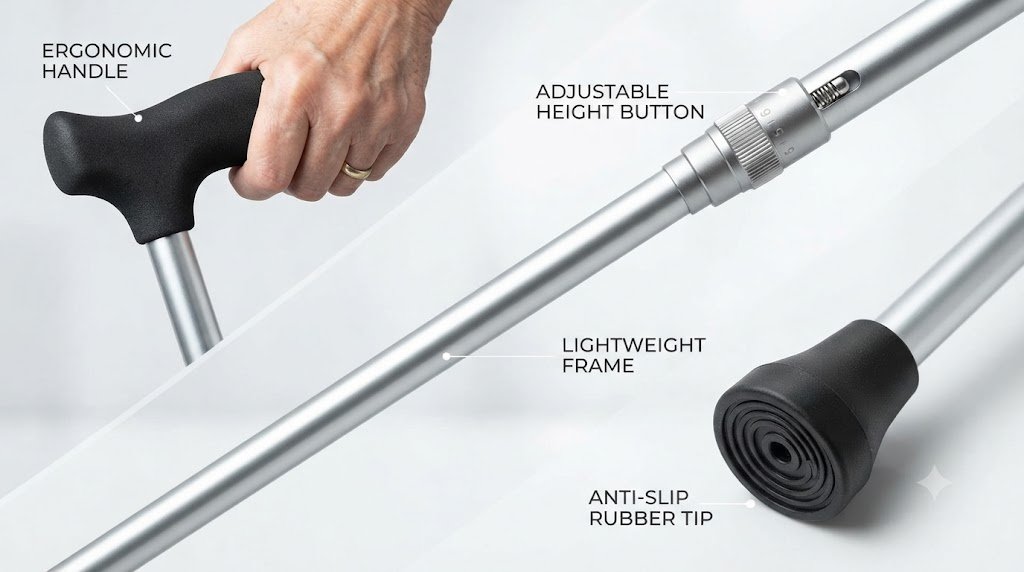
Comfortable Handle Design
Look for an ergonomic cane handle that fits naturally in the hand. A well-designed grip reduces hand strain and makes extended use far more comfortable, especially for seniors with arthritis or limited grip strength.
Proper Height Adjustment
Correct cane height directly affects walking posture. A cane that’s too tall or too short can cause discomfort or reduce stability, so height adjustment is one of the most important features to check.
Cane Tip Safety
A quality rubber tip provides slip resistance on various surfaces, from sidewalks to tile floors. Checking tip condition regularly helps ensure reliable outdoor and indoor safety.
Weight and Portability
A lightweight walking cane is easier to handle throughout the day, reducing fatigue during long walks or errands.
How to Choose the Correct Cane Height
Proper sizing is essential for both comfort and walking stability aid performance. Here’s a simple way to check the fit:
- Standing measurement method: Stand upright wearing regular shoes, arms relaxed at your sides.
- Wrist-level check: The top of the cane should reach the crease of your wrist.
- Elbow angle: When holding the cane, your elbow should bend at about a 15–20 degree angle.
- Proper positioning: The cane should feel steady and natural, not stretched or cramped.
Getting the height right is one of the simplest ways to improve mobility support and prevent unnecessary strain on the back, shoulder, or wrist.
Who Can Benefit From a Walking Cane?

A cane can be a helpful senior walking aid for a variety of people, including:
- Seniors experiencing occasional balance concerns
- Older adults who want extra confidence while walking outdoors or in crowded spaces
- Individuals recovering from minor mobility challenges
- Anyone seeking additional walking support during daily activities
For many, a cane offers the right balance between independence and support, making it one of the most popular choices among best cane for elderly options and general medical cane solutions.
Possible Limitations of Using a Cane
While canes offer valuable support, they aren’t the right fit for everyone. A cane may not provide enough support for individuals who need more substantial weight-bearing assistance, in which case a walker or rollator may be more appropriate. Because mobility needs vary widely, it’s always a good idea to have a proper assessment from a healthcare professional before choosing a mobility aid.
Safety Tips for Using a Walking Cane
Follow these simple safety habits to get the most out of your cane:
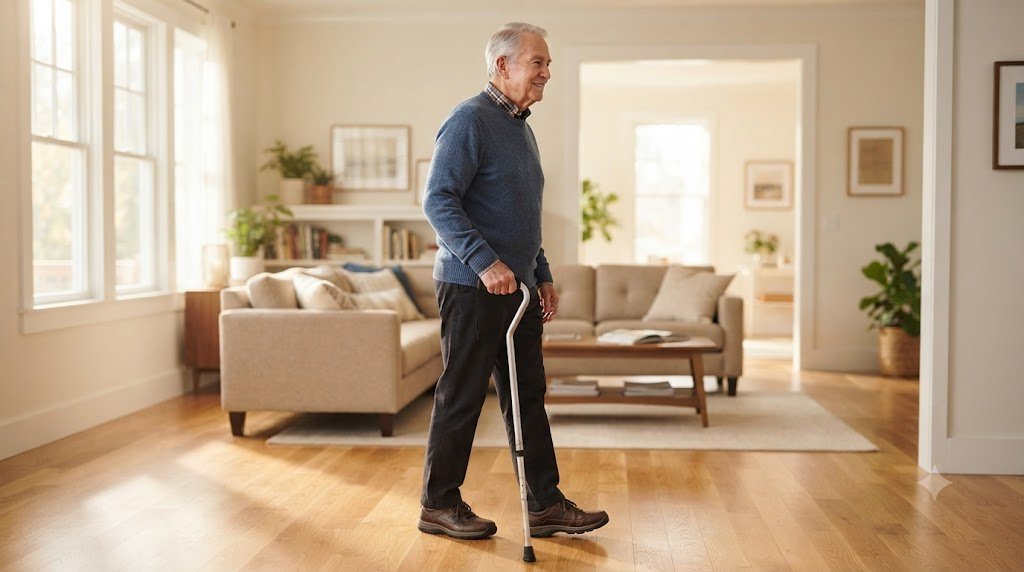
- Check cane height regularly, especially after changes in footwear
- Replace worn or cracked cane tips promptly
- Keep walking paths clear of clutter and cords
- Wear supportive, non-slip footwear
- Avoid wet or slippery surfaces when possible
- Practice safe walking techniques, moving the cane and the opposite leg together
These habits support long-term walking stability aid performance and reinforce reliable senior walking support in everyday situations.
Maintenance and Care
Keeping a cane in good condition helps ensure it continues to perform safely:
- Clean the handle and shaft regularly with a damp cloth
- Check the handle for looseness or wear
- Inspect adjustable height mechanisms to confirm they lock securely
- Replace damaged or worn rubber tips as needed
- Store the cane in a dry, upright location when not in use
FAQs
- How do I choose the right walking cane?
- What type of walking cane is best for seniors?
- How do I measure the correct cane height?
- Should I choose a folding or adjustable walking cane?
- When should I replace a walking cane?
Conclusion
Understanding how to choose a walking cane makes a meaningful difference in comfort, safety, and everyday confidence. The right cane depends on individual balance needs, hand strength, and daily activity level — whether that means a standard cane, a quad cane, or an adjustable, lightweight design. By focusing on comfort, correct height, and stability, seniors and caregivers can select a mobility aid that truly supports independence and well-being for years to come.