
Choosing a senior independent living community is one of the more significant decisions a person or family will make later in life. It affects daily routine, social life, health, finances, and long-term peace of mind. With so many communities to choose from, it’s easy to feel overwhelmed by glossy brochures and long amenity lists.

Here’s the good news: finding the best senior independent living communities doesn’t require finding the most expensive option or the one with the flashiest lobby. It requires finding the community that fits your lifestyle, mobility needs, budget, and plans for the future.
This guide walks through the practical factors worth evaluating — from accessibility and transportation to safety, dining, and cost — so you can build your own comparison checklist and choose with confidence.
Table of Contents
- What Is Independent Living for Seniors?
- Who Can Benefit From Independent Living?
- What Makes the Best Senior Independent Living Communities?
- Why Mobility Matters in Independent Living
- Activities and Social Opportunities
- Dining and Daily Services
- Safety Features to Look For
- How Much Does Independent Living Cost?
- Independent Living vs. Assisted Living
- How to Compare Senior Independent Living Communities
- Questions to Ask Before Choosing a Community
- Red Flags to Watch For
- Tips for Touring an Independent Living Community
- How to Choose the Right Community for Long-Term Independence
- Conclusion
What Is Independent Living for Seniors?
Independent living for seniors refers to housing communities designed specifically for older adults who are able to manage most or all of their daily activities on their own but want a lifestyle with less upkeep, more convenience, and more built-in social connection.
These communities are sometimes called 55+ independent living communities or senior retirement communities, and they typically offer private apartments, cottages, or small homes within a larger community setting.
Typical services and amenities include:
- Private living spaces (apartments, cottages, or small homes)
- Community dining options
- Housekeeping and maintenance
- Scheduled activities and social events
- Transportation services
- Common areas such as lounges, libraries, and fitness rooms
- Grounds and landscaping maintenance
How independent living differs from assisted living
The key difference is the level of hands-on support. Independent senior living is built for people who don’t need daily help with personal care tasks like bathing, dressing, or medication management. Assisted living communities, by contrast, provide that additional layer of support. Many people choose senior independent living communities specifically because they want to preserve their autonomy while shedding the burdens of homeownership.
Independence matters because it’s closely tied to a person’s sense of identity, purpose, and quality of life. The right community should support that independence, not diminish it.
Who Can Benefit From Independent Living?
Independent living tends to be a good fit for older adults who:
- Want to reduce or eliminate home maintenance and yard work
- Are looking for more social opportunities and less isolation
- Prefer having convenient transportation instead of relying solely on driving
- Want easier access to community activities, classes, and events
- Would benefit from a safer, more accessible physical environment
- Still manage most daily activities independently but want extra convenience and support nearby
It’s worth noting that needs vary significantly from person to person. Some residents move into independent living in their late 50s or 60s simply to simplify their lifestyle, while others move in their 70s or 80s after retiring from homeownership. There’s no single “right” age or circumstance — the right time is different for everyone.
What Makes the Best Senior Independent Living Communities?
When people search for the best independent living communities, they’re usually trying to weigh a long list of factors at once. Breaking it down into categories makes the process much more manageable.

Location
Location affects nearly every part of daily life. When evaluating a community’s location, consider its proximity to:
- Family members
- Healthcare providers and hospitals
- Grocery stores and shopping
- Restaurants and cafes
- Parks and outdoor spaces
- Community and cultural activities
- Public transportation routes
A beautiful community that’s an hour from family or medical care may not be as practical as a modest one that’s five minutes away.
Accessibility
Accessibility deserves attention even for people who are currently mobile and active. Needs can change, and a community that’s accessible from day one avoids the disruption of an unplanned move later.
Look for:
- Elevators in multi-story buildings
- Ramps in addition to or instead of stairs
- Step-free entrances
- Wide hallways and doorways
- Accessible, walk-in bathrooms
- Handrails in hallways and bathrooms
- Good lighting throughout indoor and outdoor spaces
- Accessible parking close to entrances
- Smooth, even walking surfaces without trip hazards
Transportation
Senior living with transportation is often one of the most valued features, especially for residents who no longer drive or prefer not to. Ask about:
- Community shuttle services and their schedules
- Transportation to medical appointments
- Transportation for shopping and errands
- Access to public transportation nearby
- Whether transportation is included in monthly fees or costs extra
Why Mobility Matters in Independent Living

Mobility is one of the most important — and most overlooked — factors when evaluating senior independent living communities. This is also one of the most important sections for anyone using SeniorMobilityCare.com as a resource.
Many residents use mobility aids to get around comfortably and safely, including:
- Canes
- Walkers
- Rollators
- Wheelchairs
- Power wheelchairs
- Mobility scooters
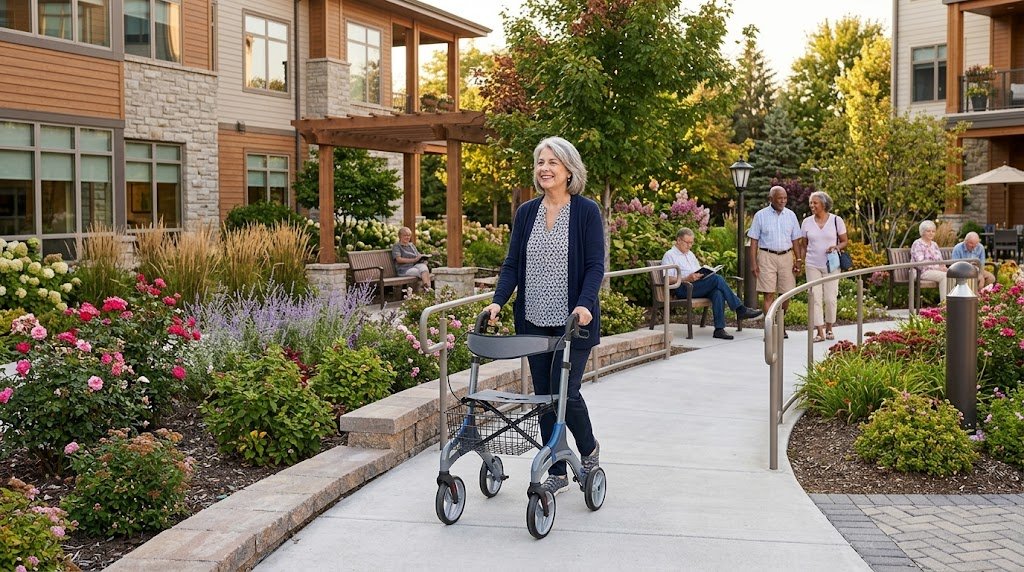
A community that works well for someone with no mobility aid may present real challenges for someone using a rollator or wheelchair. Narrow doorways, heavy doors, uneven pathways, or a lack of elevators can turn a beautiful campus into a daily obstacle course.
It’s also important to remember that mobility needs can change over time — sometimes gradually, sometimes suddenly after an illness or injury. Choosing a mobility-friendly senior living community from the start, with wide walkways, ramps, accessible entrances, and elevator access, can make a significant difference in maintaining independence for years to come, even if those features aren’t needed on day one.
When touring, pay attention to how comfortably a person using a mobility device could move through common areas, dining rooms, outdoor paths, and individual apartments — not just whether the space technically meets accessibility codes.
Activities and Social Opportunities
Social connection is one of the biggest quality-of-life factors in independent living. Look for communities that offer a genuine variety of activities, such as:

- Walking groups
- Exercise and stretching classes
- Card games and board games
- Educational programs and guest lectures
- Arts and crafts classes
- Interest-based clubs (books, gardening, music, and more)
- Community events and celebrations
- Outdoor activities and gardening spaces
- Social gatherings and happy hours
Regular social engagement can help residents stay active, connected, and engaged with their community. When comparing options, ask to see an actual weekly or monthly activity calendar rather than a generic list — this gives a much clearer picture of day-to-day life.
Dining and Daily Services
Daily services vary quite a bit between communities, and understanding exactly what’s included is essential for both comfort and budgeting. Common services include:
- On-site dining rooms and meal plans
- Housekeeping
- Laundry services
- Building and grounds maintenance
- Utilities
- Access to common areas like lounges, libraries, and fitness centers
Before signing any agreement, carefully determine which of these services are bundled into the monthly fee and which come with an additional cost. Dining plans, in particular, can vary widely — some communities include three meals a day, while others offer a limited number of meals per week or none at all.
Safety Features to Look For
Safety is foundational to a good independent living experience. When touring or researching, look for:
- Emergency call systems in apartments and common areas
- Well-lit pathways, both indoors and outdoors
- Secure building entrances
- Smoke detectors and fire safety systems
- Handrails in hallways, bathrooms, and stairwells
- Accessible, walk-in bathrooms
- Clear emergency procedures and evacuation plans
- Adequate staff availability, especially during evenings and weekends
It’s worth noting that independent living communities generally do not provide medical care. Some may offer basic wellness checks or partnerships with home health agencies, but always confirm what a specific community actually offers rather than assuming medical support is included.
How Much Does Independent Living Cost?
Costs for independent living vary significantly based on:
- Geographic location
- Apartment or unit size
- Included services and amenities
- Dining plan options
- Transportation offerings
- Community type (rental versus entrance-fee models)
Because pricing structures differ so much between communities, it’s important to understand the different types of charges you may encounter:
- Monthly rent — the base recurring cost of the unit
- Entrance fees — a one-time upfront fee required by some communities, particularly larger continuing-care campuses
- Community fees — fees that cover shared amenities and services
- Additional service charges — costs for optional services like extra housekeeping or premium dining
- Utilities — sometimes included, sometimes billed separately
- Optional services — such as guest meals, additional transportation, or specialty classes
Because there’s no single national price for independent living, always request a complete, itemized, written cost breakdown before making any decision. This helps avoid surprises and makes it easier to compare communities on an apples-to-apples basis.
Independent Living vs. Assisted Living
Understanding the difference between independent living and assisted living can help clarify which option — or combination of options — makes the most sense.
| Feature | Independent Living | Assisted Living |
|---|---|---|
| Housing | Yes | Yes |
| Maintenance services | Often | Often |
| Social activities | Yes | Yes |
| Transportation | Often available | Often available |
| Help with daily activities | Limited/varies | More extensive |
| Personal care | Generally not included | Often available |
| Medical support | Generally limited | More support available |
Keep in mind that specific services differ from one community to the next, even within the same category. Always confirm the details directly with each community rather than relying on general assumptions.
How to Compare Senior Independent Living Communities
Once you’ve toured or researched a handful of options, use a consistent checklist to compare them fairly. For each community, evaluate:
- Location and proximity to family and healthcare
- Monthly cost and what’s included
- Additional fees and optional charges
- Accessibility of buildings and common areas
- Transportation services and schedules
- Dining options and meal plans
- Activities and social programming
- Apartment layouts and floor plans
- Safety features
- Walking environment, indoors and outdoors
- Mobility accessibility throughout the campus
- Visitor policies
- Pet policies
- Options for future care needs
Writing out this checklist for each community you tour makes side-by-side comparison far easier than relying on memory or general impressions alone.
Questions to Ask Before Choosing a Community
Come prepared with specific questions during tours and conversations with community staff:
- What is included in the monthly fee?
- Are there additional service charges beyond the base fee?
- Is transportation provided, and to where?
- How often does the shuttle operate?
- Are all buildings wheelchair accessible?
- Are elevators available in multi-story buildings?
- Are bathrooms designed for accessibility?
- What activities and programs are offered on a regular basis?
- Are meals included, and how many per day or week?
- Is housekeeping included, and how often?
- What happens if a resident’s mobility needs change over time?
- Are mobility scooters permitted on the property?
- Is there secure scooter parking or a charging area?
- What emergency procedures and response systems are in place?
- Can prospective residents speak with current residents about their experience?
Red Flags to Watch For
While most communities operate with good intentions, it’s still important to watch for warning signs during your research and tours:
- Unclear or evasive pricing information
- Visible poor maintenance of buildings or grounds
- Buildings that are difficult to navigate, especially for those using mobility aids
- Limited or unreliable transportation services
- Poor lighting in hallways, entrances, or parking areas
- Lack of basic accessibility features
- High-pressure sales tactics or urgency to sign quickly
- Contracts with unclear or confusing terms
- Verbal promises about services that aren’t documented in writing
If something feels off during a tour or conversation, it’s reasonable to ask more questions or consider other options. A trustworthy community should welcome thorough questions, not discourage them.
Tips for Touring an Independent Living Community
A well-planned tour reveals far more than a website or brochure ever will. When you visit, try to:
- Visit at different times of day, including mealtimes
- Walk the common routes residents would use daily
- Test elevators and building entrances yourself
- Check bathroom accessibility firsthand
- Observe the dining area during an actual meal service
- Ask current residents about their day-to-day experience
- Review the contract carefully, ideally with time to take it home
- Ask detailed questions about transportation schedules and coverage
- Examine outdoor walking paths for surface quality and shade
- Look for places to rest along common walking routes
- Confirm whether mobility devices like rollators, wheelchairs, or scooters can be comfortably accommodated throughout the property
Taking notes during each tour — rather than relying on memory afterward — makes it much easier to compare communities later.
How to Choose the Right Community for Long-Term Independence
It’s easy to focus only on current needs, but the best decisions account for the future as well. Before choosing a community, think through:
- How future mobility changes might affect daily life there
- Whether the accessibility features would still work if mobility needs increase
- How reliable and comprehensive the transportation options are
- Proximity to family who may become more involved in caregiving over time
- Access to healthcare providers and facilities
- The depth and consistency of community activities
- Whether the community’s costs are financially sustainable long-term
Planning with the future in mind doesn’t mean assuming the worst — it simply means choosing a place that can continue to support independence even as circumstances evolve. This kind of foresight can make a future transition, if one becomes necessary, far smoother and less stressful.
Conclusion
Choosing among the best senior independent living communities comes down to finding a place that genuinely fits your life — not just the community with the most amenities or the highest price tag. The strongest choices tend to support six things at once: independence, mobility, accessibility, safety, social connection, and affordability.
Take your time, ask thorough questions, tour multiple communities, and build your own comparison checklist using the categories in this guide. With the right preparation, you can find a community that supports not just where you are today, but where you want to be for years to come.
Frequently Asked Questions
What is the difference between independent living and assisted living? Independent living is designed for seniors who can manage daily activities on their own but want less home maintenance and more social opportunities. Assisted living provides additional hands-on support with personal care tasks.
Is transportation usually included in independent living communities? Many communities offer some form of transportation, such as shuttles to medical appointments or shopping, but the extent of service and whether it’s included in the base fee varies widely by community.
Do independent living communities accommodate mobility scooters and wheelchairs? Many do, but accessibility varies significantly. It’s important to ask specifically about doorway widths, elevator access, secure scooter storage or charging, and accessible common areas.
How much does independent living typically cost? Costs vary widely based on location, apartment size, and included services. There is no single national price, so requesting a full written cost breakdown from each community is essential.
Can mobility needs change after moving into independent living? Yes. This is why choosing a community with strong accessibility features from the start — even if not currently needed — can help support long-term independence.