

Introduction
How to Choose a Mobility Scooter is one of the most important decisions for maintaining independence, safety, and daily comfort. With so many models, features, and price ranges available, finding the right mobility scooter can feel overwhelming. Many people make the mistake of choosing a scooter based only on its price without considering their personal mobility needs, lifestyle, or where the scooter will be used. This can result in buying a scooter that is too heavy to transport, too bulky for indoor use, or lacks the speed and range needed for outdoor travel.
Understanding how to choose a mobility scooter can make a significant difference in your quality of life. The right scooter helps you stay active, shop independently, visit family and friends, attend appointments, and enjoy greater freedom every day. In this guide, you’ll learn what a mobility scooter is, who can benefit from using one, the key factors to consider before buying, the different types of mobility scooters available, and essential safety tips to help you make the best choice.
Table of Contents
- What Is a Mobility Scooter?
- Who Should Use a Mobility Scooter?
- Factors to Consider Before Choosing a Mobility Scooter
- 3-Wheel vs 4-Wheel Mobility Scooters
- Different Types of Mobility Scooters
- Features Worth Paying Attention To
- Safety Tips Before Buying
- Common Mistakes to Avoid
- Frequently Asked Questions
- Conclusion
What Is a Mobility Scooter?
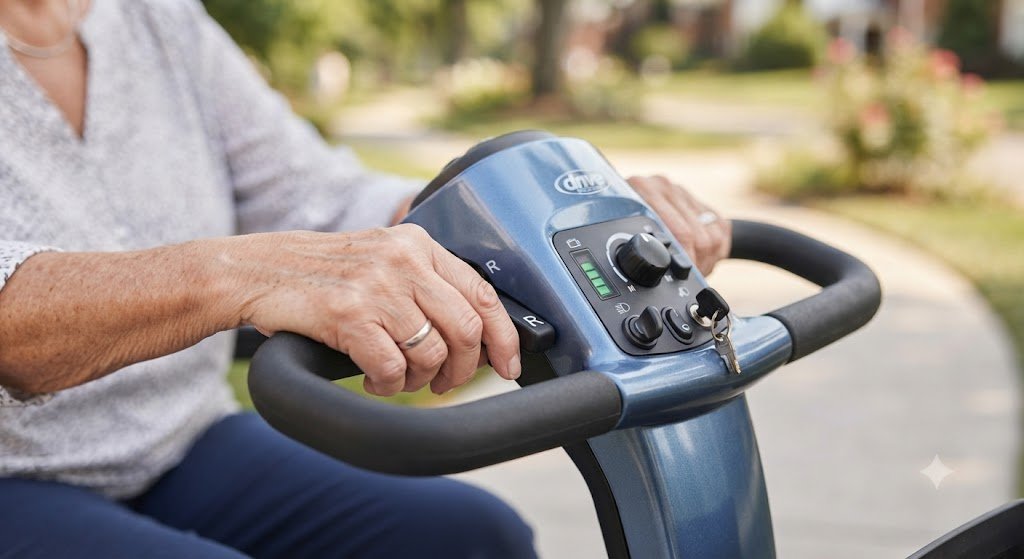
Understanding how to choose a mobility scooter starts with knowing what a mobility scooter is and how it works. A mobility scooter is a battery-powered mobility aid designed to help people travel more easily when walking becomes difficult, painful, or tiring. It typically features a comfortable seat, a set of handlebars called a tiller, three or four wheels, and a front basket for carrying personal items or groceries. Riders steer the scooter using the tiller and control its speed with simple hand throttles, making it easy to operate for most users, including those with limited hand strength.
Mobility scooters are powered by rechargeable batteries that run an electric motor. Most models can be fully charged overnight using a standard household electrical outlet, providing enough battery range for everyday activities such as shopping, medical appointments, neighborhood outings, or moving around larger indoor facilities.
When learning how to choose a mobility scooter, it’s also important to know who can benefit from using one. Mobility scooters are suitable for people of different ages and mobility levels, but they are especially popular among older adults who want to maintain their independence and continue enjoying an active lifestyle.
Another important step in how to choose a mobility scooter is understanding the difference between a mobility scooter and a power wheelchair. Mobility scooters are controlled with a tiller and are generally best for people who have reasonable upper-body strength, hand function, and sitting balance. In contrast, power wheelchairs use a joystick for steering and are often a better choice for individuals with more significant mobility, balance, or strength limitations.
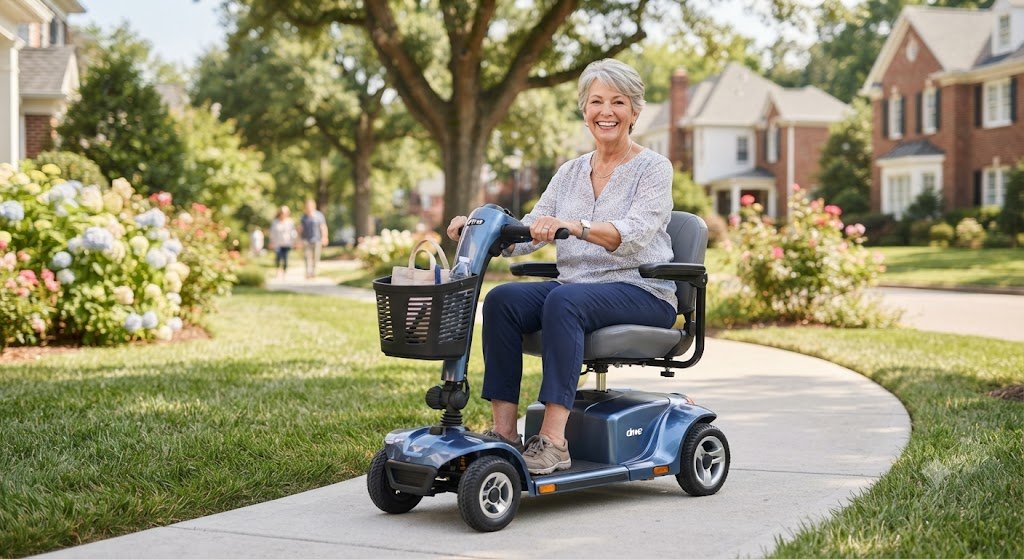
Who Should Use a Mobility Scooter?
There are many individuals who can use a mobility scooter. The common situations that could lead one to decide to use a mobility scooter include:
- People above the age of 65 wanting to maintain independence on errands, shopping, and socializing
- Pain in the joints because of arthritis which renders walking painful
- Unsteady balance when it comes to walking for long distances
- Decreased walking endurance due to heart disease or any other condition
- Walking distances become difficult after undergoing hip or knee surgery
- Difficulties walking for long distances, for example in malls, airports, or large parks
Even though mobility scooters give users more independence, they are not always a good choice for everyone. There are some situations where a mobility scooter becomes less advisable to use. This includes if an individual has a lot of trouble keeping balance while sitting or operating the hand controls safely. An individual suffering from cognitive impairment that would not be able to assess speed, distances, or traffic would also not be ideal to use mobility scooters.
Factors to Consider Before Choosing a Mobility Scooter
Selecting the right scooter comes down to matching its features to your daily life. Here are the most important factors to think through.
Intended Use
Think about where you’ll use the scooter most often.
- Indoor use calls for a compact scooter with a tight turning radius that can move through doorways and hallways.
- Outdoor use benefits from larger wheels, more power, and better suspension for handling sidewalks and uneven terrain.
- Both indoor and outdoor use may call for a mid-size scooter that balances maneuverability with outdoor capability.
Travel Needs
If you plan to take your scooter in a car, on a plane, or on public transportation, portability matters a great deal.
- Portable scooters are designed to be light enough to lift into a trunk.
- Folding scooters collapse into a compact size for easy storage and travel.
- Lightweight models are easier for caregivers or family members to help load and unload.
User Weight Capacity
Every scooter has a maximum weight capacity, and choosing the right one is essential for safety and performance.
- Standard scooters typically support up to around 250-300 pounds.
- Bariatric scooters are built with reinforced frames and wider seats to safely support higher weight capacities.
Seat Comfort
Since you may spend extended periods in the seat, comfort should never be an afterthought.
- Width should allow you to sit comfortably without feeling cramped.
- Padding helps reduce pressure and discomfort during longer rides.
- Swivel seat options make it easier to get on and off the scooter.
- Adjustable armrests provide support and can be moved out of the way when transferring.
Battery Range
Battery range determines how far you can travel before needing a recharge.
- For daily travel, such as short errands, a smaller battery may be sufficient.
- For long-distance use, like extended outdoor outings, look for a higher-capacity battery that offers a longer range per charge.
Maximum Speed
Most mobility scooters travel between 4 and 8 miles per hour. While this may sound slow, it’s important to set realistic expectations. Scooters are designed for safe, controlled movement, not speed, and slower speeds allow for better control and reaction time, especially indoors or in crowded areas.
Terrain
Consider the surfaces you’ll be riding on most often.
- Pavement and smooth sidewalks work well with most scooters.
- Grass requires larger wheels and more power to avoid getting stuck.
- Gravel can be challenging for smaller wheels and may require a sturdier model.
- Hills call for a scooter with a strong motor and reliable braking system.
Turning Radius
A smaller turning radius makes it easier to navigate tight spaces like hallways, elevators, and store aisles. If you’ll be using your scooter mostly indoors, prioritize a compact turning radius.
Storage Requirements
Think about where the scooter will be stored when not in use. Some homes have limited space, so a folding or compact model may be more practical than a larger, full-size scooter.
Transport Options
Consider how you’ll get your scooter from place to place. Some scooters disassemble into lighter pieces for car trunks, while others require a ramp or lift for vehicle transport. If you travel frequently, this is one of the most important factors to plan for in advance.
Budget Considerations
Mobility scooters range widely in price based on size, battery capacity, and features. It helps to set a budget range early and remember that additional costs, like a carrying case, ramp, or charger, may also factor into your total spending. Many buyers also check whether their insurance or Medicare coverage may apply for medical necessity, which is worth discussing with a healthcare provider.
Various Types of Mobility Scooters
All mobility scooters are not the same. Knowing the major types of mobility scooters will help you make your choice.
Travel mobility scooters are small-sized and lightweight, and thus are easy to transport from one place to another. Such scooters are recommended for seniors who travel often and require a scooter which will be easy to store in the car trunk.
Folding mobility scooters can be collapsed instantly and thus will take less space when stored in an apartment or a small home. Folding scooters are also perfect for air travelers.
Portability mobility scooters have the same characteristics as travel scooters but may provide some additional comfort of sitting.
Full-size mobility scooters provide more comfortable seats, bigger baskets, and additional amenities. Full-size scooters are good for those people who prefer to use a mobility scooter as a main way of transportation at home and outdoors.
Heavy-duty mobility scooters are designed in such a way that they can hold more weight than standard scooters because they have strengthened structures.
All-terrain mobility scooters have larger wheels, stronger engines, and better suspension system.
Features That Deserve Consideration
In addition to these basic features, there are other features that could make life easier, safer, and more comfortable for the rider.
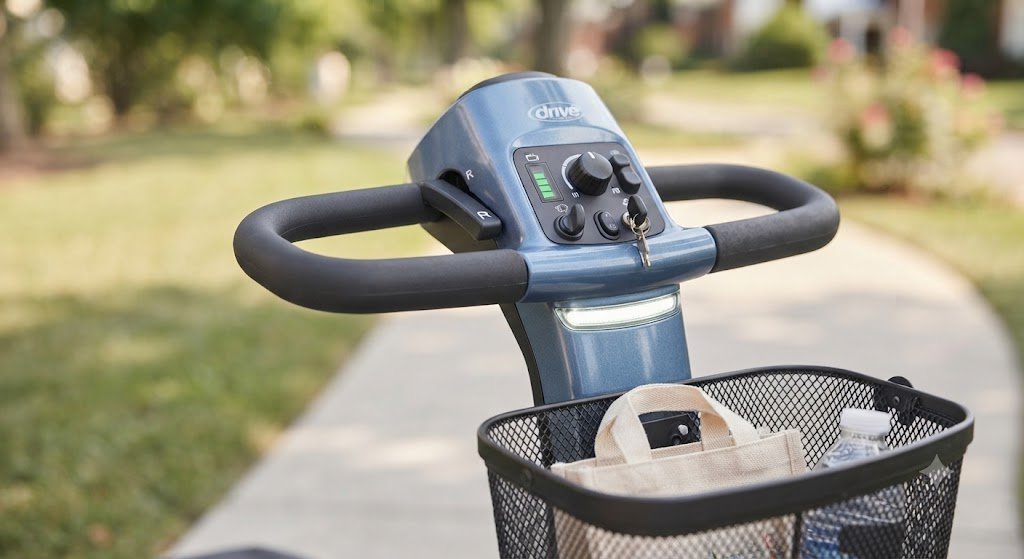
- LED lights help riders see clearly at dawn or dusk.
- Suspension assists with handling rough surfaces and maintaining smoothness.
- An adjustable tiller enables easy placement of the controls for optimal reach and posture.
- A basket is useful for carrying groceries and other items.
- A USB port allows a cell phone or tablet to be recharged while riding.
- Anti-tip wheels give extra stability to the bike, particularly when going up a ramp or an incline.
- Mirrors assist with awareness of surroundings, like those on a bicycle or a car.
- A horn is necessary for notifying other people in busy environments.
- A braking system is important for making controlled stops.
Safety Tips Before Buying
Before finalizing your purchase, keep these safety considerations in mind.
- Test driving the scooter in person helps you assess comfort, control, and visibility firsthand.
- Weight limits should always be respected to avoid strain on the motor and frame.
- Charging the battery fully before first use, and regularly afterward, helps maintain performance.
- Proper fit in the seat and footrest ensures safe posture and control.
- Turning safely at a reduced speed helps prevent tipping, especially on uneven ground.
- Visibility features like lights and reflectors help others see you, particularly at dusk or night.
- Maintenance such as checking tires, brakes, and battery health keeps the scooter running safely.
- Weather considerations matter, since rain and wet surfaces can affect traction and electrical components.
Common Mistakes to Avoid
Many buyers face avoidable errors simply by being unaware of essential factors. Here are some common mistakes you should watch out for:
- Shopping only on price basis without keeping comfort and durability in mind
- Neglecting battery life range causing inability to travel required distances with your scooter
- Selecting an inappropriate wheel arrangement in accordance with the riding conditions, either indoors or outdoors
- Failing to measure doors and hallways of your house before buying a new scooter
- Neglecting transportation issues causing your scooter to be too heavy or too big to transport
- Failing to check for comfort during trials
Frequently Asked Questions
1. How do I know what size mobility scooter I need? Consider where you’ll use it most. Compact scooters work well indoors, while larger models are better suited for outdoor terrain and longer distances.
2. What is the average weight capacity of a mobility scooter? Standard scooters typically support 250 to 300 pounds, while bariatric models are built to support higher weight capacities.
3. How far can a mobility scooter travel on one charge? Battery range varies by model, but many scooters offer between 10 and 30 miles per charge, depending on battery size and terrain.
4. Is a 3-wheel or 4-wheel scooter better for seniors? It depends on the use case. Three-wheel scooters are more maneuverable indoors, while four-wheel scooters offer greater stability outdoors.
5. Can mobility scooters be taken on airplanes? Many travel and folding scooters are designed with airline travel in mind, but it’s important to check the battery type and airline-specific policies before flying.
6. How much does a mobility scooter typically cost? Prices vary widely based on size, features, and battery capacity, so it helps to compare options within your budget range.
7. Does insurance or Medicare cover mobility scooters? Coverage depends on medical necessity and individual insurance plans. It’s best to consult your healthcare provider and insurance company directly.
8. How do I maintain a mobility scooter? Regularly check the battery, tires, and brakes, and keep the scooter clean and stored in a dry area to extend its lifespan.
9. Can a mobility scooter be used indoors and outdoors? Yes, many mid-size scooters are designed to handle both environments, though dedicated indoor or outdoor models may perform better in specific settings.
Conclusion
Selecting the ideal mobility scooter does not merely mean going through an available list of the products available in the market. In reality, one must take into account their needs and environment. Factors such as the intended purpose of the scooter, the travel needs, the weight limit, the seating comfort, the battery range, and even the terrain can be considered so that you will get a scooter that will fit your needs and way of living.
It is always best to try out several scooters before finally making up your mind regarding which one to buy. Choosing the right mobility scooter for yourself is definitely an investment in freedom and confidence.