
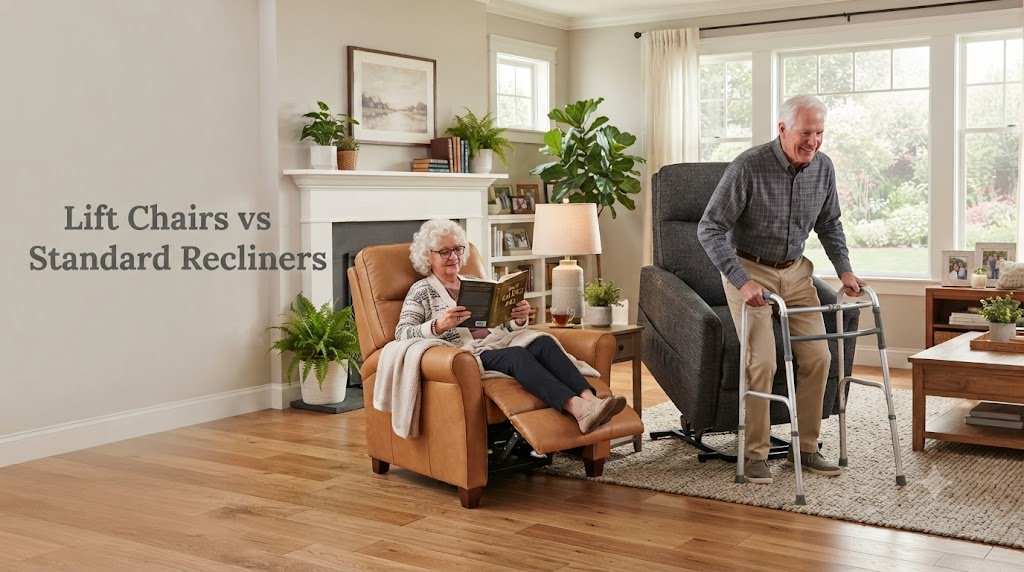
When choosing a chair, comfort is not the only important aspect to consider. In case of seniors, the right choice of a seat can determine whether they will be able to get up on their own without difficulties or have problems with each attempt. The right choice of a seat also affects whether seniors will be able to live independently at home or will need a caretaker.
Families that compare various seats for their elderly relatives often ask themselves one question: lift chairs or standard recliners – which one will be more beneficial? Both types of chairs are very alike and offer the same things like comfort and the possibility of a reclined position. But there are huge differences between them.
This article will help you understand what makes these two kinds of seats different.
Table of Contents
- What Is a Lift Chair?
- What Is a Standard Recliner?
- Side-by-Side Comparison
- Advantages of Lift Chairs
- Advantages of Standard Recliners
- Who Should Choose a Lift Chair?
- Who Should Choose a Standard Recliner?
- Safety Considerations
- Comfort Comparison
- Cost Comparison
- Maintenance and Care
- Frequently Asked Questions
- Conclusion

What Is a Lift Chair?
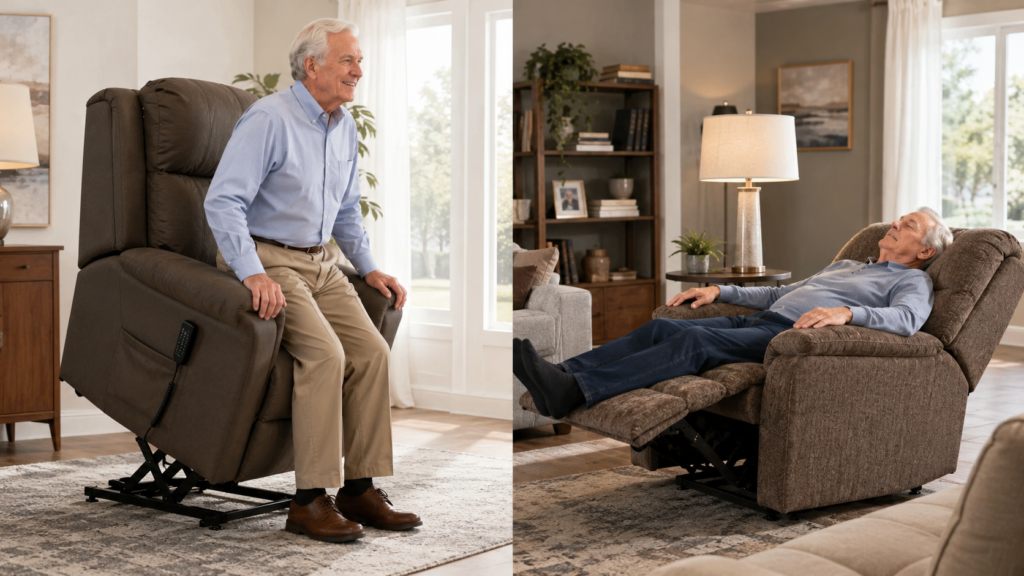
A lift chair is a powered piece of furniture built to help someone move from sitting to standing with minimal effort. A motor inside the base gently tilts the entire chair forward, lifting the seat until the user is nearly upright. From there, standing takes very little strength or balance.
Lift chairs typically include electric controls on a handheld remote. These controls adjust the recline angle, footrest position, and lift function. Many models offer multiple reclining positions, from a slight backward tilt to a near-flat lay-back position.
Because the lifting motion does the hardest part of standing up, lift chairs are especially helpful for people with weak legs, joint pain, or balance concerns. They are often recommended for seniors recovering from surgery, living with arthritis, or managing conditions that make standing difficult.
What Is a Standard Recliner?
A standard recliner is traditional furniture designed mainly for comfort and relaxation. It reclines backward and usually includes a footrest that extends when the backrest tilts. Some recliners use a manual lever or handle, while others use a small motor to power the reclining motion.
Unlike a lift chair, a standard recliner does not tilt forward to help someone stand. The user has to push themselves up using their own leg strength and balance, the same way they would from a regular chair or sofa.
Standard recliners are common living room furniture. They come in many styles, fabrics, and price points, and they suit anyone who wants a comfortable place to relax, read, or watch television without needing extra standing support.
Lift Chairs vs Standard Recliners: Side-by-Side Comparison
| Feature | Lift Chair | Standard Recliner |
| Standing Assistance | Yes, powered lift helps user stand | No, user stands unassisted |
| Reclining Positions | Multiple positions, often including near-flat | Limited to one or two recline angles |
| Ease of Use | Simple remote control operation | Manual lever or basic power button |
| Mobility Support | High, designed for limited mobility | Low, designed for general comfort |
| Comfort | High, with adjustable support | High, with plush cushioning |
| Independence | Encourages independent standing | Depends on user’s own strength |
| Cost | Higher upfront cost | Lower upfront cost |
| Power Requirement | Requires electrical outlet | May or may not require power |
| Medical Benefits | Supports arthritis, surgery recovery, balance issues | Limited medical benefit |
| Ideal Users | Seniors with mobility limitations | Seniors without significant mobility issues |
| Safety | Reduces fall risk during standing | Standard seating safety only |
Advantages of Lift Chairs
Lift chairs offer benefits that go beyond basic comfort. For many seniors, these features directly support daily independence and physical health.
Helps seniors stand safely. The powered lift reduces the physical effort needed to rise, which lowers the risk of losing balance or falling during the transition from sitting to standing.
Reduces caregiver strain. Family members and caregivers often help seniors stand up multiple times a day. A lift chair reduces how often this manual assistance is needed, easing physical strain on caregivers.

Supports arthritis. Joint pain in the hips, knees, or back can make standing painful. The gradual lifting motion reduces pressure on these joints during the standing process.
Helps after surgery. Following hip replacement, knee surgery, or other procedures, standing up can be risky and painful. A lift chair supports a safer, more controlled recovery process.
Encourages independence. Seniors who use a lift chair often need less help throughout the day, which supports a greater sense of autonomy and confidence at home.
Multiple reclining positions. From upright sitting to near-flat, lift chairs allow users to adjust their position for reading, watching television, resting, or napping.
Better circulation. Adjustable positions, including leg elevation, can help improve blood flow, which is especially useful for seniors with circulation concerns.
Comfortable for long sitting. Many lift chairs include supportive cushioning designed for people who spend extended hours seated.
Advantages of Standard Recliners
Standard recliners remain a popular choice, and for good reason. They offer real benefits, particularly for seniors without major mobility challenges.
Lower price. Standard recliners are generally more affordable than lift chairs, making them accessible for a wider range of budgets.

Comfortable seating. Well-built recliners provide solid cushioning and back support for everyday relaxation.
Stylish furniture. Recliners come in a wide range of fabrics, colors, and designs that can match nearly any living room decor.
Suitable for healthy seniors. For older adults who can stand and move without difficulty, a standard recliner offers comfort without the need for powered assistance.
Variety of designs. From compact models to oversized options, standard recliners fit different room sizes and personal preferences.
Easy maintenance. With fewer mechanical and electrical parts, standard recliners are generally simpler to maintain over time.
Who Should Choose a Lift Chair?
A lift chair is often the better choice for seniors managing specific health conditions or physical limitations, including:
- Arthritis in the hips, knees, or spine
- Parkinson’s disease
- General muscle weakness
- Chronic joint pain
- Balance issues or unsteadiness
- Recovery after a stroke
- Limited mobility from aging or injury
- Recent surgery, especially involving the hips or legs
If standing up from a regular chair feels difficult, painful, or unsafe, a lift chair can provide meaningful daily support.
Who Should Choose a Standard Recliner?
A standard recliner works well for:
- Active seniors with no significant mobility limitations
- People who can stand and sit without assistance
- Those seeking occasional relaxation rather than daily support
- Budget-conscious buyers
- General living room seating needs
For seniors who are still physically active and independent, a standard recliner can provide comfort without the added cost of powered lifting features.
Safety Considerations
Both chair types come with safety factors worth understanding before making a decision.
Trip hazards. Power cords for lift chairs and powered recliners should be placed away from walkways to prevent tripping.
Electrical safety. Regular inspection of cords, plugs, and outlets helps prevent electrical issues, especially with daily use.
Weight capacity. Every chair has a maximum weight limit. Choosing a model that matches the user’s weight ensures safe and reliable operation.
Proper positioning. Sitting too far back or too far forward in a lift chair can affect how safely the lifting mechanism works.
Emergency power outages. Since lift chairs rely on electricity, it helps to have a plan for standing safely if the power goes out.
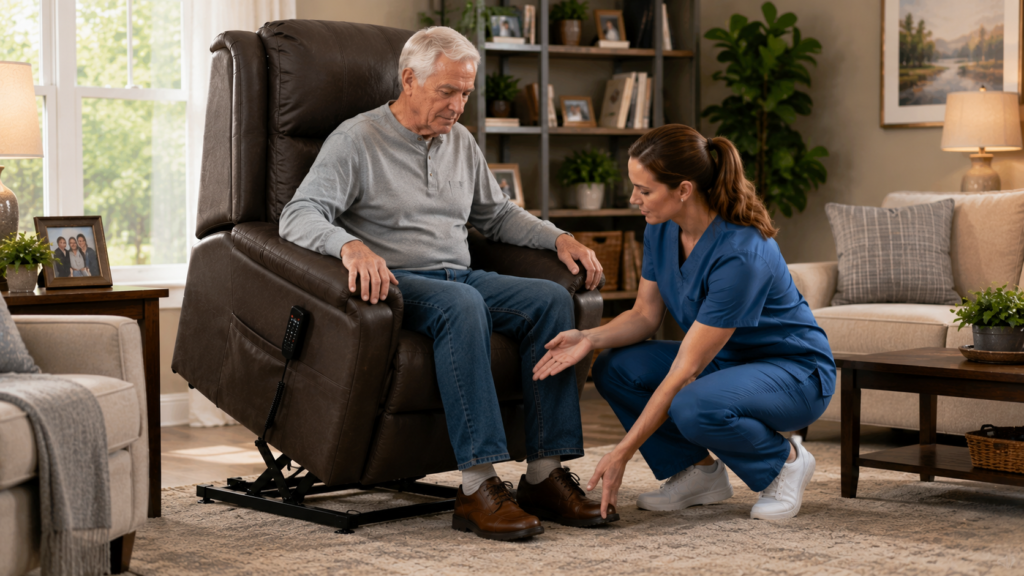
Safe transfers. Whether moving into or out of the chair, taking time and using armrests for support reduces fall risk.
Fall prevention. According to the Centers for Disease Control and Prevention, falls are a leading cause of injury among older adults, which makes stable, supportive seating an important part of home safety.
Comfort Comparison
Comfort matters for both chair types, but the details differ.
Cushion support. Lift chairs often include firmer, supportive cushioning designed for people who sit for long periods. Standard recliners may offer softer, plush cushioning geared toward relaxation.
Lumbar support. Many lift chairs are built with lower back support to reduce strain during extended sitting.
Neck support. Some lift chair models include adjustable headrests, which can help with neck comfort during recline.
Footrest. Both chair types typically include a footrest, though lift chairs often allow more precise positioning.
Sleeping comfort. Some seniors use lift chairs for overnight rest, particularly after surgery. Standard recliners can also work for short naps but are generally less suited for extended sleep positions.
Pressure relief. Adjustable positioning in lift chairs can help reduce pressure points, which matters for seniors with limited mobility or skin sensitivity.
Sitting duration. For seniors who spend many hours seated each day, a lift chair’s ergonomic design may offer more consistent support over time.
Cost Comparison
Price is often a deciding factor, so it helps to understand what affects the cost of each option.
Manual recliners tend to be the most affordable option, since they have fewer mechanical parts.
Power recliners cost more than manual models due to the added motor and electrical components, though they remain less expensive than lift chairs.
Lift chairs carry a higher price point because of the specialized lifting mechanism, motor strength, and additional safety engineering required.
Long-term value should also factor into the decision. A lift chair may reduce the need for other mobility aids or caregiver hours, which can offset the higher initial cost over time.
Maintenance costs are generally low for both chair types, though lift chairs may require occasional motor servicing.
Warranty coverage varies by manufacturer, and checking what is included, especially for the motor and lifting mechanism, is worth doing before purchase.
Maintenance and Care
Keeping either chair in good condition helps extend its lifespan and ensures safe, reliable use.
Lift Chairs
- Motor care. Avoid overloading the lifting mechanism beyond its weight capacity, and keep the motor area free of dust.
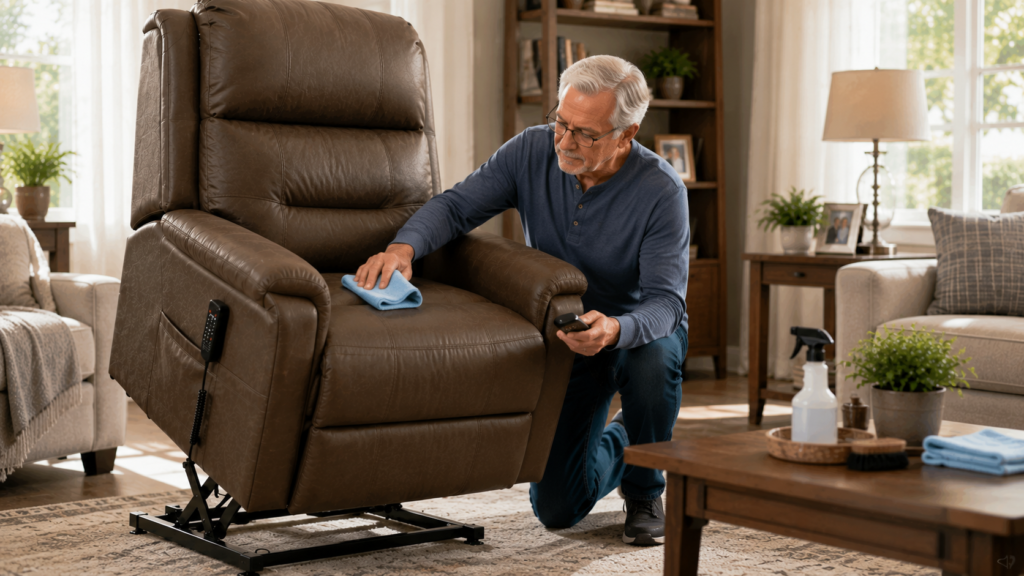
- Cleaning upholstery. Follow manufacturer guidelines for fabric or leather cleaning to avoid damaging the material.
- Electrical inspection. Periodically check the power cord and outlet connection for wear or damage.
- Remote control maintenance. Keep the remote clean and store it within easy reach to prevent loss or damage.
Standard Recliners
- Fabric cleaning. Vacuum regularly and spot-clean spills promptly to maintain appearance.
- Leather care. Use appropriate leather conditioners to prevent cracking over time.
- Mechanical parts. Check reclining mechanisms periodically for smooth operation.
- Lubrication. Apply lubricant to moving joints as needed to prevent squeaking or stiffness.
Frequently Asked Questions
Are lift chairs worth it for seniors? For seniors with mobility limitations, arthritis, or recovery needs, a lift chair can provide meaningful support and reduce fall risk when standing.
Can you sleep in a lift chair? Many people use lift chairs for short naps or overnight rest, particularly during recovery periods, though they are not a full replacement for a bed.
Is a lift chair covered by insurance? Some insurance plans, including certain Medicare plans, may cover part of the cost of the lifting mechanism when a doctor confirms medical necessity. Coverage varies, so checking with the specific insurance provider is recommended.
Do lift chairs use much electricity? Lift chairs use a small amount of electricity, mainly during the lifting and reclining motions, and typically do not add significant cost to a home’s energy use.
Is a power recliner the same as a lift chair? No. A power recliner uses a motor to adjust recline position, but it does not tilt forward to help someone stand. Only a lift chair includes this standing-assistance function.
Which chair is better after surgery? A lift chair is generally better suited for post-surgery recovery, since it reduces strain on healing joints and muscles during standing.
Are lift chairs safe? When used correctly and maintained properly, lift chairs are considered a safe mobility aid. Following weight limits and proper positioning guidelines supports safe use.
How long do lift chairs last? With proper care, a lift chair can last several years, though the motor and upholstery may eventually need servicing or replacement.
Can healthy seniors use lift chairs? Yes, seniors without mobility issues can use a lift chair comfortably, though the added lifting feature may not be necessary for their needs.
Do lift chairs require assembly? Most lift chairs arrive partially assembled and require only minor setup, such as attaching the base or footrest.

Conclusion
Both the lift chair and the traditional recliner give you comfort, but the two have different functions. While the lift chair is an excellent seat that gives you assistance in standing through its power mechanisms, it is ideal for older individuals suffering from arthritis, balance problems, weakness in muscles, and post-surgical recovery. On the other hand, the traditional recliner provides comfort for people who have no problems with standing up and moving around.
The selection process depends on one’s health condition and ability to move. It should not be guided by one’s preferences for style and price. In cases where the senior individual suffers from mobility problems, it would be wise to go for the lift chair. Where the person is mobile and has no health conditions, then he or she should consider the regular recliner.
Discussing with your physician or physiotherapist regarding the senior’s mobility problems will help make an informed choice.