
Mobility Scooters vs Power Chairs is one of the most common comparisons seniors and caregivers face when choosing a mobility aid. While the terms power chair and power wheelchair are often used interchangeably, selecting the right option depends on comfort, mobility needs, safety, and where the device will be used. This guide compares mobility scooters and power chairs to help you make a confident, informed decision.
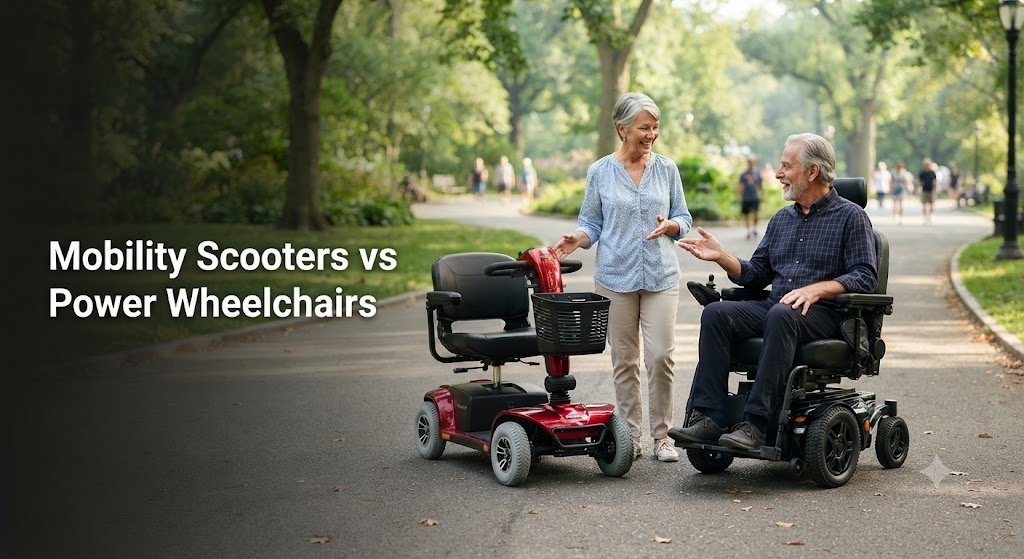
Getting this decision right matters because a poorly matched device can limit rather than expand independence. A scooter that’s too bulky for a small apartment, or a power wheelchair that can’t handle outdoor terrain, can leave a person more frustrated than before. On the other hand, the right device restores freedom, reduces fall risk, and supports long-term comfort and safety.
Table of Contents
- What Is a Mobility Scooter?
- What Is a Power Wheelchair?
- Quick Comparison Table
- Mobility Scooters vs Power Wheelchairs: Detailed Comparison
- Pros and Cons
- Which Is Better for Different Users?
- When to Choose a Mobility Scooter
- When to Choose a Power Wheelchair
- Safety Tips
- Maintenance Tips
- Common Mistakes to Avoid
- Frequently Asked Questions
- Conclusion
What Is a Mobility Scooter?
A mobility scooter is a battery-powered mobility device with a seat mounted over a wheeled base, steered with handlebars similar to a bicycle or motorcycle. It’s designed mainly for people who have some upper body strength and balance but struggle with walking long distances or standing for extended periods.
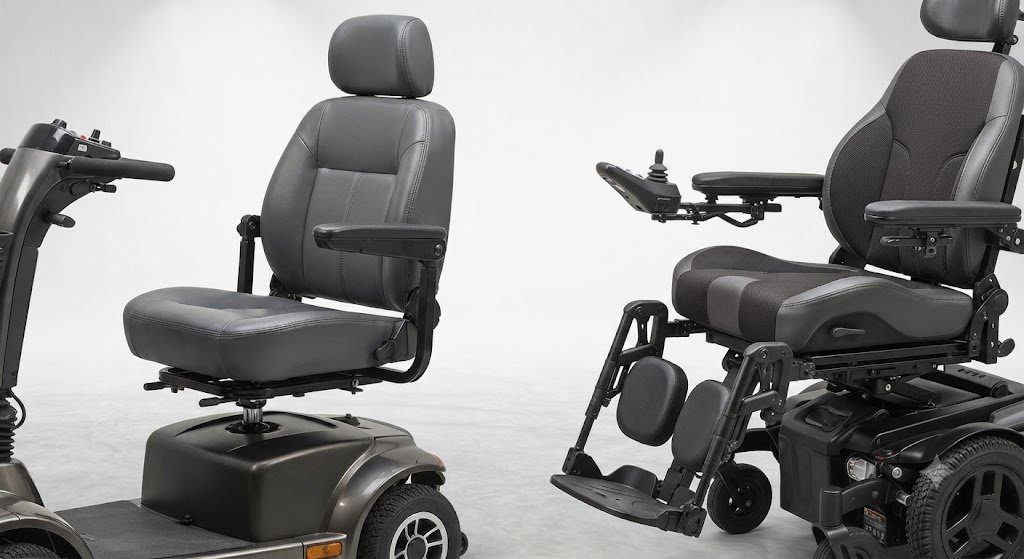
Key components include a tiller (steering column with handlebars), a captain’s-style seat, a battery pack, a basket for carrying items, and either three or four wheels.
Three-wheel vs four-wheel scooters: Three-wheel scooters offer a tighter turning radius, making them easier to maneuver in tight spaces, but they are slightly less stable on uneven ground. Four-wheel scooters provide better stability and are often preferred for outdoor mobility and rougher terrain, though they typically require more turning space.
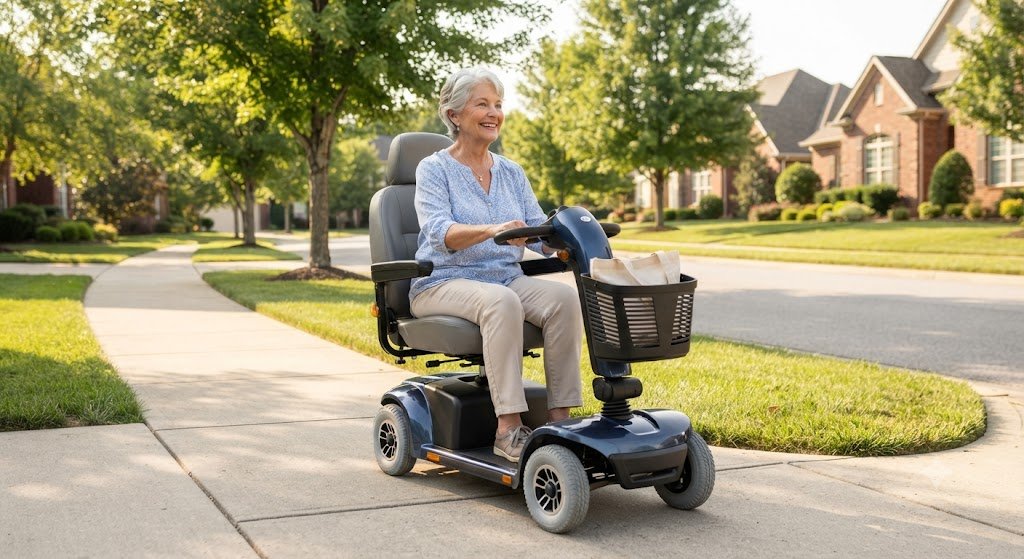
Typical users are seniors who can walk short distances, transfer independently, and have reasonably steady hand and arm control for steering.
Indoor and outdoor use: Scooters excel outdoors — on sidewalks, in parks, at shopping centers, and around large properties. Indoors, their larger frame and wider turning radius can make navigating hallways, bathrooms, and furniture-filled rooms more difficult.
Advantages include comfortable seating for long outings, a familiar steering method, and strong performance on paved or open terrain.
Limitations include a larger footprint, more difficult indoor maneuvering, and the need for adequate arm and hand strength to steer safely.
Travel Mobility Scooters vs Full-Size Mobility Scooters: Which Is Right for Seniors?
A power wheelchair (also called an electric wheelchair) is a battery-powered chair controlled by a joystick, typically mounted on an armrest. It’s built for people with more significant mobility limitations, including those who cannot walk or stand safely at all.
Joystick controls allow for precise, low-effort steering, which is especially helpful for people with limited arm strength, tremors, or coordination challenges, since joysticks require far less physical effort than steering a scooter’s handlebars.
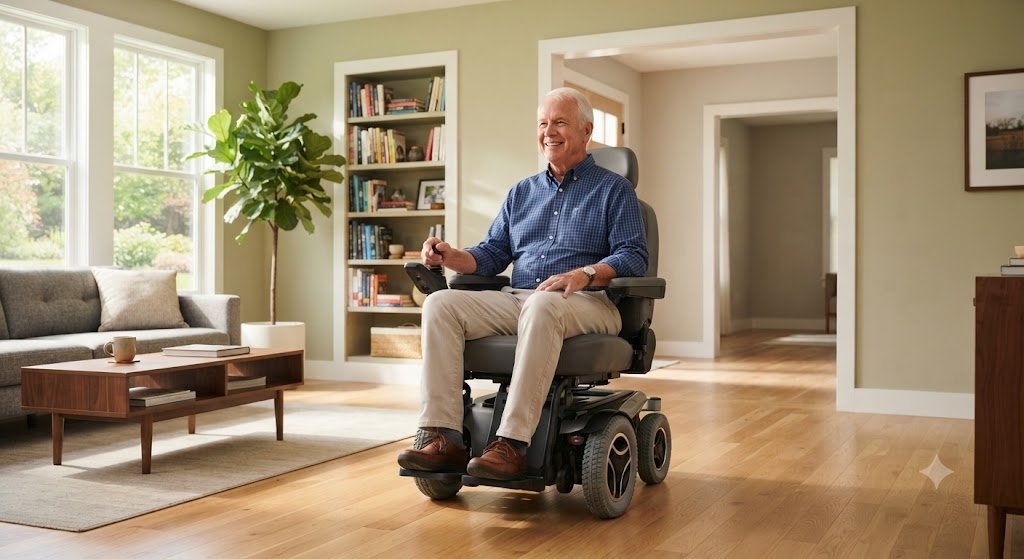
Seating system: Power wheelchairs typically offer more advanced, customizable seating, including options for tilt, recline, and specialized cushioning to prevent pressure sores and support proper posture.
Maneuverability: Because the wheels are positioned closer together and often centered under the seat, power wheelchairs can turn in a much tighter radius than scooters — some can nearly turn in place.
Indoor performance: This is where power wheelchairs shine. Their compact turning radius makes them ideal for navigating narrow hallways, kitchens, and bathrooms.
Outdoor capabilities vary by model. Some power wheelchairs are built for all-terrain outdoor use, while others are designed primarily for smooth, indoor-friendly surfaces.
Advantages include superior indoor maneuverability, low-effort joystick control, and customizable seating for medical support.
Limitations include a higher price point for advanced models, more limited range on rough terrain for some designs, and a learning curve for joystick control.
Quick Comparison Table
| Feature | Mobility Scooter | Power Wheelchair |
| Steering | Handlebar (tiller) | Joystick |
| Controls | Requires hand/arm strength | Low-effort, precise |
| Turning Radius | Wider | Tighter |
| Comfort | Comfortable seat, good for long rides | Highly customizable, medical-grade seating |
| Seat Rotation | Limited on most models | Often available, plus tilt/recline |
| Indoor Use | Fair to moderate | Excellent |
| Outdoor Use | Excellent | Good to excellent (model-dependent) |
| Travel | Varies widely by model | Varies widely by model |
| Weight Capacity | Varies widely by model | Varies widely by model |
| Battery Range | Often longer for outdoor models | Varies, generally solid for daily use |
| Portability | Easier to disassemble for transport | Bulkier, often needs a ramp or lift |
| Cost | Moderate | Moderate to higher for advanced features |
| Accessibility | Good on paved outdoor paths | Excellent for tight indoor spaces |
Mobility Scooters vs Power Wheelchairs: Detailed Comparison
Maneuverability
Power wheelchairs generally win indoors thanks to their tighter turning radius, while scooters perform better across open outdoor spaces where wide turns aren’t an issue.
Indoor Performance
A power wheelchair’s compact frame handles narrow hallways, small bathrooms, and tight kitchen layouts far more easily than most scooters.
Outdoor Performance
Scooters tend to offer smoother, faster outdoor mobility with sturdier frames built for sidewalks, parks, and shopping trips, though many power wheelchairs also handle outdoor use well.
Comfort
Scooters typically offer wide, cushioned captain’s chairs ideal for long outings, while power wheelchairs offer adjustable, medical-grade seating for all-day use and specific postural needs.
Seating Support
Power wheelchairs generally provide more advanced support, including tilt-in-space and recline features that help with pressure relief and circulation.
Ease of Transfers
Transfers can be easier on a scooter for those with decent balance, since the seat often swivels. Power wheelchairs may offer specialized transfer-friendly seating for users with more limited mobility.
Portability
Many scooters can be disassembled into lighter pieces for transport in a car trunk, making them a popular travel mobility scooter option. Power wheelchairs are often heavier and may require a ramp or wheelchair-accessible vehicle.
Transportation
If frequent car travel is a priority, a foldable or disassembling scooter often has the edge. For those who primarily travel by accessible van or with a caregiver, a power wheelchair works well too.
Storage Requirements
Scooters need space for the full frame or disassembled parts. Power wheelchairs need accessible indoor storage, ideally near a charging outlet.
Battery Range
Battery range varies by model rather than device type, but many outdoor scooters are built with longer-range batteries for extended trips, while power wheelchairs are optimized for consistent daily indoor and outdoor use.
Speed
Scooters often reach slightly higher top speeds, useful for covering longer outdoor distances quickly.
Terrain Handling
Four-wheel scooters and all-terrain power wheelchairs both handle uneven surfaces well; lighter three-wheel scooters and basic indoor wheelchairs handle rough terrain less effectively.
Accessibility
Power wheelchairs are generally easier to use in ADA-compliant indoor spaces, while scooters perform well on accessible outdoor paths and ramps.
Learning Curve
Scooters use familiar handlebar steering, which many find intuitive right away. Power wheelchairs require learning joystick sensitivity, though this typically becomes natural within a short practice period.
Maintenance
Both devices need regular battery charging, tire checks, and occasional professional servicing. Power wheelchairs may have more complex electronics due to advanced seating functions.
Durability
Well-built models of both types are designed for years of daily use; durability depends more on build quality and maintenance than on device type.
Cost
Basic scooters and basic power wheelchairs are often similarly priced, but power wheelchairs with advanced seating, tilt, or recline features tend to cost more.
Insurance Considerations (General Only)
Coverage for either device typically depends on documented medical necessity, physician evaluation, and specific insurance plan rules. Always confirm details directly with your insurance provider, as coverage varies widely.
Pros and Cons
Mobility Scooter Pros
- Comfortable for long outdoor trips
- Familiar handlebar steering
- Strong performance on paved surfaces
- Often more portable for car travel
Mobility Scooter Cons
- Wider turning radius, harder indoors
- Requires more arm and hand strength
- Larger storage footprint
Power Wheelchair Pros
- Excellent indoor maneuverability
- Low-effort joystick control
- Highly customizable seating and support
Power Wheelchair Cons
- Can be heavier and less portable
- Advanced models cost more
- Slight learning curve with joystick control
Which Is Better for Different Users?
Seniors with Mild Mobility Limitations
A mobility scooter often works well, offering outdoor freedom while preserving some walking and standing ability for short indoor movements.
Seniors with Limited Arm Strength
A power wheelchair’s joystick requires far less physical effort than steering a scooter, making it the more practical choice.
Full-Time Mobility Users
Power wheelchairs, with their advanced seating and all-day comfort features, are generally better suited for those who rely on a device throughout the day.
Arthritis
Joystick controls reduce strain on painful joints, making power wheelchairs a common recommendation, though lighter scooters can work for those with milder symptoms.
Parkinson’s Disease
Seating stability and precise, low-effort steering make power wheelchairs a strong option as symptoms progress.
Multiple Sclerosis
Because MS symptoms can fluctuate, many users benefit from a power wheelchair’s adjustable seating and reliable indoor control.
Stroke Recovery
Depending on strength and coordination on the affected side, a power wheelchair with customizable controls may offer more support during recovery.
COPD
Because energy conservation is important, a comfortable scooter for shorter outdoor errands or a power wheelchair for daily indoor use can both help reduce exertion.
Long Shopping Trips
Scooters are popular for their comfort, storage basket, and outdoor stability during extended trips.
Travel
A lightweight, foldable travel mobility scooter is often easier to transport in a car or on a trip.
Indoor Living
Power wheelchairs are typically the better fit for those who spend most of their time at home.
Outdoor Lifestyle
Scooters tend to be the preferred mobility aid for active outdoor routines, gardening, or community outings.
When to Choose a Mobility Scooter
- You have decent arm strength and balance
- You spend more time outdoors than indoors
- You want a device for errands, parks, or longer outings
- You need a portable, travel-friendly mobility device
- Your home has wide hallways and doorways
When to Choose a Power Wheelchair
- You have limited arm or hand strength
- You need tight turning ability for indoor spaces
- You require specialized seating, tilt, or recline support
- You use a mobility device for most or all of the day
- You need precise, low-effort control
Safety Tips
- Charge the battery fully before each outing and avoid letting it fully drain
- Follow posted speed limits and slow down in crowded or uneven areas
- Use ramps rather than curbs whenever possible
- Approach curbs and thresholds at a safe, perpendicular angle
- Avoid operating either device in heavy rain or icy conditions
- Always use the seat belt if the device is equipped with one
- Keep up with routine maintenance checks
- Add reflectors or lights for visibility during low-light hours
- Inspect tires regularly for wear, punctures, or low pressure
Maintenance Tips
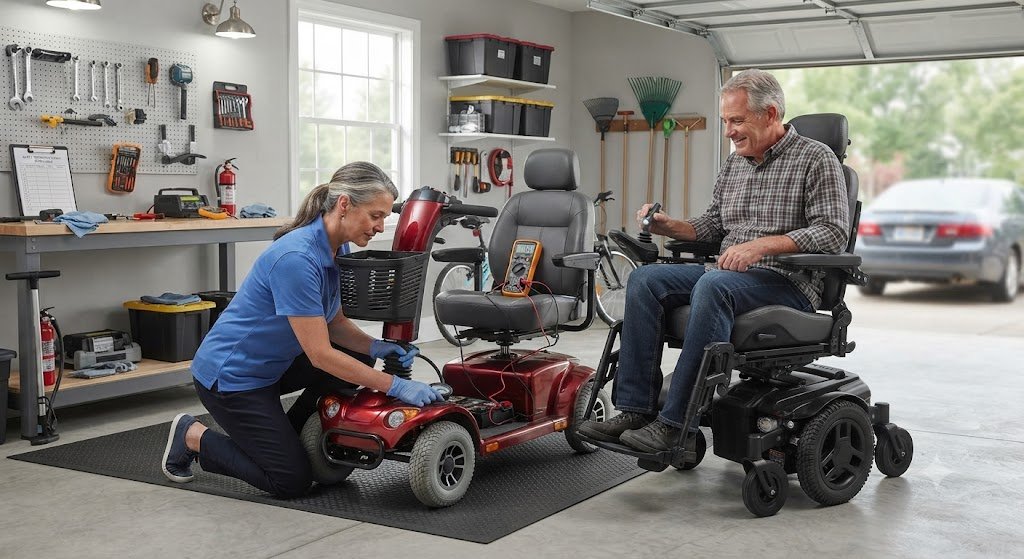
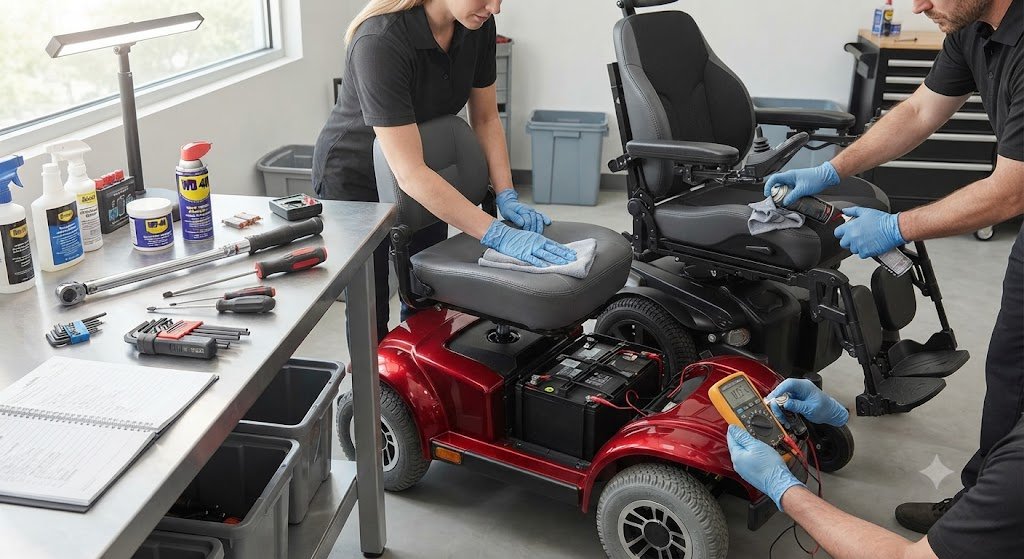
- Battery care: Charge after each use and avoid deep discharges to extend battery life
- Tire inspection: Check tire pressure and tread regularly, especially before long trips
- Cleaning: Wipe down the frame and seating regularly to prevent dirt buildup
- Storage: Store indoors or in a covered area away from moisture and extreme temperatures
- Annual servicing: Schedule a professional tune-up at least once a year to catch wear before it becomes a bigger issue
Common Mistakes to Avoid
- Choosing based only on price instead of medical need and lifestyle
- Ignoring the turning radius needed for your home’s layout
- Buying without measuring doorway and hallway widths
- Selecting a battery range that doesn’t match daily distance needs
- Forgetting to plan for transportation and vehicle storage
- Skipping a professional mobility assessment before purchasing
Frequently Asked Questions
What are the main differences between Travel Mobility Scooters vs Full-Size Mobility Scooters?
The main differences are portability, comfort, battery range, and intended use. Travel mobility scooters are lightweight and easy to transport, while full-size mobility scooters provide greater stability, longer driving range, and enhanced comfort for everyday use.
Which option is better for seniors: Travel Mobility Scooters vs Full-Size Mobility Scooters?
The best choice depends on individual needs. Seniors who travel frequently or have limited storage space often prefer travel mobility scooters, while those who need a scooter for daily outdoor use usually benefit more from a full-size mobility scooter.
Can travel mobility scooters be used every day?
Yes. Travel mobility scooters are suitable for daily errands, shopping, and short trips. However, for longer journeys or extended use, a full-size mobility scooter generally offers a smoother and more comfortable ride.
Are full-size mobility scooters safer than travel mobility scooters?
Both types are safe when used correctly. Full-size mobility scooters typically provide better stability on uneven terrain because they have larger wheels, a wider frame, and a higher weight capacity.
How do I decide between Travel Mobility Scooters vs Full-Size Mobility Scooters?
Consider where you’ll use the scooter most often, how far you typically travel, whether you need to transport it by car, and your comfort requirements. Comparing Travel Mobility Scooters vs Full-Size Mobility Scooters based on your lifestyle will help you choose the best mobility solution for long-term independence.
Conclusion
In conclusion, everything comes down to one’s ability to move, environment and need for independence, depending on what type of the device to buy. It seems like mobility scooters would be a perfect choice for seniors with decent health and interest to go outdoors. However, those individuals whose mobility problems are more serious and need for maneuvering inside is greater, should go for power wheelchairs.
Prior to making the final decision concerning either of the mentioned devices, one must get advice from a specialist to determine which kind of the device is more suitable. The right device does not necessarily mean the “best” device. It means the one that will fit best for an individual’s needs.
See more articles at our site about mobility devices.