

Table of Contents
- Introduction
- What Is a Rear-Wheel Drive Power Wheelchair?
- How Does a Rear-Wheel Drive Power Wheelchair Work?
- Key Features of Rear-Wheel Drive Power Wheelchairs
- Benefits of Rear-Wheel Drive Power Wheelchairs
- Who Can Benefit From a Rear-Wheel Drive Power Wheelchair?
- Rear-Wheel Drive vs Mid-Wheel Drive vs Front-Wheel Drive
- Possible Limitations of Rear-Wheel Drive Power Wheelchairs
- Safety Tips
- Maintenance and Care
- Frequently Asked Questions
- Conclusion
Introduction
The choice of the right kind of power wheelchair can bring about a huge improvement in comfort and independence of the elderly person. A great deal of older adults opt for rear-wheel drive power wheelchairs that allow maneuvering around comfortably and reliably both indoors and outdoors.
Rear-wheel drive electric wheelchair is the name of the electrically powered wheelchair whose drive wheels are located in the rear of the device much like those in a rear-wheel drive car. The technology is proven for decades and provides excellent stability when going fast or covering long distances.
Seniors often opt for a mobility aid like that since it decreases the strain of using a manual wheelchair and gives a possibility to save energy for visiting relatives, shopping and participating in outdoor activities. Rear-wheel drive power wheelchairs are also appreciated for the smooth ride they provide on the pavement.
In this article, you will find out about:
- The definition of rear-wheel drive wheelchair and how it operates
- The advantages of using such a wheelchair
- The target group that can use this kind of equipment
- Comparing it to mid-wheel and front-wheel drive wheelchairs
- Tips for safety and maintenance of the wheelchair
Please note that this article is informative and not medical, so you should always consult your physician about mobility devices.
What Is a Rear-Wheel Drive Power Wheelchair?
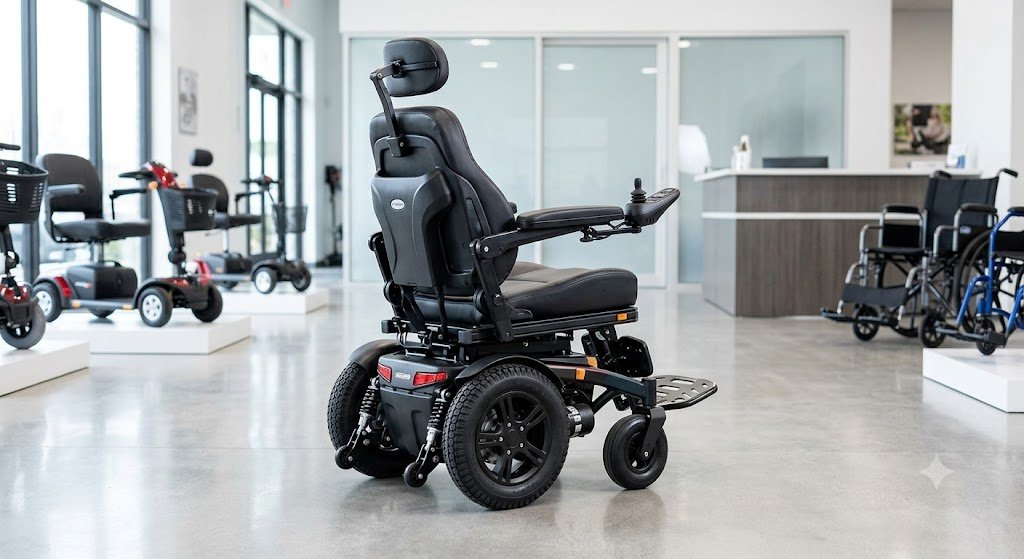
A rear-wheel drive power wheelchair is an electric mobility chair where the main drive wheels — the wheels that power movement — are located at the back of the chair. Smaller caster wheels are usually placed at the front for balance and easy direction changes
How Rear-Wheel Drive Systems Work
- The two larger wheels at the back of the chair contain the electric motors.
- These wheels push the chair forward, almost like the rear wheels of a car.
- Smaller wheels at the front help guide direction and keep the chair balanced.
Drive Wheel Placement
Drive wheel placement affects how a power wheelchair moves and turns:
- Rear-wheel drive: Motors and drive wheels sit behind the user’s seat.
- Mid-wheel drive: Drive wheels sit directly under the user, with small wheels front and back.
- Front-wheel drive: Drive wheels are placed at the front of the chair.
How Rear-Wheel Drive Differs From Front-Wheel and Mid-Wheel Models
Rear-wheel drive wheelchairs are known for stable, predictable handling, especially in a straight line and at faster speeds. Mid-wheel drive models tend to turn in a tighter circle, which some people prefer indoors. Front-wheel drive chairs can climb small curbs more easily but may feel less predictable at higher speeds. Each layout has its own strengths, which is why the right choice often depends on lifestyle and daily environment.
How Does a Rear-Wheel Drive Power Wheelchair Work?
A rear-wheel drive electric wheelchair uses several important elements:
- Battery: This device provides energy for the motors and control system.
- Motors: These devices are located in the rear wheels and provide motion forward, backward, and in different directions.
- Drive by the rear wheels: Power goes straight to the back wheels, making the motion stronger.
- Joystick control: The user manipulates the steering device with one hand (usually located on the armrest).
- Feeling stable while moving: As the drive wheels are located behind the center of mass, the device feels stable and steady in its movement, even on fast motion.
- Straight movement: This design is more appropriate for long distance travels due to stability.
Key Features of Rear-Wheel Drive Power Wheelchairs
1. Excellent Outdoor Performance
Rear-wheel drive wheelchairs are often favored for:
- Smooth sidewalks
- Parks and walking trails
- Community pathways
- Longer outdoor trips, such as visiting a neighborhood or shopping center

2. Stable Straight-Line Driving
This is one of the biggest draws of rear-wheel drive design:
- Comfortable for long-distance travel without constant steering correction
- Predictable handling, which can help build user confidence
- Smooth, even acceleration from a stop
3. Comfortable Seating
Most rear-wheel drive power wheelchairs offer a range of seating features designed for all-day comfort, such as:
- Padded cushions for pressure relief
- Adjustable armrests to suit different body types
- Footrests that support proper leg positioning
- Reclining seat options for changing position throughout the day
- Pressure-relief seating designed to reduce discomfort during extended use
4. Powerful Battery System
Battery performance is central to any electric wheelchair, and rear-wheel drive models typically include:
- Rechargeable batteries designed for daily use
- A driving range that can support errands, outings, and extended outdoor use
- Recommended charging practices, such as charging overnight or after each significant outing
- Battery maintenance routines to help extend battery life over time
Benefits of Rear-Wheel Drive Power Wheelchairs
Several benefits make rear-wheel drive power wheelchairs an ideal choice as a powered wheelchair:
- Independence: It allows users to get around the house, the neighborhood, or the community without assistance of somebody pushing them.
- Good stability: The drive wheels located in the back allow users to have stable feeling while moving fast.
- Good outdoor driving: It is perfect for long trips on paved walkways, sidewalks, and trails.
- Less physical exertion: With a motor-powered drive, users will have no problems with arm and shoulder muscles, which are involved when using manual wheelchairs.
- Smooth ride on a paved surface: This design copes perfectly with cracks and small bumps.
- Good everyday mobility: Reliable solution for shopping, visiting family members, and other activities.
- Greater confidence: Predictable behavior of such wheelchairs helps new users get more confident.
Who Can Benefit From a Rear-Wheel Drive Power Wheelchair?
A rear-wheel drive power wheelchair may be a good fit for:
- Seniors with limited mobility who want a dependable way to move around independently
- Individuals who spend more time outdoors, such as walking trails, parks, or neighborhood sidewalks
- Users who travel longer distances regularly, such as to community centers or shopping areas
- People who want a stable, predictable driving experience, especially at faster speeds
- Individuals looking for powered mobility with strong outdoor capability, in addition to indoor use
Every person’s mobility needs are different, so it’s worth thinking about daily routines, home layout, and typical outdoor environments when considering this option.
Possible Limitations of Rear-Wheel Drive Power Wheelchairs
Rear-wheel drive power wheelchairs have plenty of advantages but it is good to keep in mind several limitations of such wheelchairs:
- Greater turning radius: Usually such wheelchairs take more time to complete turning than mid-wheel drive power wheelchairs.
- Difficulties maneuvering in confined indoor spaces: Smaller rooms and narrower hallways can be a challenge.
- Some extra space for turning may be needed: Kitchen, bathroom, or small apartment should be adjusted for comfortable usage.
- Time to learn how to operate: It takes some time to get accustomed to controlling the wheelchair.
All these factors do not represent any reason why you would not choose this wheel configuration, but rather potential limitations that come with it.
Safety Tips
Using a rear-wheel drive electric wheelchair safely comes down to good habits and regular upkeep:
- Learn joystick controls in a safe, open space before using the chair in busier areas.
- Drive slowly indoors, where space is more limited and turns are tighter.
- Check surroundings before turning, especially given the larger turning radius of rear-wheel drive models.
- Charge batteries regularly to avoid running low during an outing.
- Inspect tires and wheels periodically for wear, damage, or debris.
- Avoid unsafe slopes or inclines that exceed the manufacturer’s recommended limits.
- Follow manufacturer safety guidelines for weight limits, terrain, and usage instructions.
Maintenance and Care
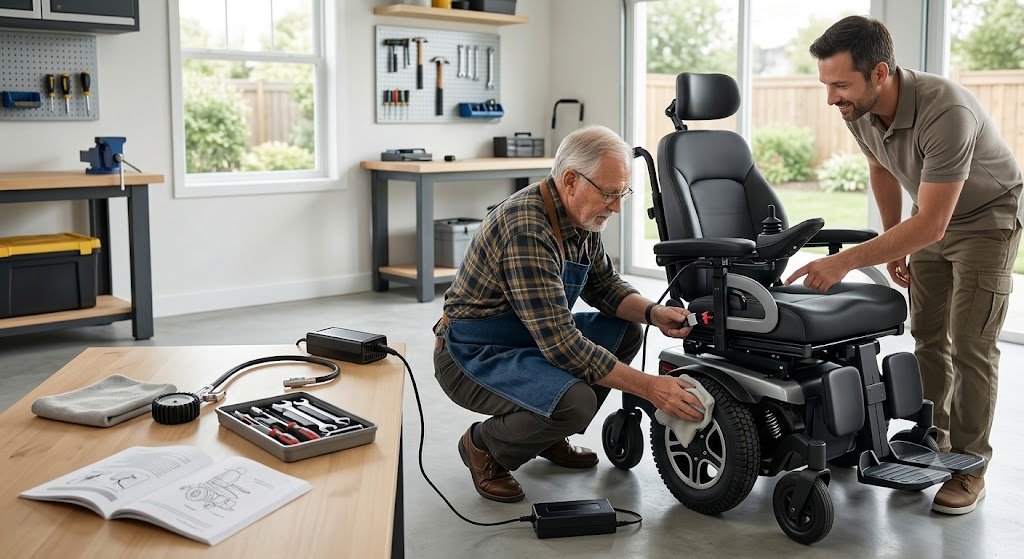
Routine servicing can ensure the safe and reliable operation of your rear-wheel drive power wheelchair:
- Daily inspection: This should include tires, brakes, and joystick prior to usage.
- Battery charging: You must charge the wheelchair battery as per the manufacturer guidelines and never leave the battery completely discharged.
- Cleaning: Clean the wheelchair seat, arm rests, and framework regularly.
- Inspection of tires and wheels: Examine them for wear, damage, and debris stuck between them.
- Maintenance of joystick: Keep the joystick dust-free and dry.
- Proper storage: Store the wheelchair in a cool, dry place, away from extreme heat or cold conditions.
Frequently Asked Questions
- What is a rear-wheel drive power wheelchair? A rear-wheel drive power wheelchair is an electric wheelchair with main drive wheels and motors mounted at the rear of the chair, providing stability and predictability.
- Are rear-wheel drive power wheelchairs good for seniors? Yes. Some seniors like the stability, smooth operation, and performance of a rear-wheel drive wheelchair.
- Can rear-wheel drive wheelchairs be used outdoors? Yes. Rear-wheel drive wheelchairs are considered excellent for use outdoors, including sidewalks, parks, and other outdoor surfaces.
- How do rear-wheel drive differ from mid-wheel drive? Rear-wheel drive wheelchairs have their drive wheels in the rear and offer stable and straight line operation, while mid-wheel drive wheelchairs have the drive wheels located centrally and have a tighter turning radius.
- What is the battery life of rear-wheel drive power wheelchairs? The time a battery lasts may depend on the model used, but rechargeable batteries are usually designed for regular charging and performing errands and outings on a daily basis.
- Are rear-wheel drive power wheelchairs easy to control? In general, the joysticks are fairly easy to learn to operate once you get used to them.
Conclusion
A rear-wheel drive wheelchair allows stable and comfortable traveling, especially outside. The design of such a vehicle is reliable when driving in a straight line, provides good performance outside and offers various comfortable sitting possibilities. Therefore, it can be recommended to seniors who want to have a reliable means of moving outdoors and feel comfortable while using it.
Nevertheless, the selection of the type of wheelchair still depends on the lifestyle and preferences of a senior and his or her family members. By comparing rear-wheel, mid-wheel, and front-wheel drives, seniors and their family members may choose the one that suits their needs both inside and outside.
As usual, one should consult a healthcare provider about the best means of moving.