

Table of Contents
- Introduction
- What Is a Standard Walker?
- What Is a Rollator Walker?
- Rollator vs Standard Walker: Key Differences
- Pros and Cons of a Standard Walker
- Pros and Cons of a Rollator
- Which Walker Is Safer?
- Best for Indoor Use
- Best for Outdoor Use
- Who Should Choose a Standard Walker?
- Who Should Choose a Rollator?
- Cost Comparison
- Maintenance Tips
- Common Mistakes Seniors Make
- Frequently Asked Questions
- Conclusion
Introduction
Choosing between a Rollator vs Standard Walker is one of the most important decisions when selecting a walking aid. The right choice can improve safety, confidence, and independence, while the wrong one may increase the risk of falls or make everyday activities more difficult. Understanding the differences between these mobility aids helps seniors and caregivers make an informed decision.
When comparing a Rollator vs Standard Walker, it’s important to know that both are designed to improve balance and reduce the risk of falls, but they serve different needs. A rollator features wheels, hand brakes, and a built-in seat, making it ideal for active seniors who enjoy walking outdoors or covering longer distances. A standard walker has four stable legs without wheels, providing maximum support for individuals recovering from surgery, coping with weakness, or requiring greater stability indoors.
This guide explains everything you need to know about Rollator vs Standard Walker, including their key differences, benefits, safety features, indoor and outdoor performance, maintenance, and how to choose the best walking aid for your mobility needs..
What Is a Standard Walker?
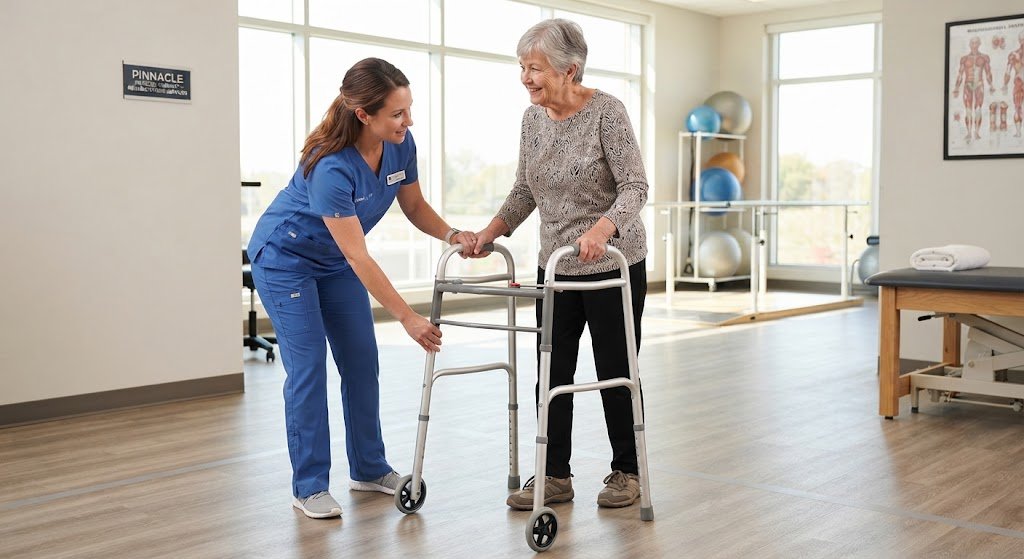
A standard walker is a simple, lightweight frame with four fixed legs and no wheels. It offers the highest level of stability of any walking aid because it does not move on its own. To use it, a person lifts the walker slightly, moves it forward a short distance, and then steps forward to catch up with it.
Key features of a standard walker:
- Four fixed legs for maximum stability
- Lift-and-move design, not a rolling motion
- Lightweight aluminum frame, usually easy to carry
- Best suited for indoor use on flat, even flooring
- Ideal for people with significant balance problems who need a device that will not roll away from them
Because it does not move until the user lifts it, a standard walker is often recommended by physical therapists for people who are still building strength and confidence after an injury or surgery.
What Is a Rollator Walker?
A rollator walker, sometimes just called a “rollator,” is a wheeled walking aid built for people who need support but also want to keep moving at a more natural walking pace. Instead of four fixed legs, a rollator has three or four wheels, along with hand brakes, a built-in seat, and often a small storage basket.
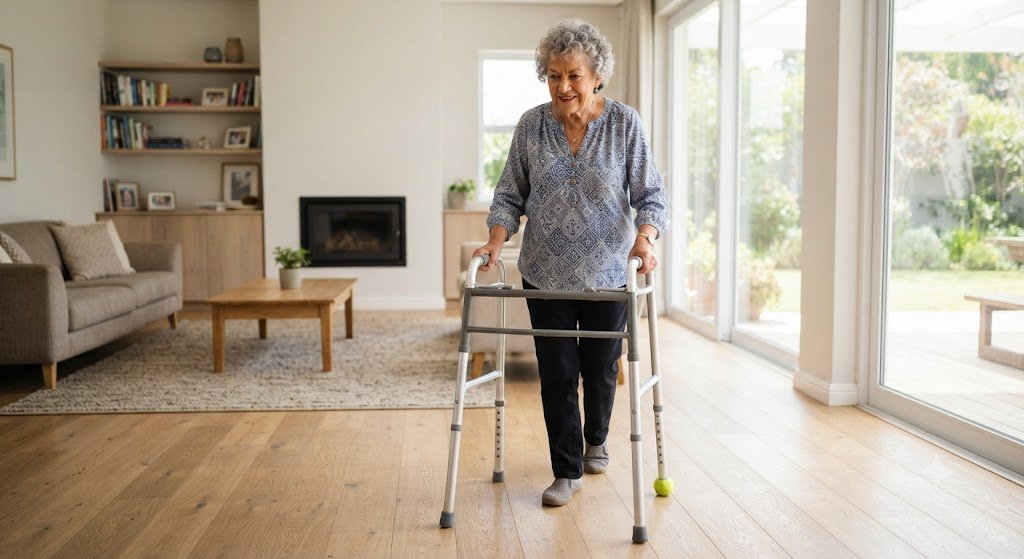
Key features of a rollator:
- Four wheels that allow smooth, continuous movement
- Hand brakes for controlling speed and stopping safely
- Built-in seat for resting during walks
- Storage basket for carrying personal items, groceries, or a water bottle
- Better suited for people with reasonably good balance who want to walk more naturally
- Great for outdoor use, including sidewalks, parks, and shopping trips
Because the wheels allow continuous forward motion, a rollator feels closer to normal walking than a standard walker does.
Rollator vs Standard Walker: Key Differences
| Features | Standard Walker | Rollator |
| Wheels | None (4 fixed legs) | 3 or 4 wheels |
| Stability | Very high | Moderate to high |
| Speed | Slower, stop-and-go | Faster, continuous pace |
| Brakes | Not applicable | Hand brakes included |
| Seat | Not included | Usually included |
| Basket | Rarely included | Usually included |
| Indoor use | Excellent | Good |
| Outdoor use | Linited | Excellent |
| Weight | Lighter | Lighter |
| Portability | Easy to fold and carry | Foldable, but bulkier |
| Maneuverability | Requires lifting | Rolls smoothly |
| User strength needed | Moderate (must lift) | Lower (no lifting) |
| Balance support | Maximum | Good, but less than standard walker |
| Safety for unsteady users | Higher | Requires more balance and brake control |
| Price | Generally lower | Generally lower |
| Storage space | Compact | Slightly larger footprint |
Strengths and Weaknesses of Standard Walker
Strengths
- Provides the highest level of support among all other walking aids
- Has simple design without any brakes and wheels
- It is lightweight and can be easily folded for transportation
- It is usually the cheapest choice
- Does not roll down by itself
Weaknesses
- Makes user lift the walker with every move
- More time-consuming and tiring for long trips
- Cannot be used outdoors due to uneven surface
- There is no seat for resting
- May be difficult to use if person has problems with arms or shoulders strength
- Strengths and Weaknesses of Rollator
Pros and Cons of a Rollator
Strengths
- Provides natural walking pace
- Has seat for resting when needed
- A storage basket provides additional convenience
- Can be used both outdoors and indoors
- Does not require lifting from the floor
Weaknesses
- Requires strong hands to use the brakes properly
- Less stable than the standard walker for people with serious balance problems
- Slightly heavier and bulkier
- Is usually more expensive
- Wheels and brakes require regular maintenance
Which Walker Is Safer?
Safety depends heavily on the individual’s physical condition, not just the device itself. A few key factors determine which option offers better fall prevention:
- Balance ability: People with significant balance problems are usually safer with a standard walker, since it will not move unless lifted.
- Brake usage: Rollators are only as safe as the user’s ability to apply the hand brakes correctly and consistently.
- Physical strength: Lifting a standard walker with each step requires decent arm and shoulder strength, which not every senior has.
- Proper adjustment: Regardless of the type, a walker that is set to the wrong height increases fall risk. The handles should sit at approximately wrist height when the arms hang naturally at the sides.
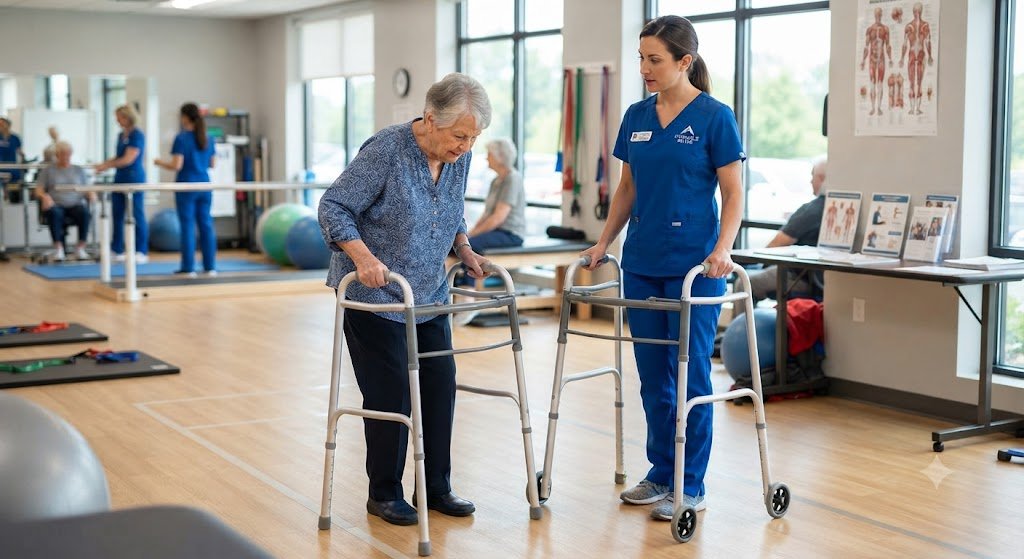
- User ability: A physical or occupational therapist can assess gait, strength, and balance to recommend the safer option for a specific person.
In general, standard walkers are considered safer for people with serious balance or stability concerns, while rollators are safer for people with adequate balance who need a more natural walking motion and a place to rest.
Best for Indoor Use
For tight spaces like hallways, bathrooms, and small rooms, the standard walker usually performs better. Its compact, non-rolling design offers precise control and minimal risk of rolling into furniture or walls. Rollators can work indoors too, especially in homes with open floor plans, but their larger frame and wheels make them slightly less ideal for narrow indoor spaces.

Best for Outdoor Use
For outdoor mobility, the rollator is the clear winner. Its wheels roll smoothly over sidewalks, driveways, and park paths, and the seat provides a convenient place to rest during longer outings. Standard walkers struggle on uneven outdoor terrain since they must be lifted with every step, which becomes tiring and impractical over longer distances.
Who Should Choose a Standard Walker?
A standard walker is often the better choice for:
- People recovering from recent surgery, such as hip or knee replacement
- Stroke survivors who are rebuilding balance and coordination
- Individuals with severe balance problems
- People with weak or unstable legs
- Those with limited walking ability who need maximum support with each step
Who Should Choose a Rollator?
A rollator tends to work better for:
- Active seniors who want to stay mobile in the community
- People planning longer walks that require occasional rest
- Individuals managing arthritis, where lifting a walker causes joint pain
- Seniors who enjoy shopping trips and need a basket for carrying items
- People who walk in parks or on outdoor paths regularly
- Travelers who want a foldable option with a built-in seat
Cost Comparison
Prices vary based on brand, materials, and features, but here are general U.S. price ranges:
- Budget standard walkers: $30–$60
- Budget rollators: $60–$100
- Mid-range standard walkers: $60–$120
- Mid-range rollators: $100–$200
- Premium standard walkers: $120–$200 (often with wheel attachments or ergonomic grips)
- Premium rollators: $200–$400+ (heavy-duty frames, extra-wide seats, all-terrain wheels)
Factors that affect price include frame material (aluminum vs. steel), weight capacity, seat quality, wheel size, and added features like cup holders or adjustable backrests. Some rollators and walkers may be partially covered by Medicare or private insurance if prescribed by a doctor, so it’s worth checking coverage before purchasing.
Maintenance Tips
Standard Walker
- Check and replace rubber leg tips regularly, since worn tips reduce grip and increase slip risk
- Wipe down the frame with a damp cloth to remove dirt and buildup
- Inspect the frame periodically for loose bolts, cracks, or bent legs
Rollator
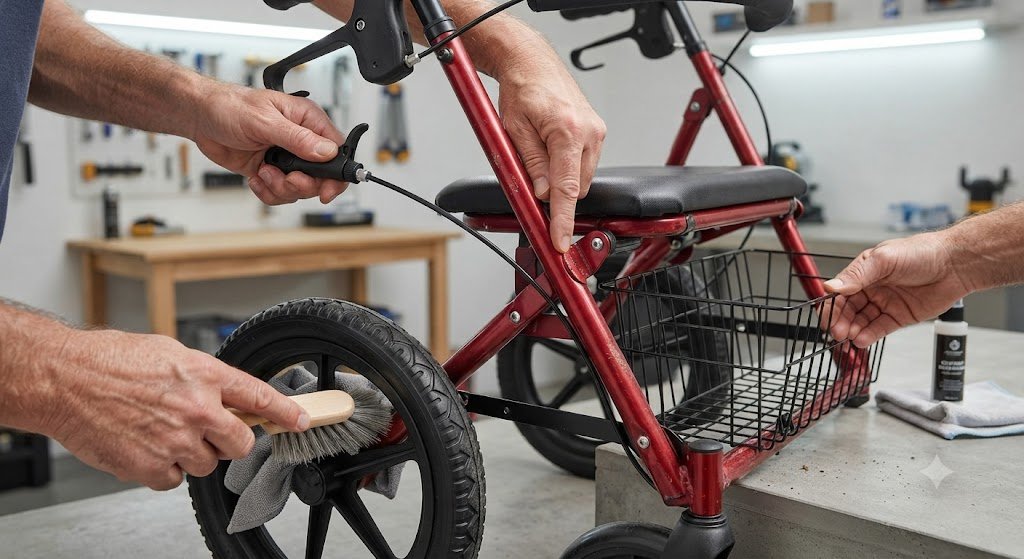
- Clean wheels regularly to remove dirt, hair, or debris that can affect rolling smoothness
- Check and adjust hand brakes so they engage properly and consistently
- Inspect the seat for tears, looseness, or weight capacity wear
- Check tire pressure and tread if the rollator uses pneumatic (air-filled) tires
- Test the folding mechanism periodically to ensure it locks securely when open
Common Mistakes Seniors Make
- Using the wrong height setting, which throws off posture and balance
- Ignoring the brakes on a rollator, especially when starting to walk or sitting down
- Overloading the basket with heavy items, which can tip the rollator
- Leaning too far forward or backward, instead of maintaining upright posture
- Continuing to use a damaged walker with bent legs, worn tips, or loose brakes
- Using improper walking technique, such as stepping too far ahead of the device
Frequently Asked Questions
Is a rollator better than a standard walker? Neither is universally “better.” A rollator suits people with decent balance who want a natural walking pace, while a standard walker suits those who need maximum stability.
Which walker prevents falls better? For people with severe balance issues, a standard walker generally offers more fall prevention since it doesn’t move until lifted.
Can a rollator be used indoors? Yes, though it works best in homes with wider hallways and open spaces rather than very tight rooms.
Is a standard walker easier to use? It’s mechanically simpler, but it requires more upper body strength since it must be lifted with each step.
Which walker is covered by insurance? Both types may be covered under Medicare Part B or private insurance with a doctor’s prescription, depending on medical necessity.
Which walker is best after surgery? A standard walker is often recommended right after surgery because of its high stability, though this varies by procedure and doctor recommendation.
How do I choose the correct walker? Consider balance ability, strength, indoor vs. outdoor needs, and consult a physical therapist or doctor for a personalized recommendation.
Are rollators safe for seniors? Yes, for seniors with adequate balance and hand strength to use the brakes correctly.
Can I travel with a rollator? Most rollators fold for transport in a car trunk, though they are bulkier than standard walkers for air travel.
How long does a walker last? With proper maintenance, a quality walker or rollator can last several years, though rubber tips, wheels, and brakes may need periodic replacement.
Do rollators require more maintenance than standard walkers? Yes, because of moving parts like wheels and brakes that need regular checks.
Can a senior switch from a standard walker to a rollator later? Yes, many seniors start with a standard walker during recovery and transition to a rollator as strength and balance improve.

Conclusion
All in all, whether to choose a rollator or a normal walker depends on personal preferences. In cases where an individual finds it hard to keep the balance or has had a recent surgery, the normal walker would be the most appropriate since it is the safest option available. On the other hand, rollators offer natural walking rhythm, resting seat, and improved performance outdoors. Rollators thus make a good choice for active elderly individuals.
To conclude, there is no right answer in this situation. Everyone is unique, and the most appropriate walker is the one that fits your health conditions perfectly at the time. If you are unsure, it is advisable to consult a doctor or physical therapist.
Would you like to know more about walkers? Visit SeniorMobilityCare.com today!