
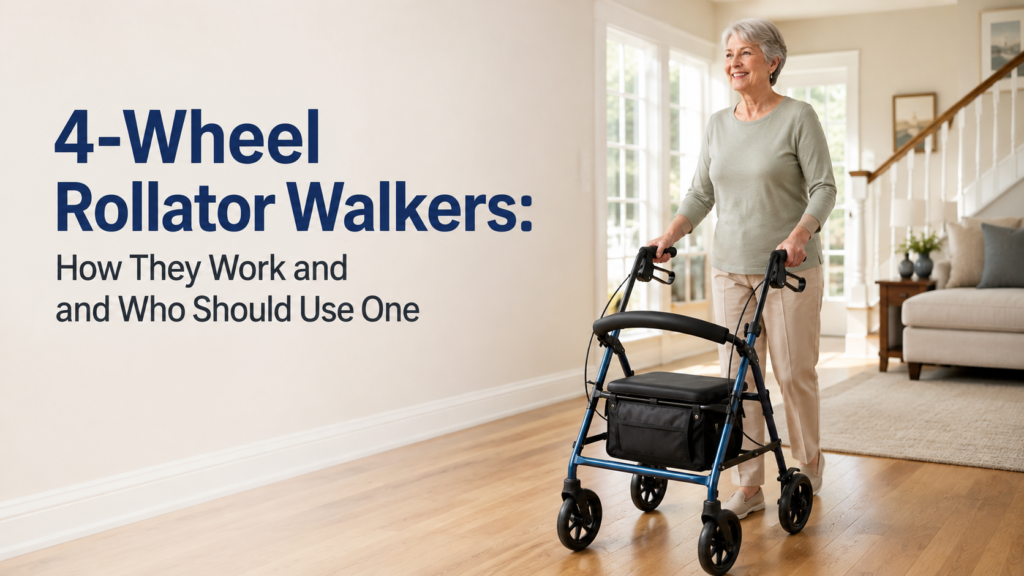
Feeling a little less steady on your feet than you used to? Getting tired halfway through a walk around the block? Wishing you had somewhere to sit down when you’re out and about? These are common experiences as people get older, and they lead many seniors and their families to start researching mobility aids.
One option you’ll come across is the 4 wheel rollator. Unlike a traditional walker, which often needs to be lifted or advanced step by step, a rollator is generally designed to roll forward on wheels while you walk behind it. That difference alone makes it worth understanding — but a rollator isn’t the right choice for everyone.
This guide explains how a 4-wheel rollator walker works, who may benefit from one, and what to consider before choosing one. It is intended for general education, not medical advice.
Table of Contents
- What Is a 4-Wheel Rollator Walker?
- How Does a 4-Wheel Rollator Work?
- Key Features of a 4-Wheel Rollator
- Who Should Consider a 4-Wheel Rollator?
- Who May Not Be a Good Fit for a 4-Wheel Rollator?
- 4-Wheel Rollator vs Standard Walker
- How to Choose a 4-Wheel Rollator
- How to Adjust a 4-Wheel Rollator
- How to Use a 4-Wheel Rollator Safely
- Common 4-Wheel Rollator Mistakes
- Frequently Asked Questions
- When to Ask a Professional for Help
- Conclusion
What Is a 4-Wheel Rollator Walker?
A 4 wheel rollator walker is a mobility aid built on a frame with four wheels, handles, and (on most models) a padded seat. It’s designed to be pushed forward as you walk, rather than picked up and set down with each step.
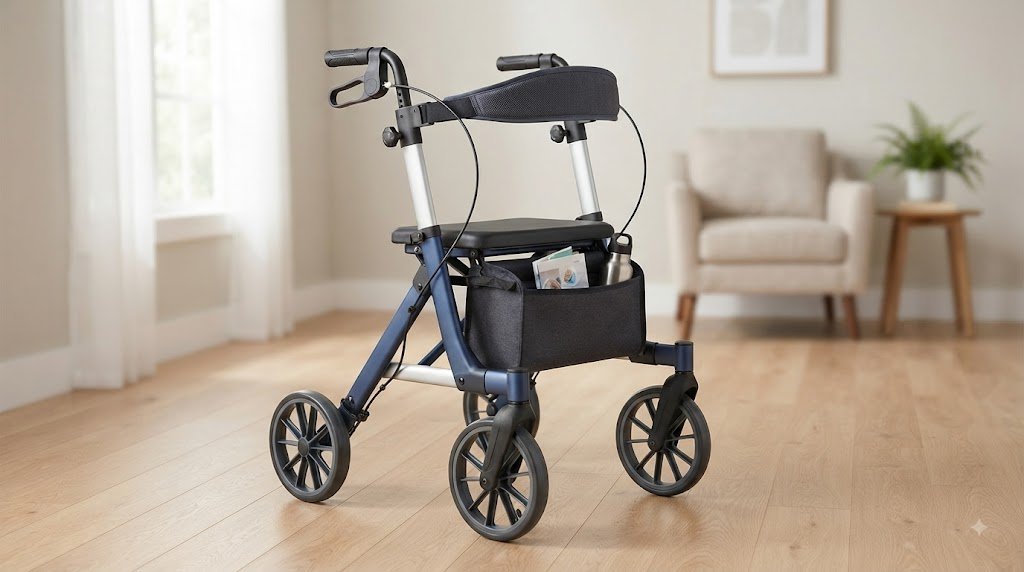
The frame is usually made of lightweight metal, such as aluminum, and folds for storage or transport. The handles sit at the top of the frame and are where you place your hands to steady yourself and guide the rollator forward. Most models include hand brakes, similar to bicycle brakes, that let you slow down or stop the wheels. Many rollators also have a fold-down seat, so you can rest when needed, and a small basket, pouch, or tray for carrying personal items like a water bottle or phone.
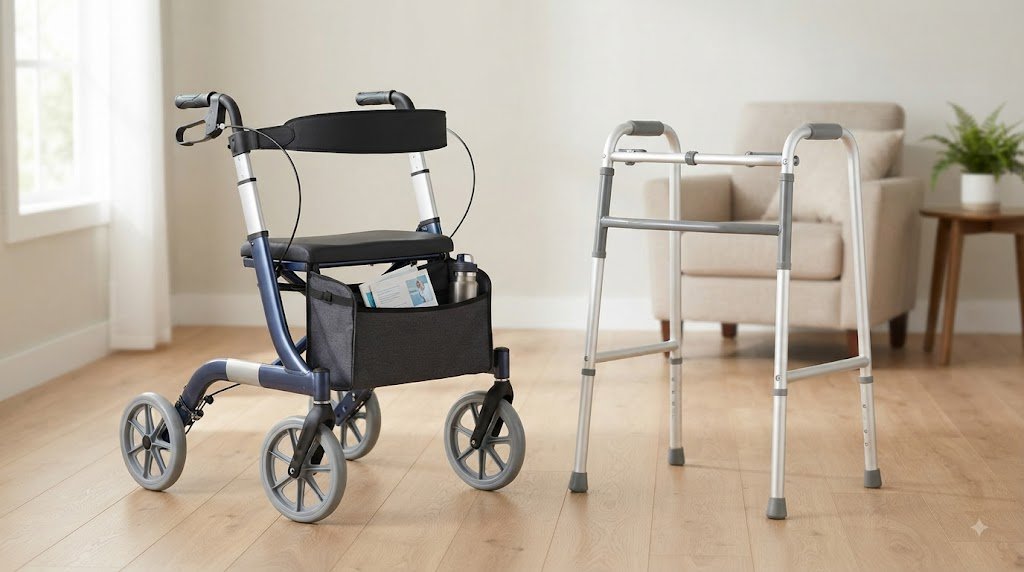
The biggest difference between a four wheel rollator and a standard walker is movement. A standard walker typically has no wheels, or sometimes two, and is lifted or shifted forward with each step. A 4-wheel rollator rolls continuously, which can make walking feel smoother and less tiring for some users — though it also requires more hand and arm control to manage speed and direction safely.

How Does a 4-Wheel Rollator Work?
While exact features vary by brand and model, the basic operation of a rollator walker generally follows these steps:
- Stand upright behind the rollator, positioned within the frame.
- Hold the handles with a relaxed, comfortable grip.
- Push the rollator forward as you walk, letting the wheels roll ahead of you.
- Use the hand brakes to slow down or stop when needed.
- Engage the parking brakes whenever the rollator is stationary.
- If the model has a seat, always engage the parking brakes before sitting down.
Because designs differ between manufacturers, it’s important to read the owner’s manual for your specific rollator and follow the instructions provided.
Key Features of a 4-Wheel Rollator
Four Wheels
The four wheels are what allow the rollator to move continuously across a surface instead of being lifted with each step. Wheel size and material affect how the rollator handles different terrain — larger wheels tend to roll more smoothly over uneven ground, while smaller wheels are often lighter and easier to maneuver indoors.
Hand Brakes
Hand brakes let the user control speed and come to a stop, much like brakes on a bicycle. Learning how to use them confidently is an important part of using any rollator walker safely.
Parking Brakes
Parking brakes lock the wheels in place. They’re typically engaged whenever the rollator is not being actively pushed — for example, before sitting on the seat or when the rollator is left standing.
Seat
Many 4-wheel rollators include a built-in seat, giving the user a place to rest during longer outings without needing to find a bench or chair.
Backrest
Some rollator models include a backrest attached above the seat, offering additional support and comfort while seated.
Adjustable Handles
Handle height can usually be adjusted to match the user’s height. Proper handle height supports better posture and a more comfortable, controlled walking position.
Storage
Baskets, pouches, or under-seat compartments allow users to carry lightweight personal items, such as a phone, keys, or a small bag, while keeping their hands free for the handles.
Who Should Consider a 4-Wheel Rollator?
A 4-wheel rollator may be a helpful option for people who:
- Can walk independently but want some additional support
- Get tired or winded during longer walks and would like the option to sit and rest
- Want a mobility aid that rolls, rather than one that must be lifted with each step
- Need some help with balance while walking, depending on individual ability
- Plan to use a mobility aid for both indoor and outdoor walking (depending on the specific model)
Whether a rollator is appropriate depends on the individual. Words like “may benefit” and “depending on individual needs” matter here — this article isn’t meant to diagnose or tell you definitively whether you need one. That determination is best made with input from a healthcare professional who knows your specific situation.
Who May Not Be a Good Fit for a 4-Wheel Rollator?
A 4-wheel rollator is not the right choice for everyone. It may not be appropriate for people who:
- Have difficulty controlling or steering the rollator
- Have difficulty operating hand brakes reliably
- Need substantial, fixed weight-bearing support while walking
- Have difficulty maintaining an upright walking position
- Have difficulty safely sitting down onto or standing up from the seat
- Experience significant balance problems that make a wheeled device hard to control safely
In these situations, a standard walker, a different type of mobility aid, or additional physical therapy may be more appropriate. A qualified healthcare professional can help evaluate which option fits best.
4-Wheel Rollator vs Standard Walker
| Feature | 4-Wheel Rollator | Standard Walker |
|---|---|---|
| Wheels | Four wheels | Usually no wheels |
| Movement | Rolled forward | Often lifted or advanced step-by-step |
| Seat | Often available | Usually unavailable |
| Brakes | Usually included | Usually not included |
| Maneuverability | Generally easier to roll | Generally more controlled |
| Weight-bearing support | Varies | Often provides more fixed support |
| Typical use | Walking assistance and mobility | Additional stability and support |
Neither option is universally “better.” The right mobility aid depends on factors like balance, strength, walking ability, the environment you’ll use it in, and your ability to safely operate brakes. A healthcare provider or physical therapist can help match the features of a rollator or walker to your specific needs.
How to Choose a 4-Wheel Rollator
If you’re comparing models, consider:
- Handle height relative to your height
- Weight capacity of the frame and seat
- Seat height and width for comfort
- Wheel size for the terrain you’ll use it on
- Frame weight, especially if you’ll be lifting it into a car
- Brake design and how easy it is to operate
- Folding mechanism for storage and transport
- Indoor vs. outdoor use
- Storage features, such as baskets or pouches
- Doorway and hallway width in your home
Always check the manufacturer’s specifications for exact measurements, weight limits, and recommended use before purchasing.

How to Adjust a 4-Wheel Rollator
Getting the fit right matters for comfort and control. General principles include:
- Stand upright in your normal posture
- Keep your shoulders relaxed, not hunched
- Hold the handles at a height that doesn’t require reaching up or bending down
- Avoid leaning too far forward over the rollator
- Make sure both handles are adjusted to the same height
- Check that the brakes engage and release properly before use
Adjustment steps vary between models, so refer to the specific instructions that came with your rollator.
How to Use a 4-Wheel Rollator Safely
Following good habits can make a real difference in day-to-day safety:
- Stay within the rollator’s frame while walking — don’t let it get too far ahead of you.
- Keep both hands on the handles when appropriate for your model.
- Look ahead, not down at your feet, while walking.
- Avoid pushing the rollator too far in front of your body.
- Use the hand brakes to control your speed, especially on slopes.
- Always engage the parking brakes before sitting down.
- Avoid sitting on the rollator seat while on slopes or uneven surfaces.
- Use extra caution on wet, loose, or uneven ground.
- Don’t overload the storage basket or pouch beyond its rated capacity.
- Inspect the wheels, brakes, and frame regularly for wear or damage.
- Always follow the manufacturer’s specific instructions for your model.
For readers who want additional guidance from a clinical source, the U.S. Department of Veterans Affairs offers a helpful resource where you can learn more about using a 4-wheeled walker safely.
Common 4-Wheel Rollator Mistakes
Even experienced users can fall into these habits:
- Adjusting the handles too low or too high
- Walking too far behind the rollator instead of staying within the frame
- Leaning heavily on the handles instead of maintaining upright posture
- Forgetting to engage the parking brakes before sitting
- Carrying too much weight in the storage basket
- Moving too quickly for comfort or control
- Using the rollator on terrain it wasn’t designed for
- Skipping regular brake checks
- Continuing to use a rollator with a damaged frame or worn wheels

Frequently Asked Questions
1. What is a 4-wheel rollator? A 4-wheel rollator is a mobility aid with four wheels, handles, and typically a seat, designed to be pushed forward while walking rather than lifted with each step.
2. Is a 4-wheel rollator the same as a walker? Not exactly. Both are mobility aids, but a standard walker is usually lifted or advanced step-by-step, while a rollator rolls continuously on its wheels.
3. Who should use a 4-wheel rollator? It may suit people who can walk independently but want extra support, get tired on longer walks, or want a mobility aid with a seat — depending on individual balance and strength.
4. Is a rollator better than a standard walker? Neither is universally better. The right choice depends on a person’s balance, strength, and specific mobility needs.
5. Can you sit on a 4-wheel rollator? Many models include a seat for resting. The parking brakes should always be engaged before sitting.
6. How high should rollator handles be? Handles are generally adjusted so you can hold them comfortably without hunching over or reaching up, but exact guidance depends on the individual and the model.
7. Are 4-wheel rollators safe for seniors? When used correctly and matched to the right user, rollators can support safer walking. Proper fit, brake use, and terrain awareness all matter.
8. Can a 4-wheel rollator be used outdoors? Many models are designed for both indoor and outdoor use, but this varies by wheel size and design. Check the manufacturer’s specifications.
9. What is the difference between a rollator and a rolling walker? “Rolling walker” and “rollator” are often used interchangeably, though rollator typically refers to models with brakes and a seat.
10. How do you use rollator brakes? Hand brakes, located near the handles, slow or stop the wheels when squeezed. Parking brakes lock the wheels in place and should be engaged when the rollator is stationary.
When to Ask a Professional for Help
Consider speaking with a physical therapist, occupational therapist, doctor, or other qualified healthcare professional if you or a loved one:
- Are unsure which mobility aid is appropriate
- Have difficulty controlling the rollator
- Experience frequent falls
- Notice significant changes in walking ability
- Have difficulty operating the brakes
- Have trouble getting on or off the rollator seat safely
A professional can assess individual balance, strength, and walking patterns to recommend the mobility aid that best fits your needs.
Conclusion
A 4-wheel rollator walker is a mobility aid built around four wheels, adjustable handles, hand brakes, and often a seat, designed to roll forward as the user walks. It may benefit people who want extra support during walks, get tired over longer distances, or prefer a mobility aid they can rest on when needed — but it isn’t the right fit for everyone, particularly those who need more fixed support or have difficulty controlling a wheeled device.
Choosing between a rollator and a standard walker comes down to individual balance, strength, and daily needs. Correct adjustment and safe habits — like using the brakes properly and staying within the frame while walking — matter just as much as the device itself. If you’re unsure which option is right for you or a loved one, a healthcare professional can help guide that decision with confidence, supporting safer mobility and greater independence.