
Introduction
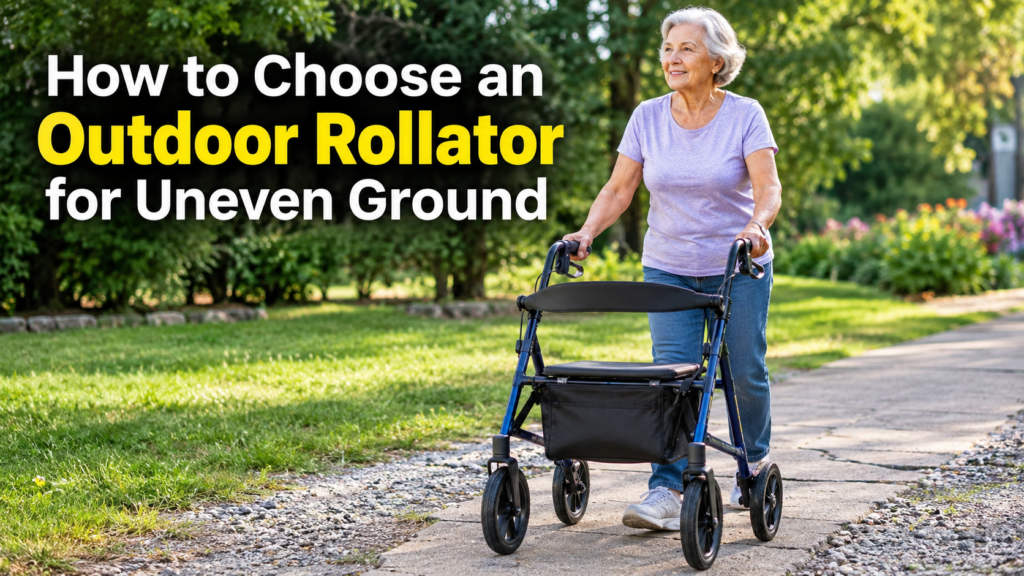
Walking outdoors is rarely as predictable as walking across a smooth kitchen floor. Sidewalks crack, park paths turn to gravel, lawns have soft or uneven patches, and driveways often slope more than they appear to. For anyone who relies on a rollator, these small changes in surface can make a big difference in comfort, confidence, and control.
An outdoor rollator is generally built with these realities in mind. But not every rollator is designed the same way, and the features that make one model comfortable on a flat hallway may not be the same features that help it roll smoothly over grass or gravel. Understanding what to look for — and why it matters — can make outdoor walks feel steadier and more enjoyable.
This guide walks through the practical features to consider when choosing a rollator for uneven ground, along with common questions people ask when comparing options.
Table of Contents
- What Is an Outdoor Rollator?
- What Makes a Rollator Good for Outdoor Walking?
- Look at the Wheel Size
- Consider the Tires
- Check Stability and Frame Design
- Pay Attention to the Brakes
- Think About Weight and Portability
- Consider the Type of Terrain You Actually Use
- Do You Need a Seat?
- How Much Does the Rollator Need to Support?
- Outdoor Rollator vs. Standard Rollator
- Common Mistakes to Avoid
- Outdoor Rollator Safety Tips
- When to Consider Professional Guidance
- Frequently Asked Questions
- Conclusion
What Is an Outdoor Rollator?
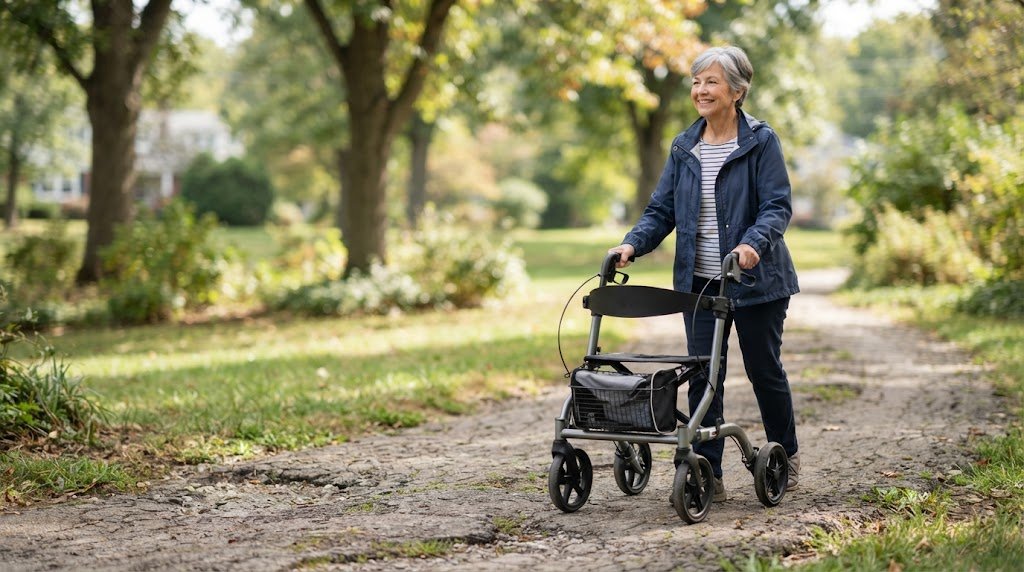
The term “outdoor rollator” generally describes a walker with wheels that is built to handle a wider range of walking surfaces than a basic indoor model. While a standard indoor rollator is often designed for flat, predictable flooring, an outdoor-capable version usually has features intended to manage light unevenness — things like cracked pavement, small pebbles, or slightly uneven grass.
It’s important to set realistic expectations. No rollator, regardless of how it’s marketed, is designed to handle extreme terrain such as steep hills, deep mud, sand, snow, or rocky trails. The goal of an outdoor rollator is to make everyday outdoor environments — sidewalks, driveways, parks, and neighborhood paths — easier and safer to navigate, not to replace careful judgment about where it’s appropriate to walk.
What Makes a Rollator Good for Outdoor Walking?
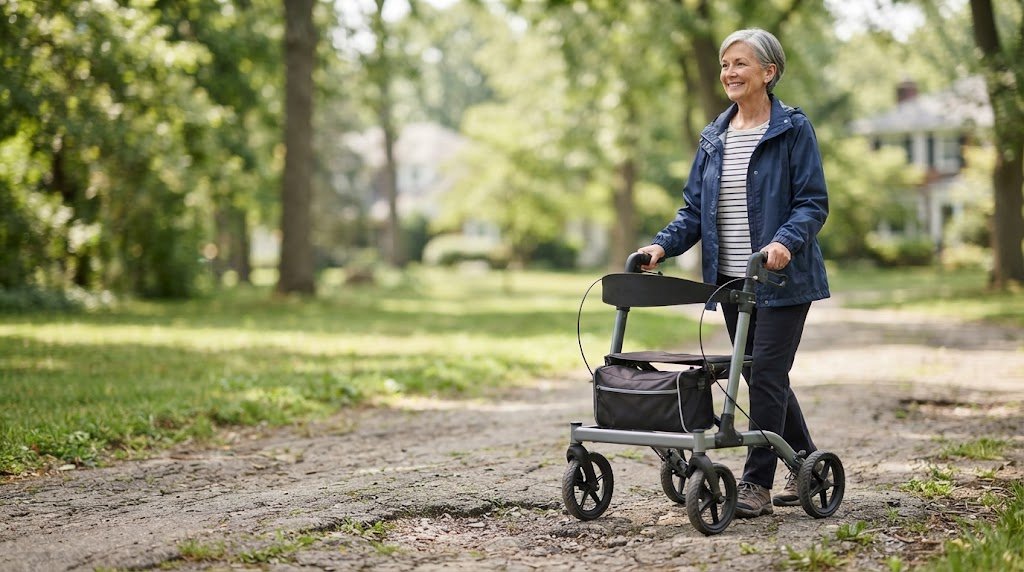
Several design characteristics work together to determine how well a rollator performs outside:
- Larger wheels that can roll over small bumps and cracks more easily
- Tire design suited to grass, gravel, or pavement
- A stable frame that resists tipping on uneven ground
- Reliable brakes for controlled stopping, especially on slopes
- Comfortable, adjustable handles to reduce strain
- Appropriate weight that balances stability with ease of handling
- Good maneuverability for turning and steering around obstacles
- Sufficient ground clearance to avoid catching on uneven surfaces
- A comfortable seat, when the design includes one, for resting during longer outings
Each of these plays a different role, and the right combination depends on where and how someone plans to use the rollator most often.
1. Look at the Wheel Size
Wheel size is one of the first things to check when comparing outdoor rollators. Larger wheels — generally in the 8-inch range or bigger — tend to roll over small obstacles like cracked sidewalks, tree roots, and uneven pavement more smoothly than smaller wheels.
Smaller wheels, which are common on lightweight indoor rollators, can catch more easily on cracks, gravel, or grass, which may interrupt a smooth walking rhythm.
That said, larger wheels alone don’t guarantee suitability for every surface. Wheel size works together with tire type, frame stability, and overall design, so it’s worth looking at the complete picture rather than wheel size in isolation.
2. Consider the Tires
Tires play a major role in how a rollator handles different ground conditions.
- Solid or foam-filled tires tend to require less maintenance and work well on many everyday outdoor surfaces.
- Pneumatic (air-filled) tires often provide a smoother ride over bumps and uneven ground, similar to a bicycle tire, though they may need occasional air pressure checks.
- Textured or wider treads can offer more grip on grass, dirt, or gravel compared to smooth tires designed mainly for pavement.
Surfaces like wet pavement or loose gravel can still be challenging regardless of tire type, so it’s always a good idea to follow the manufacturer’s terrain and safety recommendations rather than assuming any tire design handles every condition equally well.
3. Check Stability and Frame Design
A rollator that feels sturdy in a store or on a flat floor can feel different once it’s out on a sloped driveway or an uneven path. Stability outdoors depends on several frame-related factors:
- Four-wheel designs generally offer a wider, more stable base than three-wheel models
- Frame construction and materials, which affect rigidity and durability
- Center of gravity, since a lower center of gravity often improves balance
- Weight distribution across the frame and wheels
- Handle height, which should allow an upright, comfortable posture
- Overall width, which affects how the rollator handles turns and narrow paths
Testing a rollator on a mildly uneven surface — not just a smooth showroom floor — can give a much better sense of how stable it will actually feel outdoors.
4. Pay Attention to the Brakes
Reliable brakes matter everywhere, but they become especially important outdoors, where slopes, uneven pavement, and unexpected obstacles are more common.
Key brake features to check include:
- Hand brakes that are easy to reach and operate
- Locking or parking brakes for coming to a complete, secure stop
- Brake accessibility, especially for users with limited hand strength
- Testing brakes before every outing to confirm they’re working properly
Brakes are particularly important when stopping on a slope or transitioning from pavement to grass, where extra control can make a noticeable difference.
5. Think About Weight and Portability
There’s often a trade-off between a rollator’s stability and how easy it is to lift, fold, and transport.
- Lightweight frames are easier to lift into a car trunk or carry up steps, but may offer less stability on rougher ground.
- Heavier, sturdier frames often provide more stability outdoors but can be more difficult to fold and transport.
- Folding mechanisms vary in how compact and simple they are to use.
- Vehicle transport and home storage are worth considering, especially for people who travel with their rollator frequently.
The easiest rollator to lift isn’t always the most stable choice for outdoor terrain, so it helps to weigh both needs honestly based on how the rollator will actually be used.
6. Consider the Type of Terrain You Actually Use
Thinking about the specific surfaces encountered on a typical day can help narrow down which features matter most.
| Terrain | Features to Consider |
|---|---|
| Smooth sidewalks | Standard outdoor-capable wheels |
| Cracked sidewalks | Larger wheels and a stable frame |
| Gravel | Larger wheels and suitable tires |
| Grass | Larger wheels and appropriate ground clearance |
| Dirt paths | Outdoor-capable tires and stability |
| Slopes | Reliable brakes and controlled handling |
Terrain suitability always depends on the specific rollator’s design, so it’s best to check the manufacturer’s instructions rather than assuming any single model is built for every surface listed above.
7. Do You Need a Seat?
Many outdoor rollators include a built-in seat, which can be helpful for anyone who needs occasional rest during longer walks. A seat can turn a walk in the park into a more relaxed outing, with the option to pause without needing to find a bench.
At the same time, a seat adds weight and size, which can affect portability. Seats should only be used when the rollator is on level, stable ground with the parking brakes fully engaged, following the manufacturer’s instructions — sitting on an unlocked rollator, or one positioned on a slope, can be unsafe.
8. How Much Does the Rollator Need to Support?
Every rollator has a manufacturer-specified weight capacity, and this should never be assumed to be the same across different models. Before choosing a rollator, it’s worth checking:
- User weight capacity, which varies significantly between models
- Frame dimensions, including width and length
- Seat weight capacity, if the rollator includes one
- Handle height range, to ensure a comfortable fit for the user’s height
Reviewing the manufacturer’s specifications directly is the most reliable way to confirm a rollator will meet an individual’s needs.
9. Outdoor Rollator vs. Standard Rollator
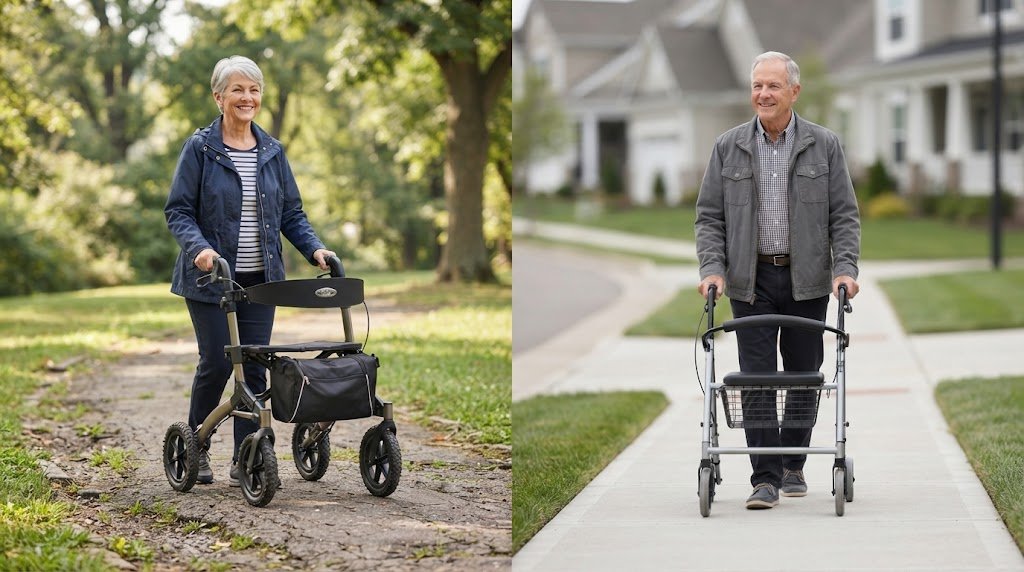
| Feature | Outdoor Rollator | Standard (Indoor) Rollator |
|---|---|---|
| Wheel size | Larger, typically 8 inches or more | Smaller, often under 8 inches |
| Terrain suitability | Sidewalks, grass, gravel, mild unevenness | Smooth, flat indoor flooring |
| Stability | Built for varied outdoor surfaces | Optimized for predictable indoor floors |
| Maneuverability | Designed to handle bumps and turns outdoors | Best in open, obstacle-free spaces |
| Weight | Often heavier for added stability | Typically lighter |
| Portability | May be bulkier to fold and transport | Usually easier to fold and carry |
| Typical use | Walks, errands, parks, neighborhood paths | Homes, hallways, indoor facilities |
Some people choose one rollator that handles both environments reasonably well, while others prefer a lighter indoor model and a sturdier outdoor model for different parts of their day.
10. Common Mistakes to Avoid
- Choosing a rollator based on price alone, without checking features
- Selecting wheels that are too small for the terrain actually encountered
- Ignoring the listed weight capacity
- Skipping a brake check before use
- Assuming any rollator can handle every type of surface
- Overlooking proper handle height, which affects posture and comfort
- Forgetting to consider how the rollator will be transported and stored
- Using a rollator on terrain that exceeds its intended design
Outdoor Rollator Safety Tips
- Test the rollator in a safe, familiar area before using it somewhere new.
- Check the brakes before every outing.
- Keep both hands on the handles while walking.
- Avoid terrain that goes beyond the rollator’s intended use.
- Slow down on slopes, curbs, and uneven surfaces.
- Watch for holes, loose gravel, tree roots, and wet or slippery spots.
- Keep the rollator properly maintained, including tires and brakes.
- Wear supportive, well-fitted footwear.
- Ask a qualified healthcare professional or mobility specialist for personalized guidance when needed.
When to Consider Professional Guidance
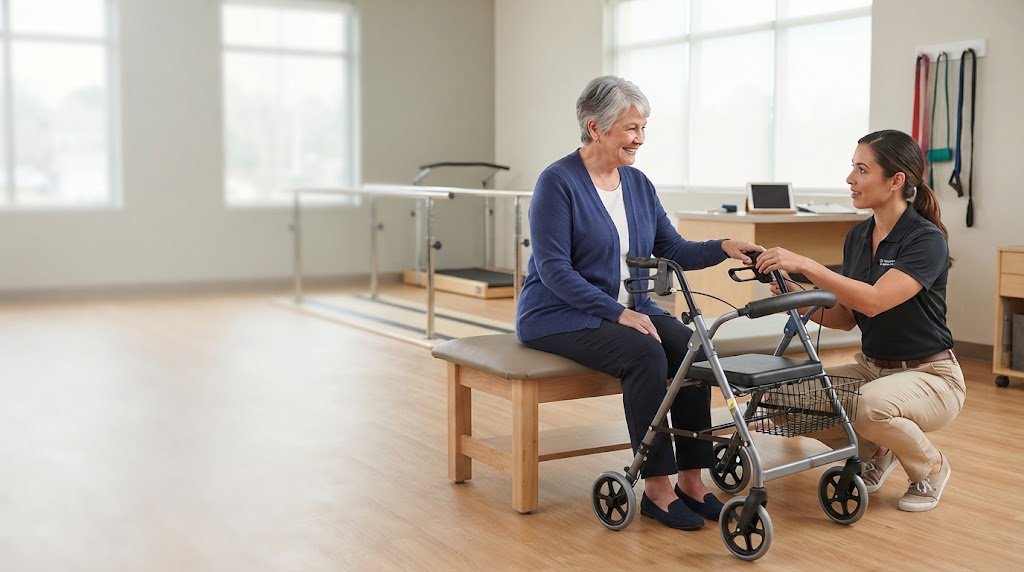
A physical therapist, occupational therapist, physician, or qualified mobility specialist can offer personalized advice on choosing and using a rollator safely. Speaking with a professional may be especially helpful in situations such as:
- Frequent loss of balance
- Difficulty controlling the rollator, especially on turns or slopes
- Repeated falls or near-falls
- Noticeable weakness that affects walking
- Trouble navigating curbs, ramps, or slopes
- Uncertainty about which type of mobility aid best fits individual needs
A professional evaluation can help match the right rollator features to an individual’s specific mobility level and daily environment.
Frequently Asked Questions
What is the best type of rollator for outdoor use? Generally, a rollator with larger wheels, a stable four-wheel frame, and reliable hand and locking brakes tends to perform best across common outdoor surfaces like sidewalks, gravel, and grass.
Are larger wheels better for uneven ground? Larger wheels typically roll over small bumps, cracks, and uneven pavement more smoothly than smaller wheels, though overall design still matters.
Can a rollator be used on grass? Some outdoor rollators are designed to handle light, mildly uneven grass, particularly those with larger wheels and appropriate ground clearance. Always check the manufacturer’s terrain guidance first.
Can you use a rollator on gravel? Rollators with larger wheels and suitable tire treads may handle light gravel more easily, but loose or deep gravel can still be challenging for any rollator.
What size wheels are best for outdoor rollators? Wheels around 8 inches or larger are commonly recommended for outdoor use, since they tend to roll over obstacles more smoothly than smaller indoor-style wheels.
Is a 3-wheel or 4-wheel rollator better outdoors? Four-wheel rollators generally offer a wider, more stable base, which can be an advantage on uneven outdoor terrain. Three-wheel models are often lighter and more maneuverable in tighter spaces.
Are rollators safe on uneven sidewalks? Many outdoor-capable rollators are designed to handle mildly uneven sidewalks, but users should still walk cautiously, watch for cracks, and follow the manufacturer’s recommendations.
Can I use a rollator on slopes? Rollators can often be used on gentle slopes, but reliable brakes and cautious handling are essential. Steep slopes may not be appropriate for any rollator, and professional guidance can help determine safe limits.
Helpful Resources for Safe Outdoor Walking
Conclusion
Choosing the right outdoor rollator comes down to understanding a handful of key factors: wheel size, tire design, stability, brakes, weight, user capacity, terrain, and portability. Each of these plays a role in how confidently and comfortably someone can move through everyday outdoor spaces, from a cracked city sidewalk to a grassy park path.
There’s no single “best” outdoor rollator for everyone. The right choice depends on the specific surfaces a person encounters most often, their comfort level, and their individual mobility needs. Taking the time to compare these features — and checking in with a healthcare or mobility professional when needed — can lead to a rollator that genuinely supports safer, more confident outdoor walks.