
Table of Contents
- Introduction
- What Is a Front-Wheel Drive Power Wheelchair?
- How Does a Front-Wheel Drive Wheelchair Work?
- Key Features of Front-Wheel Drive Power Wheelchairs
- Benefits of Front-Wheel Drive Power Wheelchairs
- Who Can Benefit From a Front-Wheel Drive Power Wheelchair?
- Front-Wheel Drive vs Mid-Wheel Drive vs Rear-Wheel Drive
- Possible Limitations of Front-Wheel Drive Power Wheelchairs
- Safety Tips
- Maintenance and Care
- Frequently Asked Questions
- Conclusion
Introduction
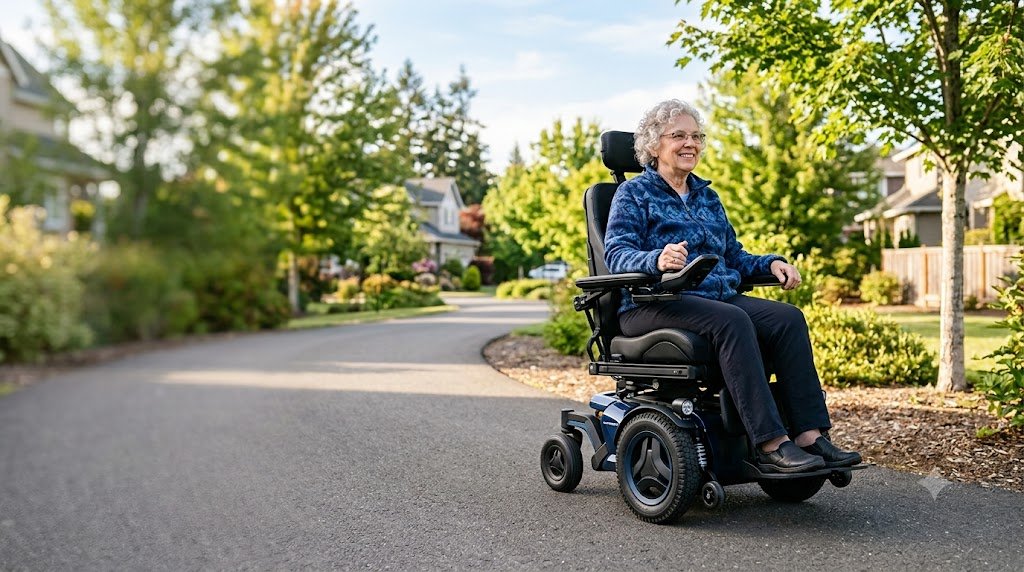
Remaining independent as you age is usually dependent on one thing – being able to move about in a way that is safe, comfortable, and easy for you. Seniors in need of mobility aid devices will find that front wheel drive power wheelchairs are designed to accomplish just that. The front wheel drive power wheelchair places its wheels at the front end of the chair in order to provide its user with maneuverability, stability, and usability.
The use of powered mobility aids has been increasing significantly in recent years, among those seniors that require assistance in staying independent in their homes, communities and wherever else they may go. The right power wheelchair will allow you to navigate through tight spaces, cross door sills, and even walk about the neighborhood easily and comfortably.
Here you will be introduced to what the front wheel drive power wheelchair is, how it functions, some of its important features and advantages, who would benefit most from it, and compare it to other types of wheelchairs with regard to their drive type. We will also discuss important safety and maintenance information, as well as answer common questions regarding these chairs.
What Is a Front-Wheel Drive Power Wheelchair?
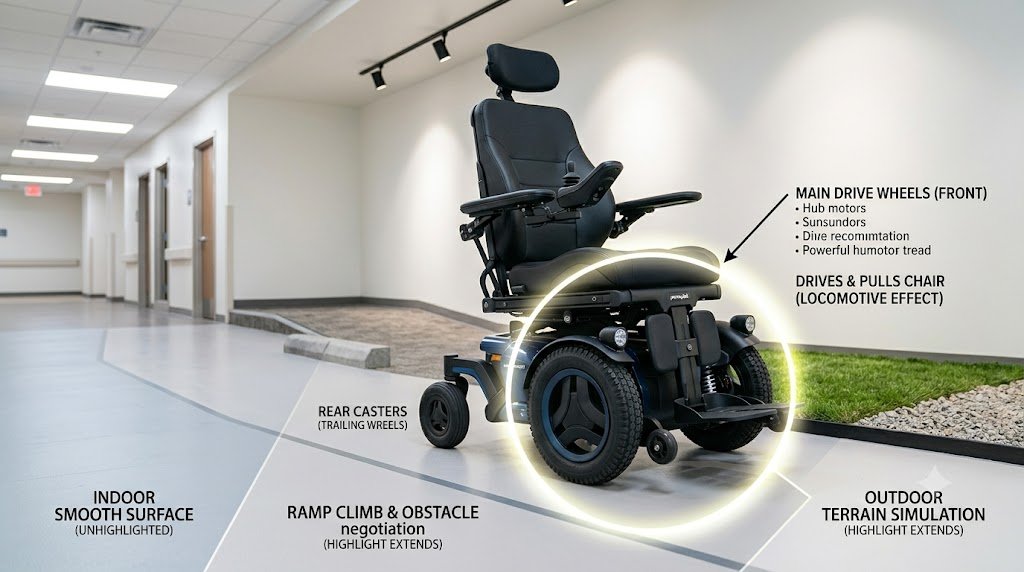
A front-wheel drive power wheelchair refers to a kind of motorized wheelchair whereby the primary drive wheels, which propel and steer the wheelchair, are placed at the front of the wheelchair frame under the user’s feet or foot rests. The small caster wheels are found at the back.
As opposed to the other kinds of power wheelchairs, there are three common classes of power wheelchairs based on the positioning of the drive wheels:
- Front-wheel drive – Drive wheels are found at the front of the wheelchair.
- Mid-wheel drive – Drive wheels are found at the middle part of the wheelchair under the user, while the smaller wheels are at the front and back of the wheelchair.
- Rear-wheel drive – Drive wheels are found at the back of the wheelchair.
Therefore, in a front-wheel drive power wheelchair, the motor system pulls the wheelchair from the front instead of pushing it from the back.
How Does a Front-Wheel Drive Wheelchair Work?
For a front-wheel drive wheelchair to work efficiently, there are certain parts involved and they have to interact with each other for movement to occur:
- Electric motors – Two electric motors are usually placed at the front wheels to produce enough power for the wheelchair to move back and forth as well as sideways.
- Battery – The energy produced is stored in rechargeable batteries that serve as the source of energy for the motors and lighting among other electronic features.
- Control mechanisms – The movement is controlled via a joystick located on the armrests.
- Steering mechanism – For front-wheel drive wheelchairs, the steering mechanism is achieved through the varying speed and direction of the two front wheels which pulls the wheelchair during turns.
- Drive wheels positioning benefits – With the drive wheels positioned at the front, the wheelchair is able to pull itself up the obstacles with ease.
In short, it means that the two front wheels are like the engine moving the wheelchair as the rear wheels follow behind.
Key Features of Front-Wheel Drive Power Wheelchairs
1. Better Obstacle Handling
One of the most talked-about advantages of a wheelchair with front drive wheels is how it handles real-world obstacles, including:
- Small thresholds between rooms
- Doorways with slight lips or transitions
- Outdoor surfaces like gravel or grass
- Uneven pathways, cracked sidewalks, and curb cuts
Because the front wheels lead the chair, they can climb over small bumps more smoothly, reducing jolts and improving the overall ride.
2. Tight Turning Ability
Front-wheel drive chairs are often praised for how well they handle indoor spaces, including:
- Navigating narrow hallways
- Turning within smaller rooms
- Moving comfortably through home layouts with tight corners
This makes them a popular advanced mobility solution for seniors who spend a lot of time indoors and need to move confidently through their homes.
3. Comfortable Seating Options
Modern power wheelchairs, including front-wheel drive models, typically offer a range of comfort-focused seating features:
- Cushioned seats for pressure relief and comfort
- Adjustable armrests to suit different body types
- Reclining options for rest and repositioning
- Foot supports that keep legs properly aligned
These features help make longer periods of sitting more comfortable, which matters for anyone using a power wheelchair throughout the day.
4. Battery Performance
Battery life and charging habits play a big role in how reliable a power wheelchair feels day to day:
- Rechargeable batteries typically power the wheelchair for several hours of regular use
- Travel distance depends on terrain, battery condition, and how the chair is used
- Developing consistent charging habits — such as charging overnight — helps maintain battery health and ensures the chair is ready when needed
Benefits of Front-Wheel Drive Power Wheelchairs
Some of the potential benefits of using an electric wheelchair that uses front-wheel drive could include the following:
- Increased independence – It would allow the user to navigate around the home or outside without needing much help from other people.
- Improved ability to negotiate obstacles – The front-pull mechanism will make it easier for the electric wheelchair to go over doorsills, bumpy ground, and small obstacles.
- Improved comfort – Comfortable seating and smooth handling will make it enjoyable for the senior to ride the chair.
- Good indoors and outdoors performance – An all-purpose wheel chair can be used both inside the house and outside in driveways and sidewalks.
- Decreased effort – Power mobility means that the user does not have to walk or push the wheelchair himself.
Who Can Benefit From a Front-Wheel Drive Power Wheelchair?
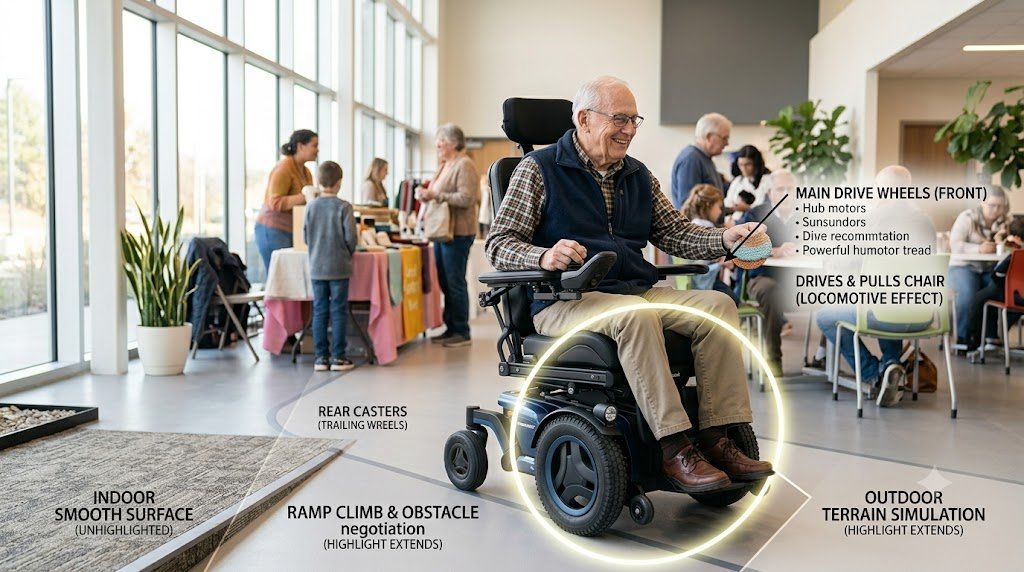
A front-wheel drive power wheelchair may be a good senior mobility aid for:
- Seniors with limited walking ability who need reliable support to get around
- People who require a power mobility device for daily indoor and outdoor use
- Individuals with reduced upper-body strength who may find manual wheelchairs difficult to operate
- Users who regularly move across different surfaces, from carpet to pavement to grass
- People seeking more independent mobility without depending on a caregiver for every trip
Everyone’s needs are different, so it’s always a good idea to talk with a healthcare provider or mobility specialist before choosing a wheelchair type. They can help assess individual needs, home layout, and lifestyle to determine the best fit.
Potential Limitations of Front-Wheel Drive Power Wheelchairs
Although there are many pros to front-wheel drive power wheelchairs, there are also some potential limitations that should be taken into account:
- Bigger turn radius in comparison to some mid-wheel drives – Mid-wheel drive chairs usually have a smaller turn radius that is beneficial when navigating very tight spaces.
- Some time needed to learn how to use – Since the steering mechanism is quite different from pushing and pulling from behind, users may need to adjust.
- Can take a little bit more space inside buildings – Some front-wheel drive chairs can need a bit more space to navigate in comparison to mid-wheel ones.
- Different feeling while driving – The “pulling” feeling of the chair is different from rear and mid-wheel designs.
These are just some things to consider, not something that should scare people off of such chairs.
Safety Tips
Whether you’re new to powered mobility or switching from another wheelchair type, these safety tips can help:
- Practice joystick controls in an open, obstacle-free area before using the chair in busy or tight spaces.
- Start at slower speeds until you feel fully comfortable with how the chair turns and responds.
- Check surroundings before turning, especially in narrow hallways or crowded areas.
- Avoid unsafe slopes or inclines that exceed the manufacturer’s recommended limits.
- Charge batteries properly by following the manufacturer’s charging guidelines to avoid unexpected power loss.
- Maintain tires and wheels by checking for wear, debris, or damage on a regular basis.
- Use safety accessories when needed, such as seat belts, reflective elements, or lighting for visibility.
Maintenance and Care
Routine care helps keep a front-wheel drive power wheelchair running safely and reliably for years to come:
- Battery charging – Charge the battery regularly, ideally after each significant use, and avoid letting it fully drain too often.
- Cleaning the wheelchair – Wipe down the seat, armrests, and frame regularly to keep the chair hygienic and comfortable.
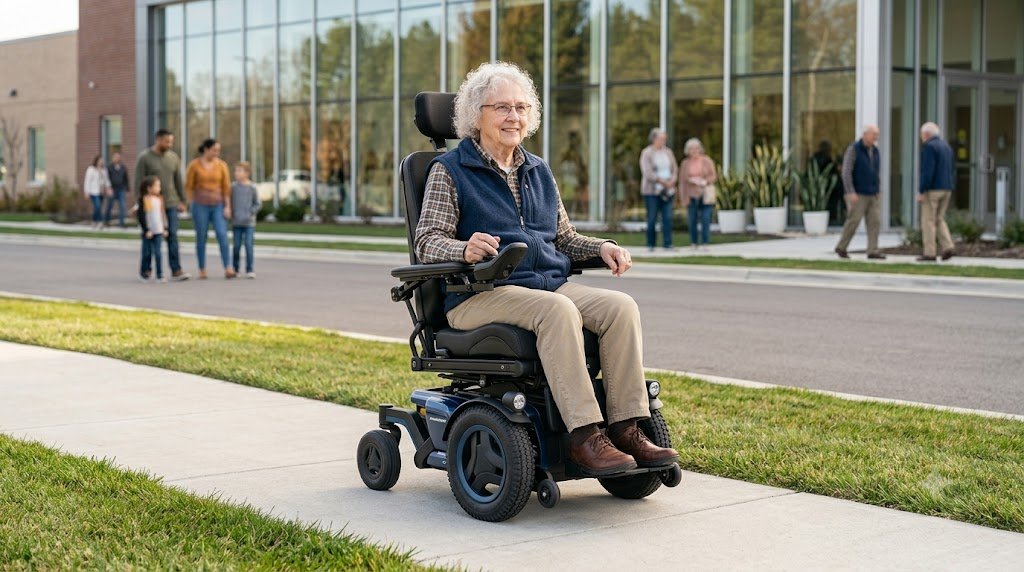
- Checking wheels – Inspect front drive wheels and rear casters periodically for wear, debris, or reduced traction.
- Inspecting controls – Make sure the joystick and control panel respond smoothly and accurately.
- Storage practices – Store the wheelchair in a dry, temperature-controlled area when not in use.
- Regular servicing – Schedule periodic checkups with a qualified mobility equipment provider to catch small issues before they become bigger problems.
Frequently Asked Questions
1. What is a front-wheel drive power wheelchair? It’s a motorized wheelchair with its main drive wheels positioned at the front of the frame, which pulls the chair forward and helps with steering and obstacle handling.
2. Are front-wheel drive wheelchairs good for seniors? Yes. Many seniors find front-wheel drive wheelchairs helpful for navigating both indoor and outdoor environments, thanks to their stability and ability to handle small obstacles.
3. Can front-wheel drive wheelchairs be used outdoors? Yes, many front-wheel drive models are designed to handle a mix of indoor and outdoor surfaces, including sidewalks, driveways, and uneven pathways.
4. What is the difference between front-wheel and mid-wheel drive? Front-wheel drive chairs have their drive wheels at the front, offering strong obstacle handling, while mid-wheel drive chairs have centered drive wheels, offering a tighter turning radius for indoor spaces.
5. How far can a front-wheel drive electric wheelchair travel? Travel distance depends on the battery, terrain, and usage habits, but many models are designed to support several hours of regular daily use on a full charge.
6. Are power wheelchairs easy to operate? Most power wheelchairs use simple joystick controls, and with a bit of practice in an open space, most users become comfortable operating them fairly quickly.
Conclusion
A power wheelchair with front-wheel drive is a sensible and effective mobility assistive device that enables older adults to move comfortably and conveniently around to keep themselves active and independent.
The front wheel drive makes it possible to negotiate barriers and travel on various surfaces with greater ease.
This type of a mobility device is best suited for older individuals who require dependable movement indoors as well as outdoors and are concerned about riding smoothly on uneven surfaces. Like other power mobility devices, the selection of a device is very much dependent on an individual’s lifestyle and needs.