

Table of Contents
- Introduction
- What Is a Rollator Walker?
- How Does a Rollator Walker Work?
- Key Features of a Rollator Walker
- Benefits of Using a Rollator Walker
- Who Can Benefit From a Rollator Walker?
- Rollator Walker vs Standard Walker
- Possible Limitations of Rollator Walkers
- Rollator Walker Safety Tips
- Rollator Walker Maintenance and Care
- How to Choose the Right Rollator Walker
- Frequently Asked Questions
- Conclusion
Introduction
Growing old affects many things. Stiff joints, decreased balance, and even a regular walk can no longer be a comfortable experience. But it is not a signal that an elder has to stop living their life — quite the contrary, a slight assistance will help to keep the pace. There are plenty of devices that can help elders with their everyday tasks. One of them is a rollator walker for seniors — a special kind of walking aids that ensures safety during the movements.
It is important to choose a suitable walking aid for elderly individuals for many reasons but mainly because when a person feels comfortable on his feet, he is more motivated to remain active, socialize, go shopping and so on. This article provides a detailed analysis of how a rollator walker operates, what distinguishes it from a regular walker and how it helps in providing senior mobility support.
What Is a Rollator Walker?
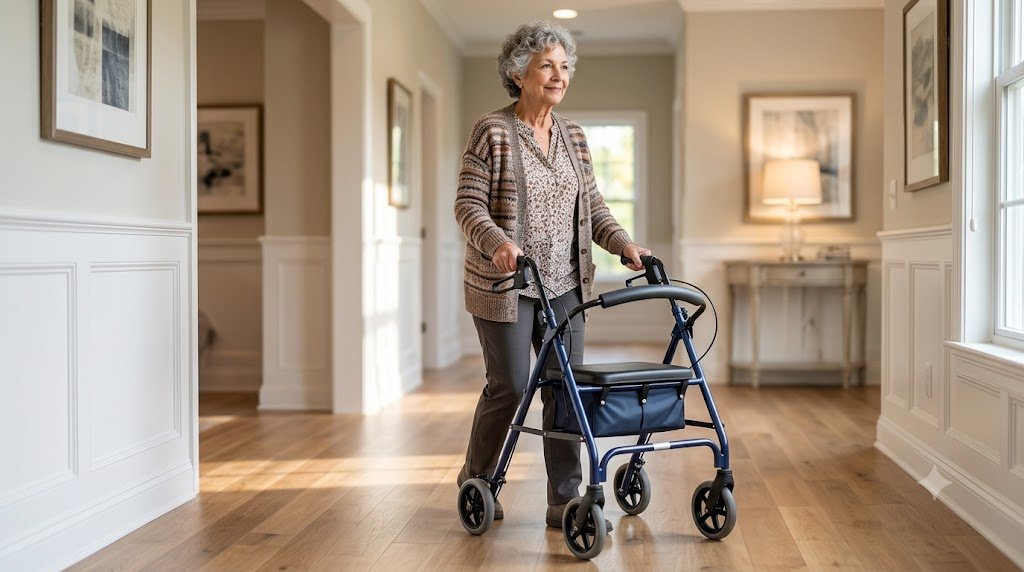
And so, what is the definition of a rollator walker? The main elements of such equipment include wheels, hand brakes, and also, a seat, which is an upgrade from the conventional types of walkers that most people envision in their mind and have to lift while walking.
Rollator Walker is the name given to medical walkers used by elderly people who need assistance in order to improve their balance, endurance, and stability, yet retain their ability to walk at a normal pace. With a rollator walker, there is no need to lift the walker while walking.
How does a rollator walker work in practice? It glides along on its wheels while the user leans on the frame for support, using hand brakes to control speed and stop safely. This wheeled design is why many seniors choose rollators over traditional walkers — it allows for a smoother, more continuous walking motion that feels closer to normal walking, with far less physical strain.
How Does a Rollator Walker Work?
Getting an idea of how the rollator works gives confidence right off the bat:
- Wheels: The four wheels move easily on most surfaces, allowing the person using the walker to move forward without picking up the walker.
- Brake mechanism: Brakes located on the handles let the user either reduce speed, come to a full stop, or lock the wheels in case it is necessary to keep the walker stationary – for instance, while sitting down.
- Function of the seat: Whenever it’s time to take a break, the seat makes it possible for the user to have a rest without having to look for some place to sit.
- Right way to walk: The walker should be kept just a little behind the person who uses it, with a comfortable distance ahead, and pushed forward in unison with the user’s steps.
It becomes easy to get started with using the rollator knowing all of that.
Key Features of a Rollator Walker
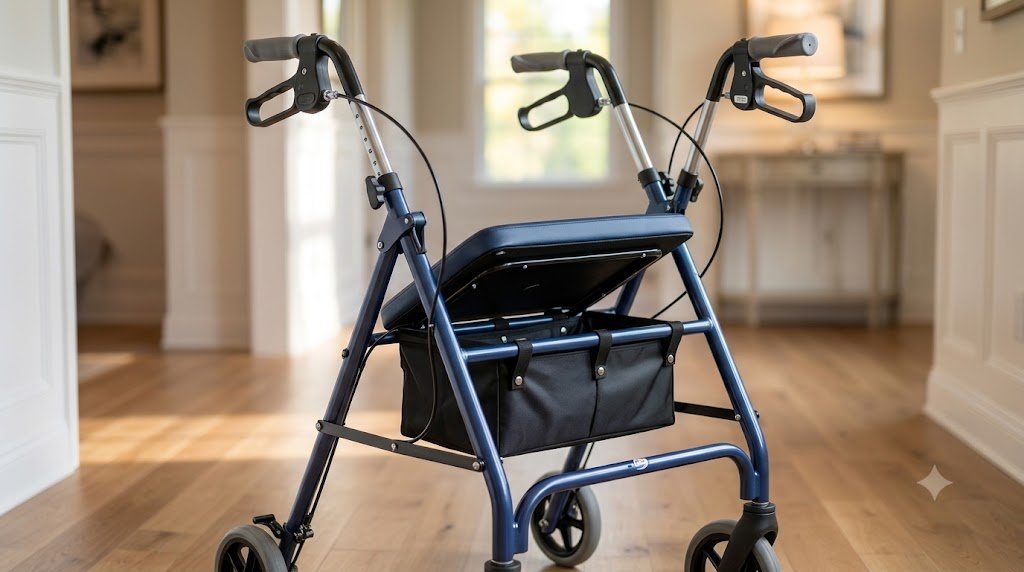
Four-Wheeled
The four-wheeled rollator walker provides a stable base, thus making it easy for you to maneuver the walker on sidewalks, tiles, carpets, and even outdoor surfaces. The four-wheeled design ensures that the weight is distributed evenly and, therefore, making the walker stable but at the same time movable.
Hand Brakes
The walkers equipped with hand brakes help the walker regulate the walker’s speed. Also, the brakes can lock to stabilize the walker in case the walker wants to sit or stand.
Comfortable Seat
A walker with seat for seniors is one of the most valued features of a rollator. It offers a place to rest during longer outings, whether at the store, in a park, or on a walk around the neighborhood, without needing to search for outside seating.
Adjustable Handles
An adjustable rollator walker allows the handle height to be set to match the user’s posture. Proper height keeps the shoulders relaxed and the back upright, reducing strain during use.
Storage Basket
A walker with storage basket gives users a place to carry personal items, groceries, or a water bottle, so both hands remain free to hold the handles securely.
Folding Design
A folding rollator walker collapses down for easy storage and transport, making it simple to bring along in a car trunk or tuck away at home when not in use.
Benefits of Using a Rollator Walker
Greater Independence
Another major advantage of rollator walkers is the increased independence that it provides. With the presence of such a support device right next to them, activities like going out to get the mail, meeting up with a friend, or grocery shopping are made much easier for seniors.
Increased Comfort
The use of wheels on a rollator walker allows seniors to move about comfortably without any strain in the body.
Outings
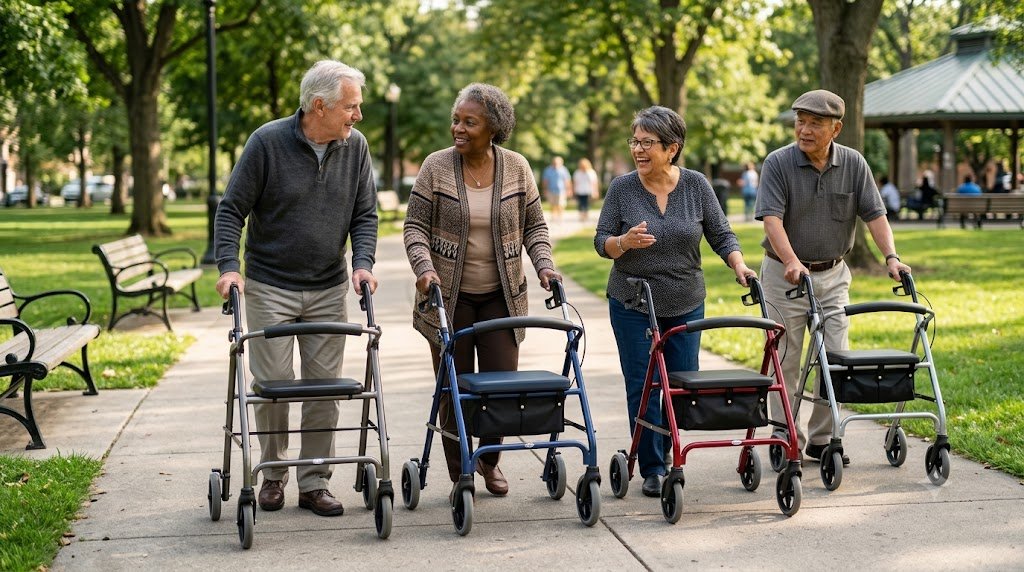
Another benefit of having a rollator is that it makes it possible for seniors to go out to places such as shopping centers and the park.
Rest Support
As a mobility support device, the built-in seat means users never have to push through fatigue to find a place to sit — rest is always within reach.
Who Can Benefit From a Rollator Walker?
There are a variety of people who could benefit from using a rollator walker, which includes:
- Old individuals who require stability while walking
- Senior citizens who get tired easily
- Injured people who temporarily need walking assistance
- Those who want more assurance during their walks
Not everyone who uses a rollator is someone who requires a great deal of mobility aid, as many active older individuals use a rollator as a safety measure. In addition, as an all-purpose elderly walker, the rollator is flexible enough to adapt to different types of needs.
Possible Limitations of Rollator Walkers
Although rollators have a number of benefits, there are people for whom they might be unsuitable:
- They might not be stable enough for people who lack balance because wheels let the whole frame roll instead of staying stationary.
- They require knowing how to use brakes, which will require some time to learn.
- The wheels of rollators might roll too fast if you are going down or on slippery surface without using brakes.
- They are not suited for all types of environments – carpets, gravel, or rough surface might make it harder to roll the walker.
Consulting your doctor or physiotherapist will help you choose between rollator or another type of walker.
Rollator Walker Safety Tips
Adhering to some basic rollator walker safety tips reduces the risk of injury:
- The height must be adjusted such that the handles are at wrist-level height when you stand straight.
- Ensure the brakes are locked before sitting and standing to avoid any accidental movement of the walker.
- Always maintain a straight posture and not bend over the walker while using.
- Do not place excessive weight on the walker, as it will act more like a cane and crutches do.
- Regularly check the wheels and the braking system to ensure that everything is working well before using.
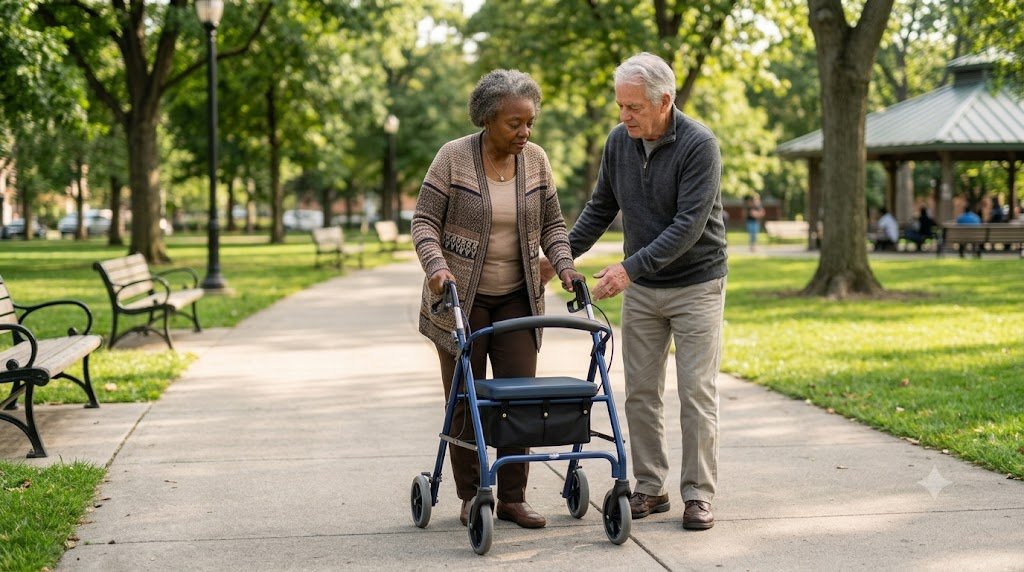
When it comes to being a safety walking aid, a rollator is only as good as its use. When treated as a walking aid that needs attention, it plays an important part in reducing the chances of falls.
Rollator Walker Maintenance and Care
Regular maintenance is important to ensure the safety and functionality of a rollator walker:
- Cleanliness: The walker needs to be cleaned at regular intervals by wiping the framework, seat, and handles.
- Brake check: Test if the hand brakes function properly and lock well.
- Wheel check: Remove any dirt in the wheels and ensure smooth rotation without any wobbling of the wheels.
- Storage: It needs to be kept in a dry place whenever folded to avoid moisture affecting the framework and brake cables.
- Handle height: This may need adjustment on occasions due to changes in postures and shoes.
Taking care of the walker occasionally takes care of a lot of potential problems in the future.
How to Choose the Right Rollator Walker
When it comes to choosing a rollator walker, it all comes down to matching the product to the individual. Think about the following criteria:
- Adjustable height: It is important to find a model where you can adjust the handles at the right height.
- Maximum weight: Check whether the walker is able to withstand the user’s weight safely.
- Wheels size: The bigger the wheel size, the more likely it will cope well outdoors; otherwise, smaller wheels might work better indoors.
- Use both indoors and outdoors: A rollator walker for indoor and outdoor use must be able to travel easily from one surface to another.
- Comfort of seat: A properly padded and sized seat would make the process of resting easy.
- Portability: A compact rollator walker with foldable design will take less space to carry around.
- Extra storage: A basket or a pouch will make it easier for the user to carry personal items.
Taking into account all these criteria, you will have an idea of how to find the best rollator walker.
Frequently Asked Questions
1. What is a rollator walker? A rollator walker is a wheeled mobility aid with hand brakes and typically a built-in seat, designed to help users walk with more stability and less physical effort than a traditional walker.
2. Is a rollator walker better than a standard walker? It depends on the individual. A rollator suits those who want smoother, more continuous movement and occasional rest breaks, while a standard walker may offer more stability for those who need maximum support with each step.
3. Can seniors sit on a rollator walker? Yes. Most rollator walkers include a built-in seat, allowing users to rest whenever needed, as long as the brakes are locked before sitting down.
4. How do you adjust a rollator walker? Handle height is typically adjusted using a lever or button near the handle grips, allowing the user to set the height so their wrists rest comfortably at their side while standing upright.
5. Are rollator walkers safe for outdoor use? Many rollator walkers are designed for both indoor and outdoor use, though it’s important to choose a model with wheels suited to outdoor terrain and to use brakes carefully on slopes or uneven ground.
Conclusion
Rollator walker provides much more than just physical support – it gives you freedom. With the combination of these three qualities, rollator walker for seniors allows the elderly not only to be active but also to be mobile and handle their everyday tasks better. It may be the convenience of wheels, the possibility to rest on a seat or hand brakes that will help you to use a proper rollator and benefit from it.
In the end, choosing the right walking aid and using it safely will provide you with maximum security and freedom for many years to come.