
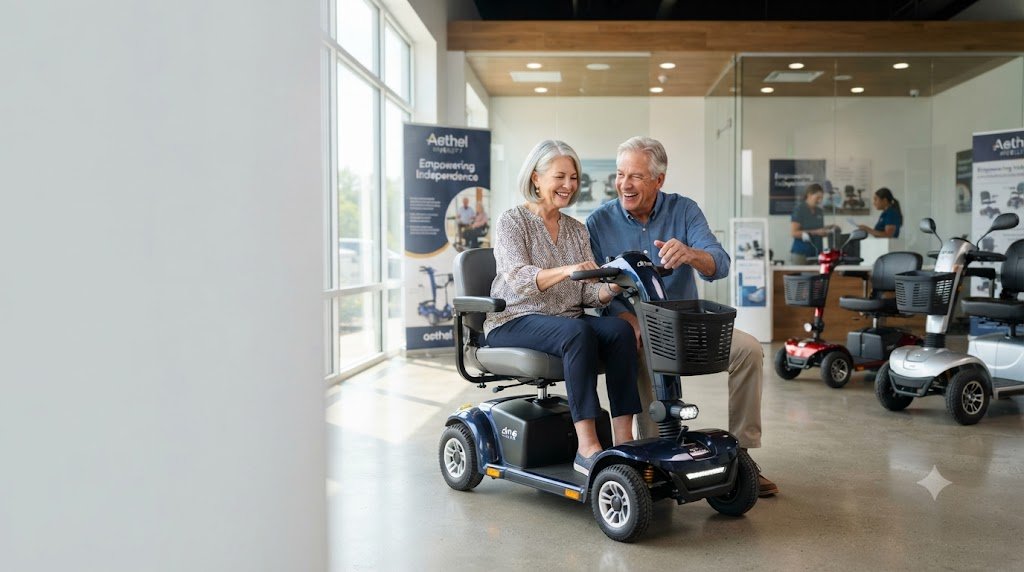
It is important to remain active, self-sufficient and integrated into everyday life at all ages; and, the right mobility scooter will enable a lot of elderly people to achieve just that. From doing some grocery shopping, going to see family, or simply taking a walk in the park, being able to move around with confidence plays an integral part in the quality of life.
However, finding the right scooter is not easy. With a myriad of styles, configurations, prices, and features on the market today, one could easily get lost. To cut it short: there is no best scooter out there. The best scooter for the elderly is the one which meets their needs in terms of style and price point.
The following guide offers all of the information needed for finding the ideal senior mobility solutions.
Table of Contents
- What Is a Mobility Scooter?
- Types of Mobility Scooters
- Key Mobility Scooter Features to Consider
- How to Choose the Right Mobility Scooter
- Who Can Benefit From a Mobility Scooter?
- Possible Limitations of Mobility Scooters
- Mobility Scooter Safety Tips
- Mobility Scooter Maintenance and Care
- Frequently Asked Questions
- Conclusion
What Is a Mobility Scooter?
A mobility scooter is an electric-powered machine meant to facilitate movement of individuals who find it strenuous to walk for a long distance or are having difficulty walking at all. It differs from the manual wheelchair in that it uses self-power and a handlebar and the rider steers the scooter using hand controls, just like in a bicycle.
Some of the features shared by most mobility scooters are:
- Seat – cushioned seat that may be swiveling and facilitates easy sitting position
- Battery – provides power to the motor and also influences the distance that the scooter can cover with one charge
- Motor – runs the rear or front wheels of the scooter, facilitating easy movement
- Controls – located on the handlebars; consist of a throttle, brake and speed settings
- Wheels – the number of wheels varies from one scooter to another and may be three or four
Mobility scooters vs. wheelchairs: Both mobility scooters and wheelchairs facilitate movement and mobility but there are some differences in their designs and application.
For many senior adults, a scooter isn’t just a mobility aid — it’s a tool for independence. It means being able to run errands alone, attend social events, or take a walk around the block without relying on someone else for support.
Types of Mobility Scooters
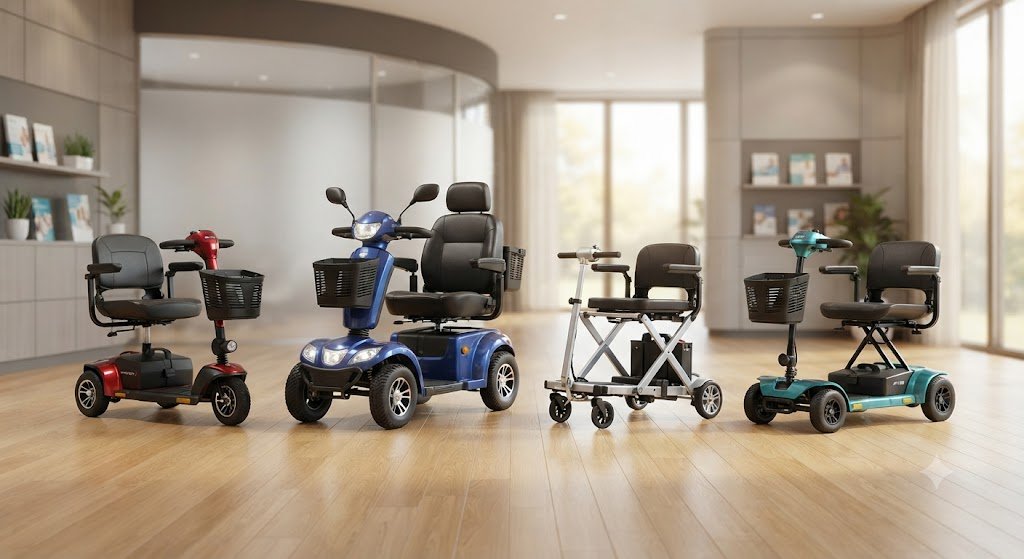
Not all scooters are built the same way. Understanding the different types of mobility scooters is the first step toward finding the right fit.
1. 3-Wheel Mobility Scooters
3-wheel mobility scooters are known for their compact design and tight turning radius, making them a great choice for navigating narrow hallways, indoor spaces, and stores. Because they have one wheel in front, they’re generally lighter and easier to maneuver in tight quarters — though they may feel slightly less stable than four-wheel models on uneven ground.
Best for: indoor use, apartments, small homes, and errands in tight spaces.
2. 4-Wheel Mobility Scooters
4-wheel mobility scooters offer added stability thanks to their wider wheelbase. This makes them well-suited for outdoor use, uneven sidewalks, and longer trips where confidence on varied terrain matters. Riders often find four-wheel scooters more comfortable for extended outings.
Best for: outdoor errands, parks, longer-distance travel, and uneven surfaces.
3. Folding Mobility Scooters
Folding mobility scooters are designed with storage and travel in mind. Their lightweight frames fold down (sometimes automatically) for easy placement in a car trunk, closet, or under a bed. This makes them a popular option for seniors who want mobility support without a bulky, permanent setup.
Keywords in focus: folding mobility scooters, lightweight mobility scooters.
4. Travel Mobility Scooters
Travel mobility scooters are the most portable option, built for vacations, flights, cruises, and frequent transportation. They’re typically smaller and lighter than standard models, prioritizing portability over long-range battery life or heavy-duty features.
Key Mobility Scooter Features to Consider
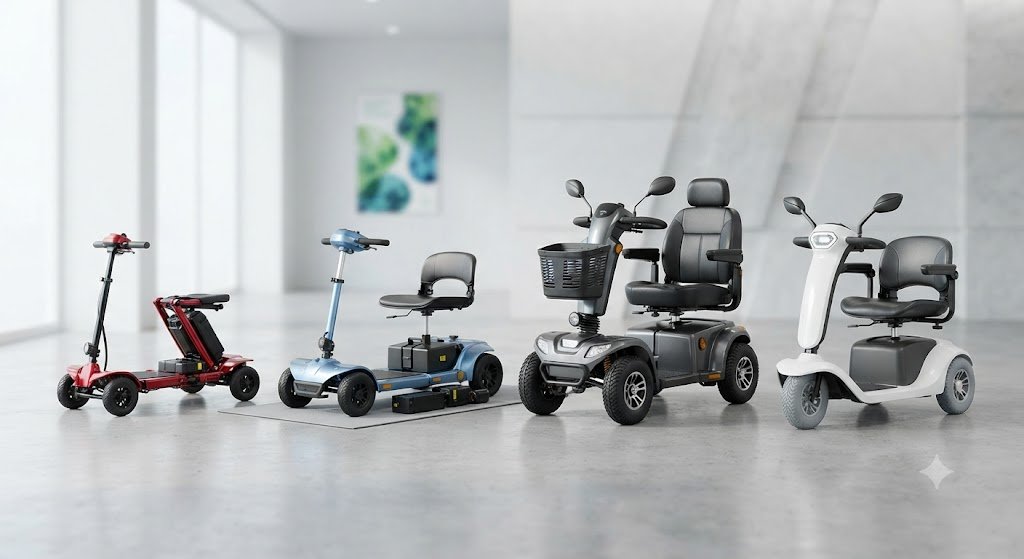
Once you understand the basic types, it’s time to look closer at the features that determine day-to-day comfort and usability.
Comfort Features
Look for comfortable mobility scooters with:
- Adjustable, cushioned seats
- Padded armrests
- Supportive backrests
- Adequate legroom
- Suspension systems for a smoother ride over bumps
Battery and Range
Battery capacity determines how far a scooter can travel before needing a recharge. Consider:
- How far you typically travel in a day
- Charging time and convenience
- Planning longer trips around charging needs
Weight Capacity
Every scooter has a maximum weight limit. Standard models typically support a certain range, while heavy-duty scooters are built for higher capacities. Always match the scooter’s weight rating to the rider’s needs for safety and comfort.
Portability
If storage or travel is a priority, consider:
- Folding vs. non-folding designs
- Total transport weight (including battery)
- How much space is available at home for storage
Safety Features
Look for these mobility scooter features when evaluating safety:
- Anti-tip wheels for added stability
- Front and rear lights for visibility
- Mirrors for outdoor awareness
- Reliable braking systems
- Stability-enhancing wheel designs
How to Choose the Right Mobility Scooter
This mobility scooter buying guide breaks the decision down into five practical steps.
1. Consider Your Daily Lifestyle
Think about how the scooter will actually be used — indoors, outdoors, for shopping trips, neighborhood travel, or community activities. A scooter that fits one lifestyle may not suit another.
2. Think About Comfort Needs
Consider seating support, ease of operating the controls, and how the scooter will feel during longer periods of use. Comfort directly affects how often — and how confidently — a scooter gets used.
3. Check Your Space
Measure doorway widths, hallways, and storage areas at home. Make sure there’s enough turning space indoors, and confirm the scooter will fit comfortably in its storage spot.
4. Consider Transportation
If the scooter needs to travel in a vehicle, look at portable or folding options that are easy to lift, load, and unload — or consider whether a vehicle lift or ramp might be needed for larger models.
5. Choose Based on Terrain
Match the scooter to where it will be used most: smooth indoor floors, neighborhood sidewalks, park paths, or a mix of outdoor surfaces. This helps identify the best mobility scooter for seniors based on real-world use, not just specifications on paper.
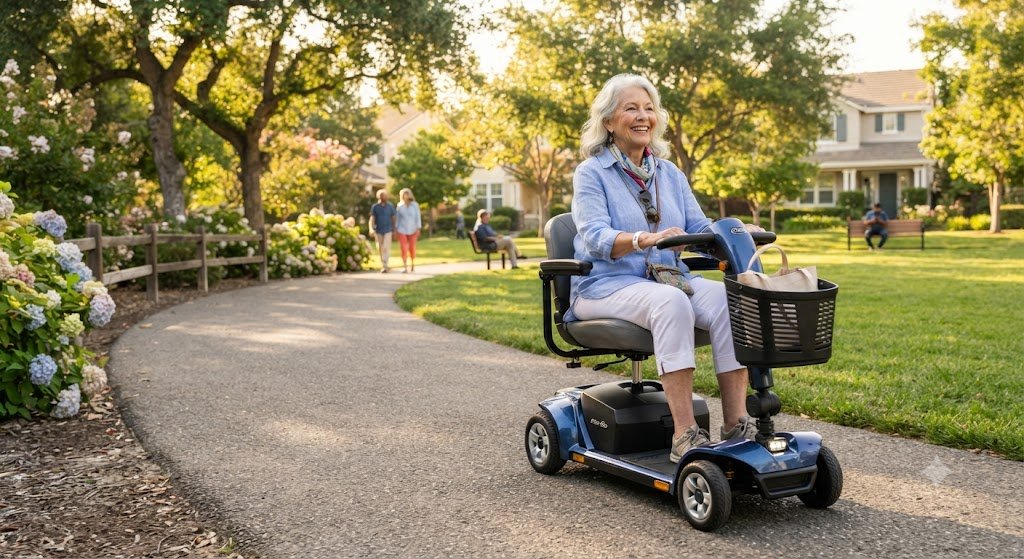
Who Can Benefit From a Mobility Scooter?
Mobility scooters can make a meaningful difference for:
- Seniors with limited walking endurance
- Older adults who tire easily during errands or outings
- Individuals who want more independence outdoors
- People needing extra mobility support for daily activities
- Caregivers looking for safer, more manageable transportation options for a loved on
Possible Limitations of Mobility Scooters
While mobility scooters offer real benefits, it’s helpful to consider a few practical factors before purchasing:
- Storage requirements — scooters need a dedicated, accessible storage spot
- Charging needs — regular charging is required to keep the scooter ready for use
- Transportation challenges — larger models may require a lift or ramp for vehicle transport
- Weather considerations — most scooters aren’t designed for heavy rain or rough conditions
- Learning curve — new users may need a little practice with controls and steering
- Space limitations — not ideal for very tight or cluttered indoor environments
Being aware of these factors ahead of time helps set realistic expectations and leads to a better overall experience.
Safety Tips for Mobility Scooters
Adhering to the basics of mobility scooter safety tips will ensure that each journey you take is always safe for you:
- Practice the controls of your scooter in a safe environment before leaving
- Check the battery of your scooter before you go anywhere
- Abide by pedestrian laws and pay attention to sidewalks and roads
- Have lights and reflectors attached, particularly when traveling in low visibility
- Don’t drive your scooter on dangerous paths such as steep slopes or unstable terrains
- Maintain good posture and keep your hands on the controls when driving your scooter
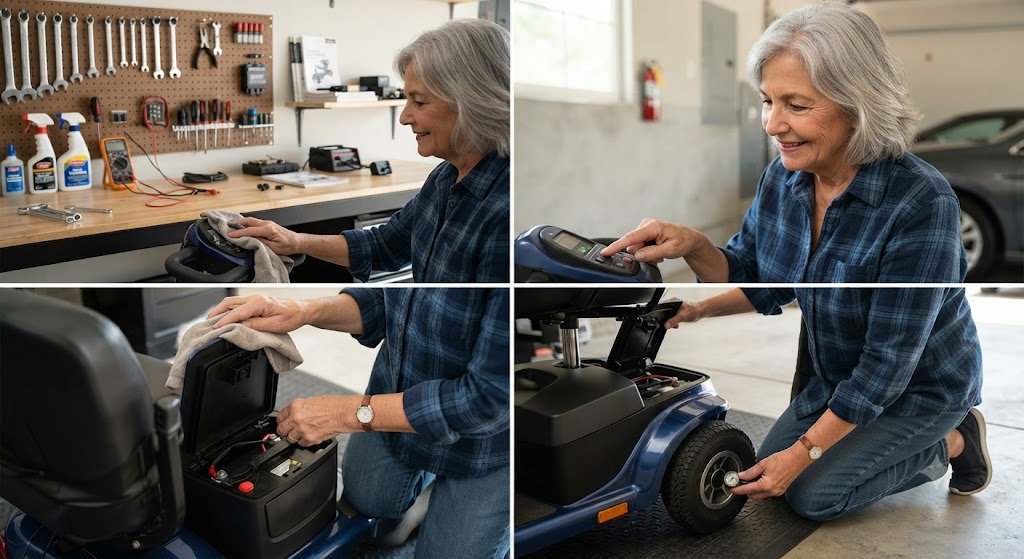
Maintenance and Caring for Mobility Scooters
Maintenance of your mobility scooter will ensure safe and effective operation for many years to come:
- Battery charging routines – regular charging without allowing the battery to discharge completely
- Inspection of tires – wear and tear checking, inflation, and any damage that might have occurred
- Cleaning – cleaning the seat, the body, and the handlebars to reduce dust accumulation
- Checking the brakes – checking periodically that the brakes work effectively
- Storing – storing your mobility scooter in a dry place
- Servicing – periodic professional maintenance of wiring and engine performance
Frequently Asked Questions
1. What is the best mobility scooter for seniors? The best option depends on individual needs — lifestyle, terrain, storage space, and comfort preferences all play a role in finding the right fit.
2. How do I choose the right mobility scooter? Consider daily lifestyle, comfort needs, available space at home, transportation requirements, and the terrain the scooter will be used on most often.
3. Are 3-wheel or 4-wheel mobility scooters better? Three-wheel scooters are generally better for tight indoor spaces, while four-wheel scooters offer more stability for outdoor and uneven terrain.
4. Are folding mobility scooters easy to transport? Yes, folding scooters are specifically designed to be lightweight and compact, making them easier to store and transport in a vehicle.
5. How far can electric mobility scooters travel? Travel distance depends on the battery capacity and model, so it’s important to consider daily travel needs when comparing options.
6. What features should I look for in a mobility scooter? Key features include comfortable seating, adequate battery range, appropriate weight capacity, portability, and reliable safety features.
7. How often should mobility scooters be maintained? Regular maintenance — including battery care, tire checks, and cleaning — should be done routinely, with professional servicing scheduled periodically.
8. Can mobility scooters be used outdoors? Yes, many models, especially four-wheel scooters, are designed for outdoor use on sidewalks, parks, and other outdoor surfaces.
Conclusion
Selecting an appropriate mobility scooter will depend on various factors, such as the personal style, level of comfort, safety needs and even the surroundings within which it is going to be used. The best scooter doesn’t need to be the most expensive and advanced one but the one which fits perfectly into everyday routines and provides independence.
Making this evaluation of scooters will enable you to make a wise choice.