
Any injury to your foot or ankle means that you will have difficulties doing simple daily tasks. Although the crutch has been in use for ages as a mobility tool, many individuals consider them cumbersome to use. The knee walker, which is also called a knee scooter, is another option as it allows you to keep your weight off your injured foot and walk using your other foot. In addition to making it easy for users to walk without causing pain in their arms and shoulders, a knee walker makes daily activities such as grocery shopping and walking within the house possible.
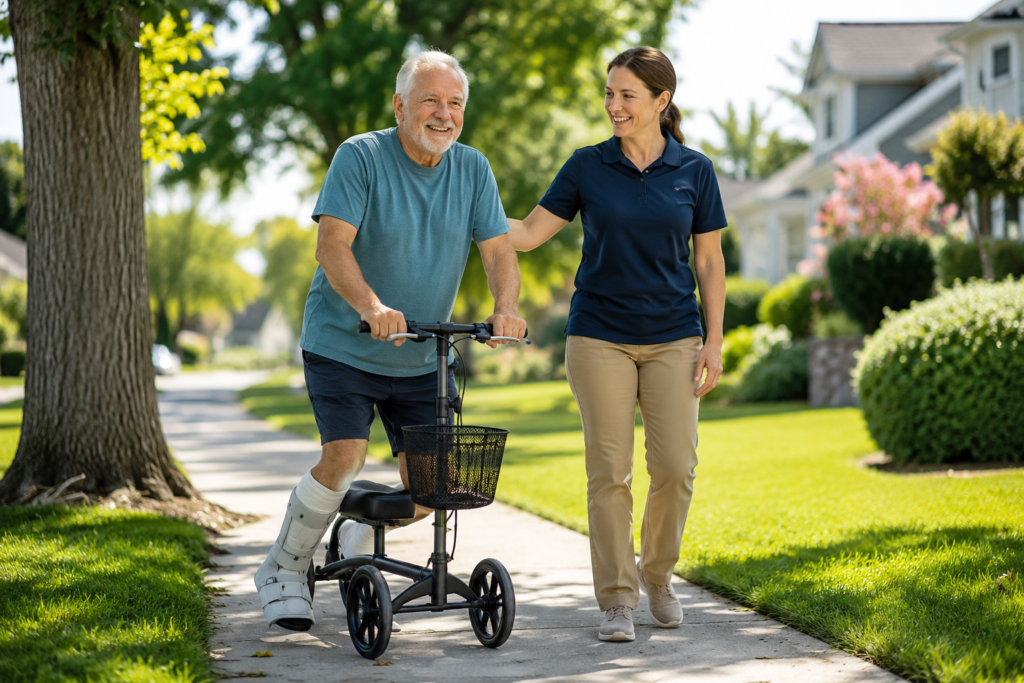
What Is a Knee Walker?
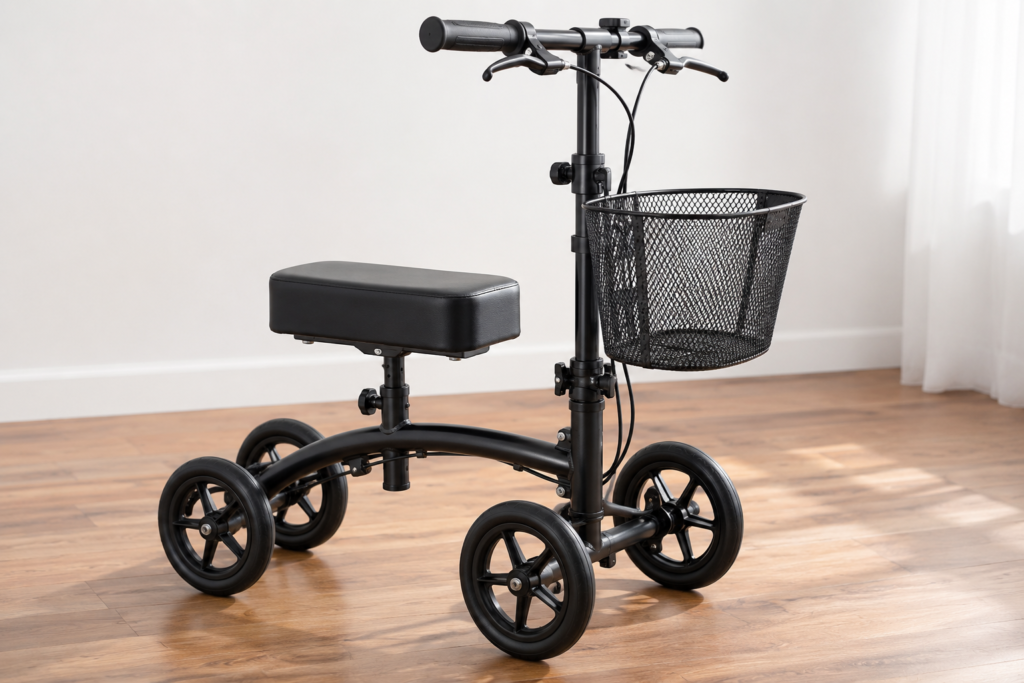
Knee walkers has four wheels, knee pad, handlebars, and brakes. The patient places his injured leg on the cushioned knee pad and keeps the leg bent while moving himself by using his healthy leg.
The most common knee walker features include handlebars for steering, knee pad, framework with three or four wheels, hand brakes, and a basket in front of it. Some knee walkers are also foldable; thus, they can be easily carried or transported.
Unlike crutches, a knee walker does not need you to be strong or balanced, in your body to move forward.
You put your knee on the pad hold the handles and roll.
This makes using it less tiring especially if you have to use it for a long time.
Who Can Benefit from Knee Walker?
Knee walkers not only for young people with sports injuries. They’re actually a great fit for seniors adults and the people who care for them.

Seniors who have difficulty with balance or upper body strength needed for crutches.
Caregivers who want a safe and easy method of assisting someone during in recovery.
Individuals suffering from an injury to the foot, such as fractures and sprains.
Post-operative patients following ankle surgery who must remain off their feet for several weeks.
Anyone healing from lower leg trauma, including fractures below the knee
Standing on one leg and balancing on crutches may seem too daunting or even dangerous; however, a knee scooter can provide you with an even safer method.
Benefits of Using a Knee Walker.
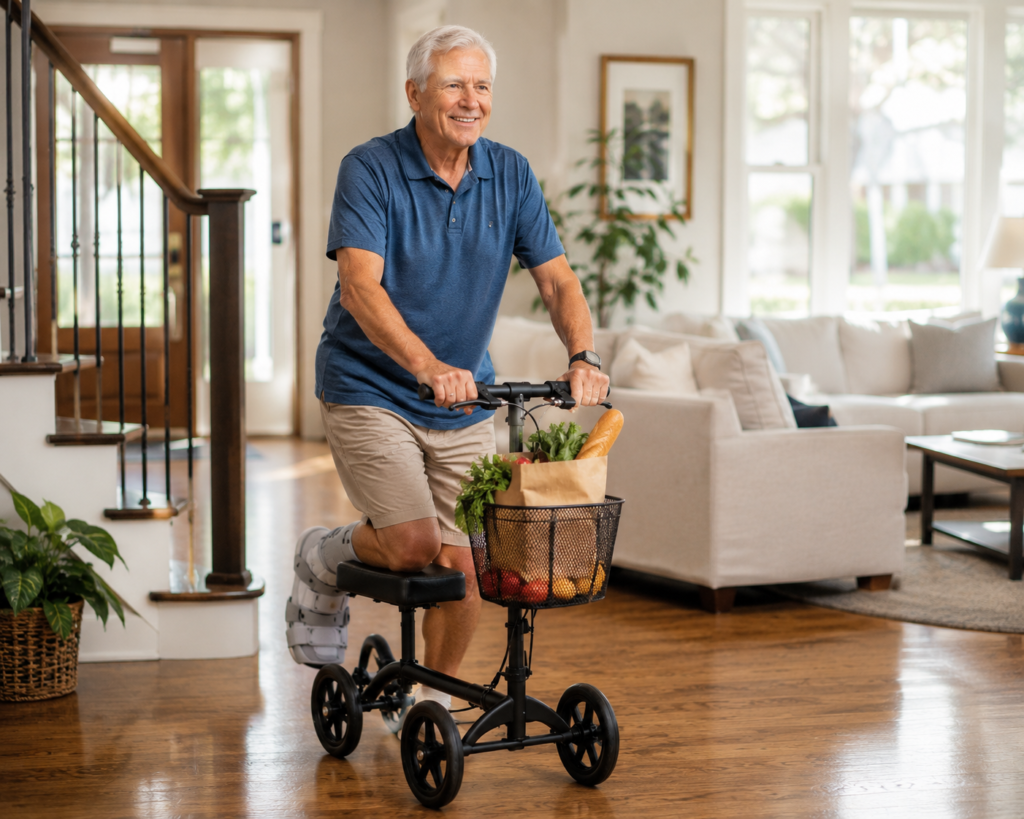
There are plenty of benefits of using the knee walker compared to crutches during recovery from injuries of the feet or ankles.
Less strain on the arms, shoulders, and wrists
Better balance
Makes things easier and less tiring
Increases mobility both indoors and outdoors
Can benefit many people who need to recover
Common Uses
Physicians and physical therapists recommend knee walkers for a variety of lower limb disorders.
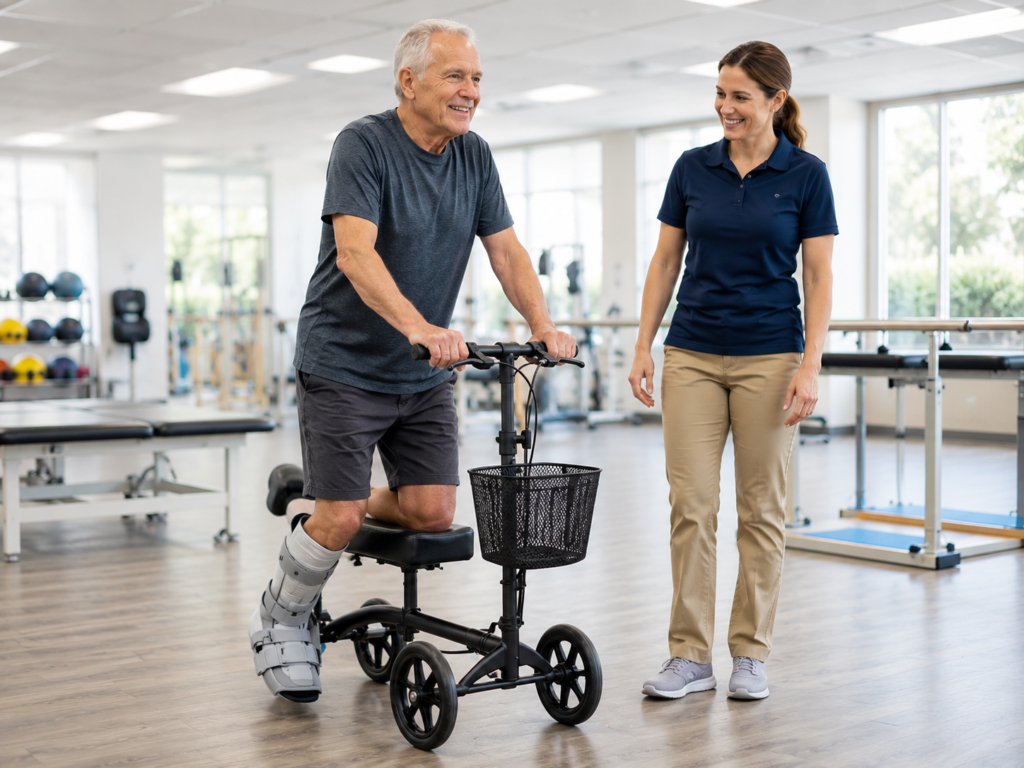
Foot fractures – Keeps weight off the injured foot while it heals.
Ankle fractures – Supports safe movement during recovery.
Achilles tendon injuries or surgery – Helps prevent weight-bearing while healing.
Foot or ankle surgery – Makes everyday mobility easier after an operation.
Recovery on the foot, ankle, or lower leg after surgery
Non-weight-bearing recovery – Allows movement while following your doctor’s instructions.
A knee walker maintains your mobility while adhering to any limits your doctor may have placed on your foot or ankle.
Types of Knee Walkers
Not all knee walkers come in the same design. The kind of walker to choose will depend on where it will be used and how frequently.
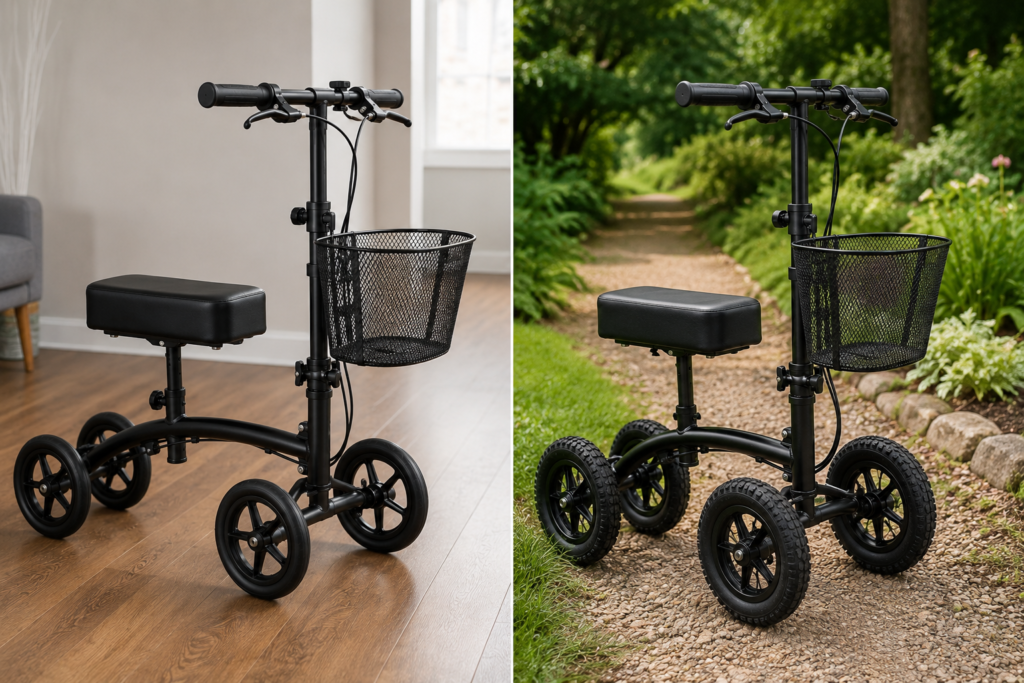
Standard Knee Walkers
They are the most popular type, meant for walking on even floors and pavements both indoors and outdoors. Standard knee walkers are ideal for home or street use.
All-Terrain Knee Walkers
Designed with large pneumatic tires, they offer better mobility on soft surfaces such as dirt or loose terrain compared to standard ones. They suit elderly people who garden or walk on uneven surfaces.
How to Choose the Right Knee Walker?
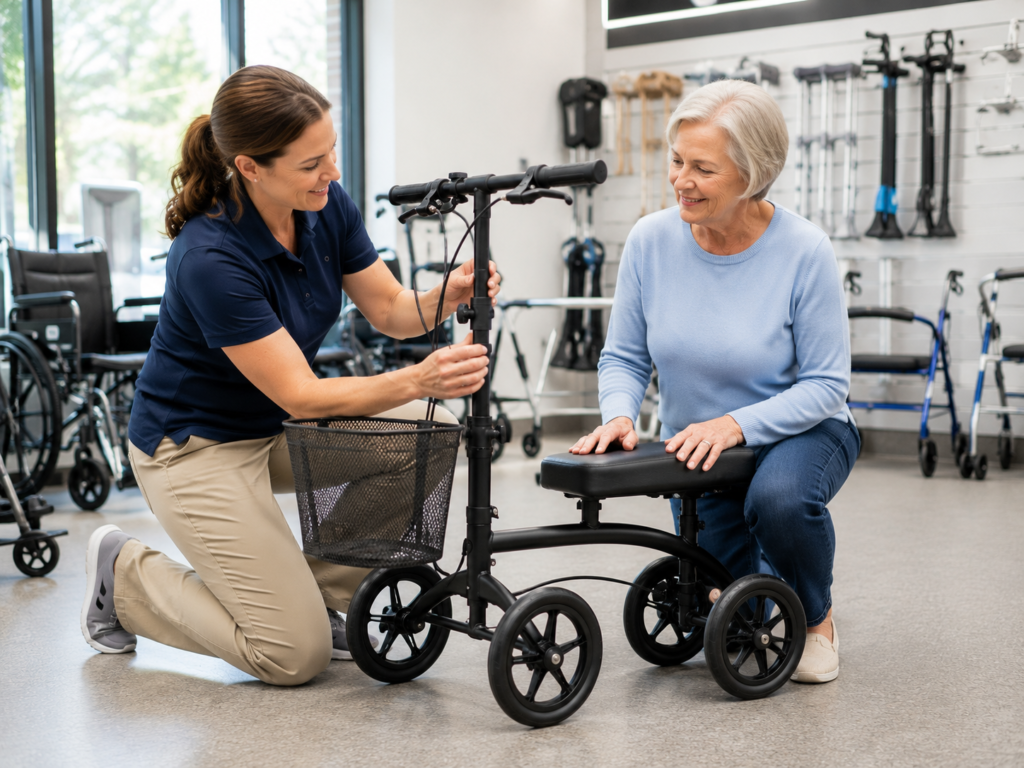
Comfort and safety are greatly enhanced through choosing the right type. Prior to buying or renting, take these into account, ensure that the knee walker has sufficient room to support your body.
Weight Capacity
Height Adjustment
Wheel Size
Brakes
Foldable Design
Storage Basket
It would be ideal if you could test the knee walker yourself or get a recommendation by your physical therapist because of your unique problem.
Safety Tips
For some people, a knee walker might be more safe than crutches, but it still has to be used with caution.
Before using it every time, you need to adjust its knee pad and handlebars to your height.
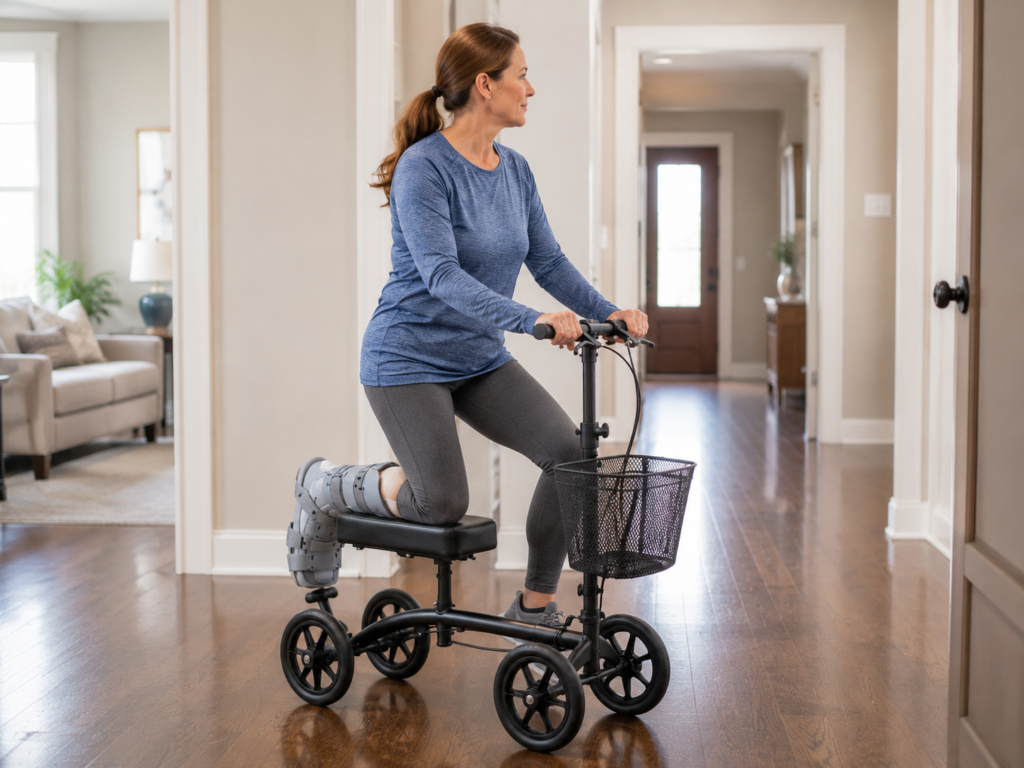
Whenever you stop, particularly on an incline, you have to apply the brakes.
Rather than turning abruptly, you have to make turns slowly and wide.
Knee walkers are not meant to be used on stairs; hence, it is advisable that you avoid them completely.
Also, you will need to wear supportive footwear without an opening in the toe area for your unaffected foot.
Additionally, cords, carpeting, and doorsills need to be eliminated from all your pathways in order to avoid any possible risk of tripping.
Frequently Asked Questions
Why do I get knee pain when I am walking? Some possible reasons include arthritis, damaged cartilage, strained ligaments, or overuse. Another reason could be that after a certain injury, walking style changes and leads to pain. A doctor will be able to diagnose the real cause.
What causes pain behind knee when I walk? Pain behind the knee indicates problems, such as a Baker’s cyst, hamstrings tendonitis, or swelling because of another condition. You should mention this pain to your doctor in case it does not go away after some resting period.
Can a knee walker be used if I have pain when I walk up and down stairs? A knee walker is not designed for using when going upstairs or downstairs; therefore, this solution cannot solve your problem. Nevertheless, it may reduce the load on your joints during recovering after a foot or ankle injury.
Is knee support for walking more useful than a knee walker? These things are used for different needs. Knee support, for example, a knee brace, supports your knee joint during activities. A knee walker is needed in case you have to take the weight off the foot/ankle.
Conclusion
There is no need for one to struggle for several weeks with awkward, wobbly movement using crutches during the recovery process after an injury in the foot, ankle, or lower leg. Both seniors and caregivers will have an easy, stable, and independent movement when using a knee scooter during the recovery process.
Each recovery process is different and what will suit you depends on your own injury, strength, and even living place. It is advisable to seek the advice of your doctor or physiotherapist regarding which type of mobility device will help you recover.