
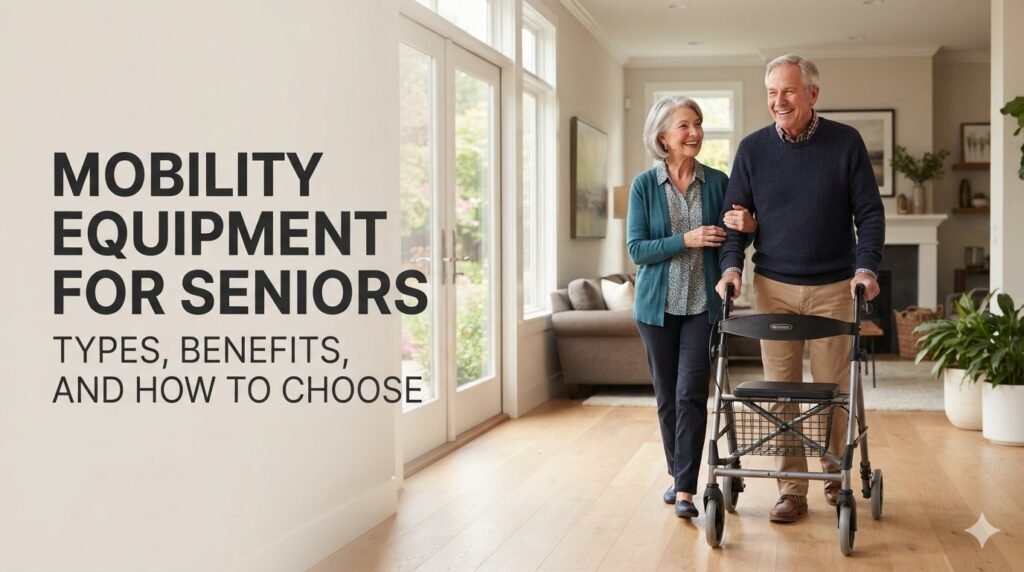
Getting older often means moving a little differently than we used to. Joints stiffen, balance shifts, and a walk that once felt effortless can start to feel like a project. This is a normal part of aging, but it doesn’t mean daily life has to become harder than it needs to be.
That’s where mobility equipment for seniors comes in. From simple canes to powered scooters, today’s mobility aids are designed to support safer, more comfortable movement around the house, the yard, and the wider community. The right piece of equipment won’t turn back the clock, but it can make everyday tasks—like getting to the mailbox or moving from the bed to a chair—feel more manageable.
In this guide, we’ll walk through the main types of mobility equipment for seniors, what each one is generally used for, and how to think through choosing equipment that actually fits a person’s life. Whether you’re researching for yourself or helping a parent or loved one, this article is meant to give you a clear, honest starting point.
What Is Mobility Equipment for Seniors?
“Mobility equipment for seniors” is a broad term for tools and devices designed to help older adults move, stand, sit, and transfer more comfortably. This includes both simple aids, like a cane, and more advanced equipment, like a power wheelchair or stair lift.
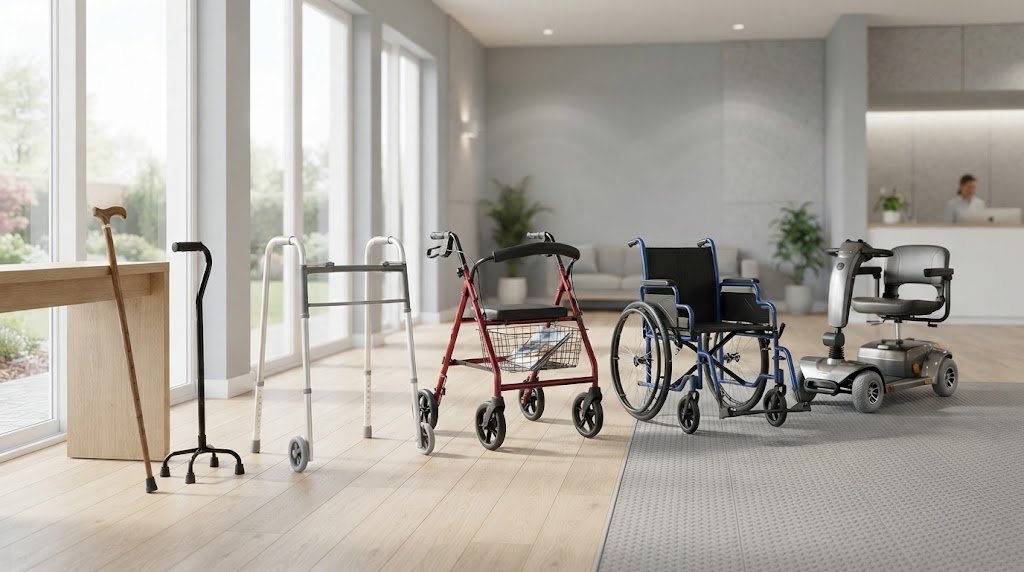
You’ll often hear the terms “mobility aids” and “mobility equipment” used interchangeably, and in everyday conversation, that’s fine. If there’s a distinction, it’s usually this:
- Mobility aids tend to refer to smaller, often lower-cost devices that support walking or standing, such as canes and walkers.
- Mobility equipment is a wider category that also includes larger items like wheelchairs, scooters, lift chairs, and stair lifts.
In practice, both terms describe the same general goal: helping someone move through daily life with a bit more support and a bit less strain. This can touch nearly every part of a day, including getting out of bed, walking to the bathroom, sitting down for meals, or heading out to run errands.
Types of Mobility Equipment for Seniors
There isn’t a single “best” mobility device, because different people need different kinds of support. Below is an overview of the most common types of senior mobility equipment.
Walking Canes
A standard cane is often the first mobility aid people consider. It offers light support and can help with balance for someone who is fairly steady on their feet but wants a bit of extra stability, especially on uneven ground or during longer walks.
Quad Canes
A quad cane has four small feet at the base instead of one, giving it a wider, more stable footprint than a standard cane. This can be helpful for people who need more support than a single-point cane provides but don’t yet need a walker.
Walkers
Walkers offer more support than a cane because they have four legs and a wider frame. Standard walkers (without wheels) are typically lifted slightly with each step, which can be a good option for someone who needs substantial stability and moves at a slower pace.
Rollators
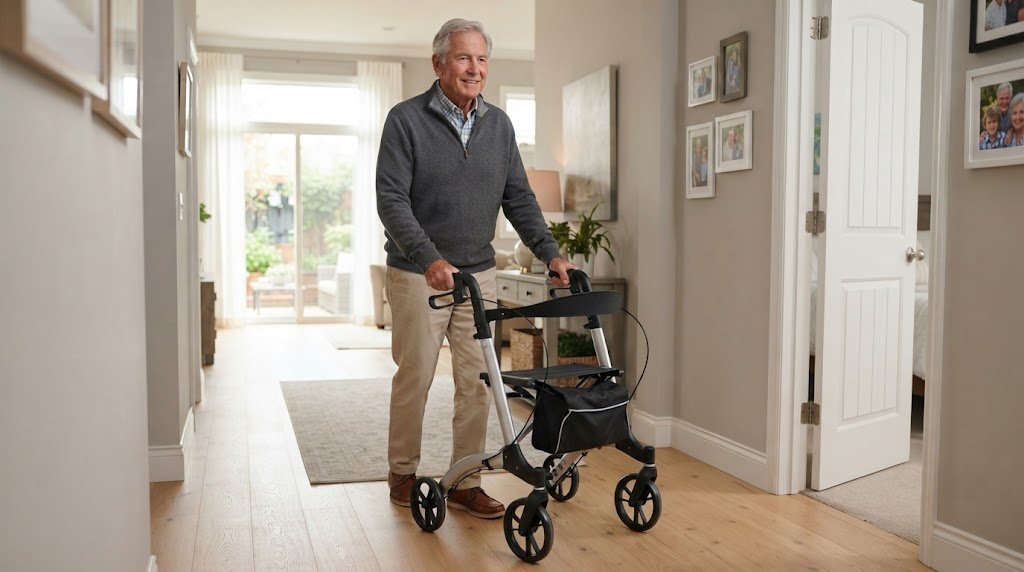
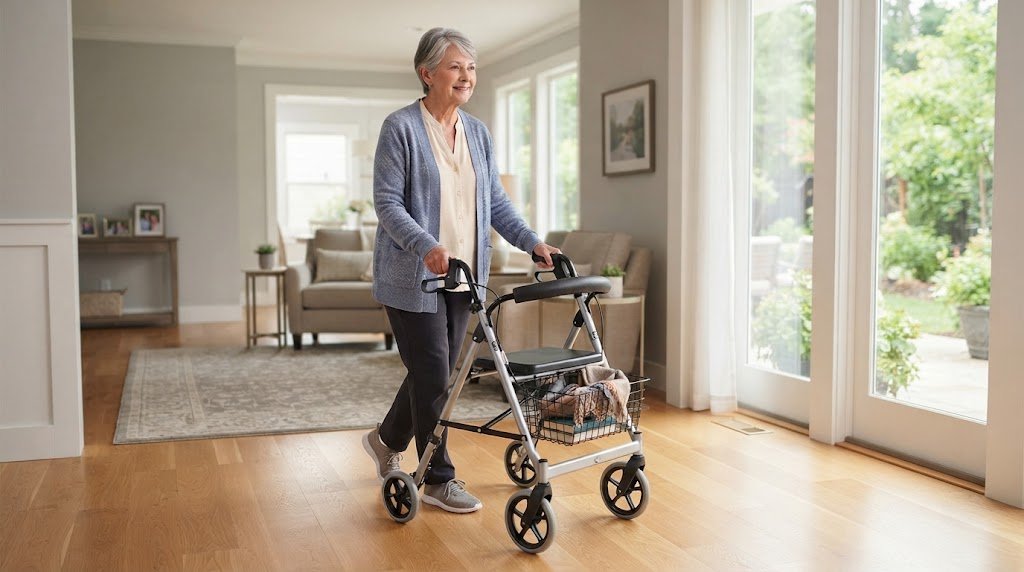
A rollator is a walker with wheels, hand brakes, and usually a built-in seat. Because it rolls rather than needing to be lifted, it can allow for a smoother, more continuous walking pattern. Many people appreciate having a seat built in for resting during longer outings.
Wheelchairs
Wheelchairs, whether manual or power-operated, are designed for people who need significant support for mobility or who cannot walk safely or comfortably for extended distances. Manual wheelchairs require the user or a caregiver to propel them, while power wheelchairs use a motor and joystick control.
Transport Chairs
Transport chairs are lightweight chairs designed to be pushed by a caregiver rather than self-propelled. They’re often smaller and easier to fold and store than a standard wheelchair, making them popular for trips to appointments or outings where a caregiver will be doing the pushing.
Mobility Scooters
Mobility scooters are powered devices that allow a person to sit and drive using handlebars or a tiller. They’re often used by people who can stand and transfer independently but have difficulty walking longer distances, such as around a shopping center or outdoors.
Transfer Aids
Transfer aids include items like transfer boards, gait belts, and stand-assist devices. These tools are designed to help someone move safely between surfaces, such as from a bed to a wheelchair, or from a wheelchair to a car seat.
Stair Lifts
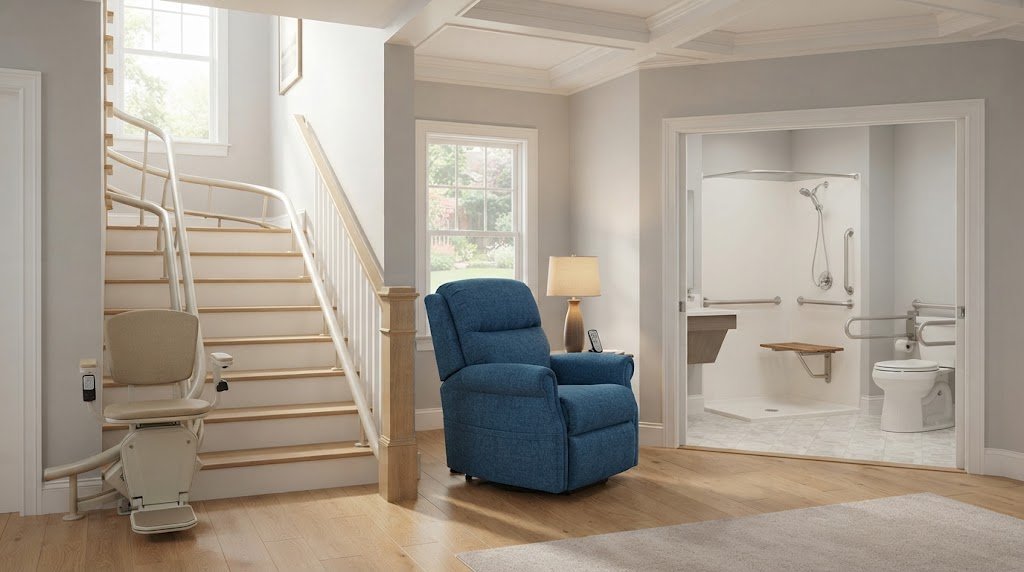
A stair lift is a motorized chair that travels along a track installed on a staircase, allowing a person to sit and be carried up or down the stairs rather than walking them. This can be especially relevant for homes where bedrooms or main living areas are on different floors.
Lift Chairs
A lift chair looks similar to a recliner but includes a motorized mechanism that gently tilts and raises the chair to help a person move from sitting to standing. This can reduce the physical effort involved in getting up from a low or soft seat.
Bathroom Mobility and Safety Equipment
The bathroom is one of the most common places for slips and falls, which is why many households add equipment like grab bars, raised toilet seats, shower chairs, and non-slip mats. These items are designed to provide extra stability during transfers and while standing on wet surfaces.
Benefits of Senior Mobility Equipment
When matched appropriately to a person’s needs, mobility equipment can offer several practical benefits:
- Supporting independence. Many seniors use mobility aids to continue doing daily tasks—like cooking, gardening, or attending social events—on their own terms.
- Making daily movement easier. Equipment like rollators or lift chairs can reduce the physical effort involved in common movements.
- Improving confidence. Feeling steadier on one’s feet can make a real difference in how comfortable someone feels moving around, both at home and in public.
- Helping with community mobility. Scooters and lightweight wheelchairs can make it easier to get to appointments, visit family, or run errands.
- Supporting caregivers. Transfer aids and transport chairs can make it physically easier and safer for a caregiver to assist a loved one.
- Making certain daily activities more manageable. From bathing to getting dressed, the right equipment can reduce strain on both the senior and anyone helping them.
It’s worth noting that mobility equipment supports movement and daily tasks—it does not prevent falls or injuries, and it isn’t a guarantee of independence. Equipment works best as one part of a broader approach that may also include exercise, home modifications, and medical guidance.
How to Choose the Right Mobility Equipment
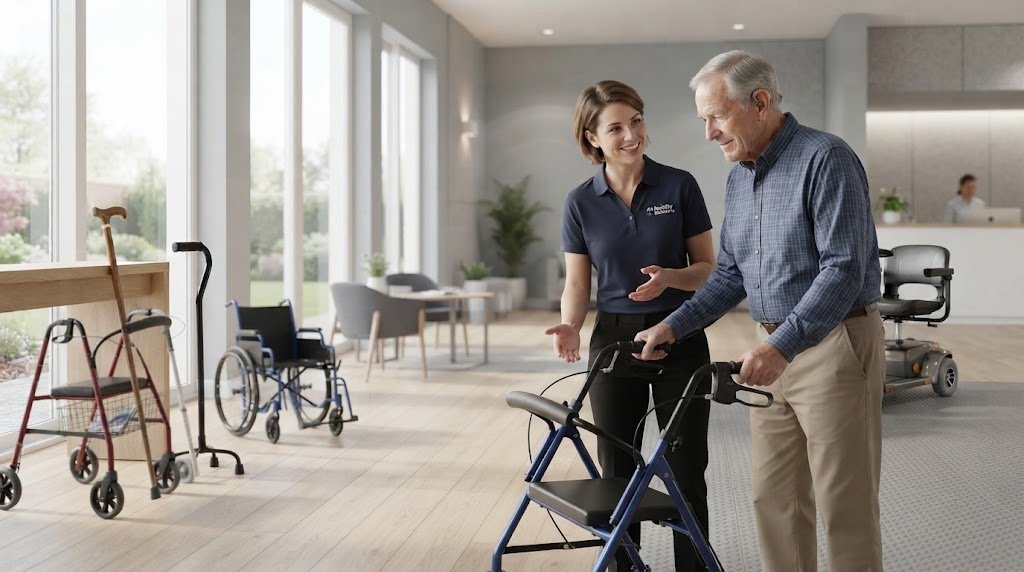
Choosing mobility equipment is a personal decision that depends on the individual’s needs, physical ability, and living environment. Here are some factors worth thinking through:
- Mobility level. Does the person need light support for balance, or more substantial help with walking or standing?
- Balance and stability. Some devices, like quad canes or rollators, are designed for people who need more stability than a standard cane provides.
- Upper-body strength. Devices like standard walkers or manual wheelchairs require a certain amount of arm and shoulder strength to use safely.
- Indoor vs. outdoor use. A lightweight indoor walker may not hold up well on gravel or uneven outdoor terrain.
- Home layout. Narrow hallways, stairs, and doorway widths can all affect which equipment will actually fit and function well at home.
- Transportation needs. Consider whether the equipment needs to fold, fit in a car trunk, or be easily loaded and unloaded.
- Weight capacity. Every device has a maximum weight rating, and choosing equipment within that limit is important for safe use.
- Portability and storage. Think about how often the equipment will need to be moved, folded, or stored, and how much space is available.
- Comfort and adjustability. Look for adjustable heights, padded grips or seats, and other features that make the equipment easier to use for extended periods.
- Budget. Prices vary widely, and it’s worth comparing options, including whether insurance or Medicare may help cover part of the cost.
- Ease of maintenance. Some equipment, like power wheelchairs and scooters, requires more regular maintenance (such as battery care) than simpler manual devices.
Because these factors interact, it’s a good idea to involve a doctor, physical therapist, or occupational therapist when deciding on mobility equipment, especially for anything beyond a basic cane.
Mobility Equipment Comparison Table
| Equipment | Best For | Main Benefit | Where It Is Commonly Used |
|---|---|---|---|
| Walking Cane | People with mild balance needs | Light, portable support | Home and community |
| Quad Cane | People needing extra stability | Wider base for added balance | Home and short outings |
| Walker | People needing substantial support | Sturdy, four-point stability | Home and indoor spaces |
| Rollator | People who want to keep walking with less effort | Wheels plus a seat for resting | Home, community, outdoors |
| Manual Wheelchair | People unable to walk long distances safely | Seated mobility, caregiver or self-propelled | Home, medical settings, outings |
| Transport Chair | People who need a caregiver to push them | Lightweight and easy to transport | Appointments, outings |
| Mobility Scooter | People who can transfer but tire easily walking | Powered mobility over longer distances | Outdoors, shopping centers |
| Transfer Aids | People moving between surfaces (bed, chair, car) | Safer, more supported transfers | Home and vehicles |
| Stair Lift | People with stairs in the home | Motorized transport between floors | Multi-level homes |
| Lift Chair | People who struggle to stand from a seated position | Assists the sit-to-stand motion | Living rooms and bedrooms |
| Bathroom Equipment | People needing support in wet, slippery areas | Added stability during transfers | Bathrooms |
When Should a Senior Consider Mobility Equipment?
There’s no single moment when mobility equipment becomes “necessary,” but certain situations often prompt families to start looking into it, such as:
- Difficulty walking long distances without stopping to rest
- Trouble standing for extended periods, such as while cooking or in line
- Balance concerns, including a fear of falling
- Difficulty navigating stairs safely
- Reduced mobility following an illness, surgery, or injury
- Needing assistance with daily activities like bathing, dressing, or getting out of bed
If any of these sound familiar, it may be worth having a conversation with a healthcare provider about whether mobility equipment could help.
Common Mistakes to Avoid
Selecting mobility equipment can feel overwhelming, and a few common missteps can make equipment less helpful—or even unsafe:
- Choosing equipment based only on price. The cheapest option isn’t always the safest or most comfortable fit.
- Buying the wrong size. A cane or walker that’s too tall or too short can affect posture and balance.
- Ignoring weight capacity. Exceeding a device’s weight limit can affect its stability and lifespan.
- Using equipment without proper adjustment. Height and fit should be set for the individual, not left at a generic default.
- Choosing equipment that doesn’t fit the home environment. A wide rollator may not maneuver well in a narrow hallway.
- Not considering transportation needs. Some devices are difficult to fold, lift, or fit into a vehicle.
- Continuing to use damaged equipment. Worn grips, loose wheels, or cracked frames should be repaired or replaced promptly.
Safety Tips for Using Mobility Equipment
General safety habits can go a long way, regardless of which device is being used:
- Always follow the manufacturer’s instructions for setup, adjustment, and weight limits.
- Check equipment regularly for loose bolts, worn tips, or damaged wheels.
- Make sure canes, walkers, and rollators are set to the correct height for the user.
- Keep pathways at home clear of clutter, cords, and loose rugs.
- Wear supportive, non-slip footwear when using mobility equipment.
- Ask a physical or occupational therapist for guidance on proper technique, especially when starting to use a new device.
- When in doubt, consult a healthcare professional before choosing or changing mobility equipment.
Mobility Equipment for Seniors: Making the Right Choice
There’s no single piece of equipment that works for every senior. The right choice depends on the individual’s mobility level, physical strength, home layout, and daily routine. What works well for one person may not be the right fit for another, even if they have similar diagnoses or ages.
Taking time to evaluate needs honestly, involve a healthcare professional, and try equipment before committing can make a meaningful difference in comfort and usability over the long run.
FAQ Section
What is the best mobility equipment for seniors? There isn’t one “best” option for everyone. The right equipment depends on the person’s balance, strength, and daily activities, so it’s worth evaluating individual needs before choosing.
What mobility aid is best for an elderly person with balance problems? For balance concerns, a quad cane, standard walker, or rollator is often considered, depending on how much support is needed. A healthcare provider can help determine the safest option.
What is the difference between a walker and a rollator? A standard walker typically has four legs and no wheels, requiring it to be lifted with each step. A rollator has wheels, hand brakes, and usually a seat, allowing for a smoother, rolling motion.
Are mobility scooters suitable for seniors? Mobility scooters can be a good fit for seniors who can transfer and sit independently but have difficulty walking long distances. They’re not typically designed for people who need help standing or transferring.
How do I know which mobility aid I need? Consider your current mobility level, balance, strength, and where you plan to use the equipment. A doctor or physical therapist can offer a more personalized recommendation.
Can mobility equipment be used inside the home? Yes, many devices, including canes, walkers, rollators, and lift chairs, are commonly used indoors. Some equipment, like larger scooters, may be better suited for outdoor or community use.
Should a senior consult a professional before choosing mobility equipment? Yes, it’s generally a good idea. A doctor, physical therapist, or occupational therapist can assess mobility, strength, and safety needs to help guide the choice.

Conclusion
Aging often brings changes to how we move, but with the right support, daily life can still feel manageable and comfortable. Mobility equipment for seniors comes in many forms, from a simple cane to a powered scooter, each designed to support a different level of need.
There’s no universal solution, and choosing the right equipment means thinking honestly about physical ability, home environment, and daily routines, ideally with guidance from a healthcare professional. If you or a loved one are exploring options, take the time to compare a few types of equipment, ask questions, and choose what genuinely fits your life. The right senior mobility solution is the one that helps you move through your day with a little more ease and confidence.