
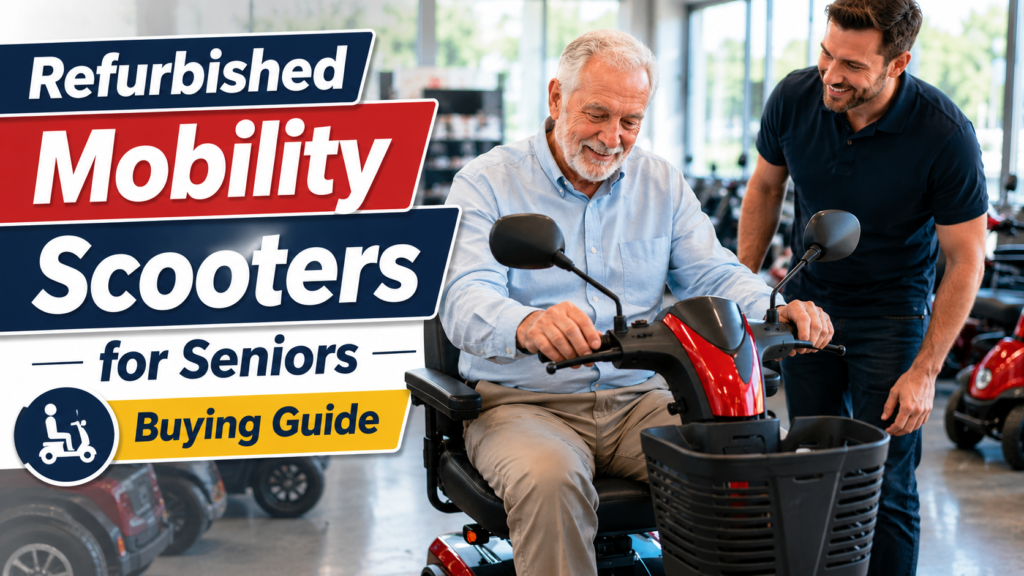
Refurbished Mobility Scooters for Seniors: What to Check Before You Buy
Losing some of your independence can feel discouraging — but a mobility scooter can help you get it back. The trouble is, brand-new scooters can be expensive, and not everyone wants to spend thousands of dollars on a device they may only need part-time.
That’s where refurbished mobility scooters come in. For many seniors, caregivers, and family members, buying a refurbished or pre-owned scooter is a smart, budget-friendly way to regain freedom of movement without draining a savings account. A well-inspected, professionally refurbished scooter can offer many of the same benefits as a new one — reliable performance, a comfortable ride, and the confidence to get around the house, the neighborhood, or the grocery store — at a fraction of the cost.
But here’s the catch: not all “used” scooters are created equal. Some have been carefully restored and tested by professionals. Others are simply resold as-is, with unknown wear on the battery, motor, or frame. Knowing the difference — and knowing exactly what to inspect — can save you from a frustrating (and potentially unsafe) purchase.
This guide walks you through everything you need to know before buying a used or refurbished mobility scooter, including a full inspection checklist, typical pricing, common scams to avoid, and answers to the most common questions seniors and caregivers ask.
Used vs. Pre-Owned vs. Refurbished: What’s the Difference?
These terms get used interchangeably online, but they don’t mean the same thing. Understanding the difference is the first step in making a confident purchase.
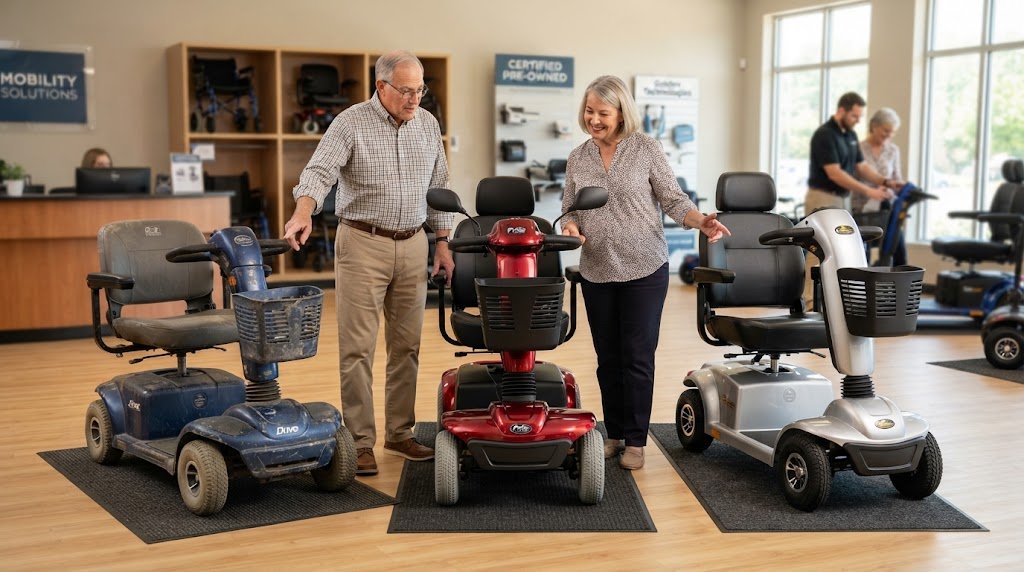
Used Mobility Scooters
A used mobility scooter is simply a scooter that has already had at least one owner. It may be sold “as-is,” often by an individual through a classifieds site or local marketplace, with little to no inspection, testing, or repair work done before the sale.
Pre-Owned Mobility Scooters
Pre-owned mobility scooters is largely a softer marketing term for the same thing — a previously owned scooter. Some sellers use “pre-owned” to describe units that have had a basic cleaning or once-over, but there’s no industry-standard definition, so it’s worth asking the seller directly what work (if any) was done.
Professionally Refurbished Mobility Scooters
A professionally refurbished mobility scooter has typically gone through a structured process that may include:
- A full mechanical inspection
- Replacement of worn parts (such as tires, batteries, or upholstery)
- Cleaning and sanitizing
- Functional testing before resale
Because of this extra work, refurbished scooters usually come at a slightly higher price than a private “used” sale — but they generally offer more peace of mind. Always ask the seller exactly what their refurbishing process includes, since the quality can vary from one company to another.
Why Consider a Refurbished Mobility Scooter?
For many seniors and their families, refurbished scooters strike a helpful balance between affordability and reliability. They can be a particularly good option if you:
- Need a scooter for occasional or short-term use
- Are trying mobility equipment for the first time and aren’t ready to invest in a brand-new model
- Are working with a limited or fixed budget
- Want a more environmentally friendly option by giving a used device a second life

The Complete Pre-Purchase Checklist
Before you hand over any money, walk through this checklist — whether you’re buying in person, from a refurbisher, or online. If you can’t physically test the scooter yourself, ask a caregiver, family member, or the seller to walk through each item with you and confirm the results in writing.
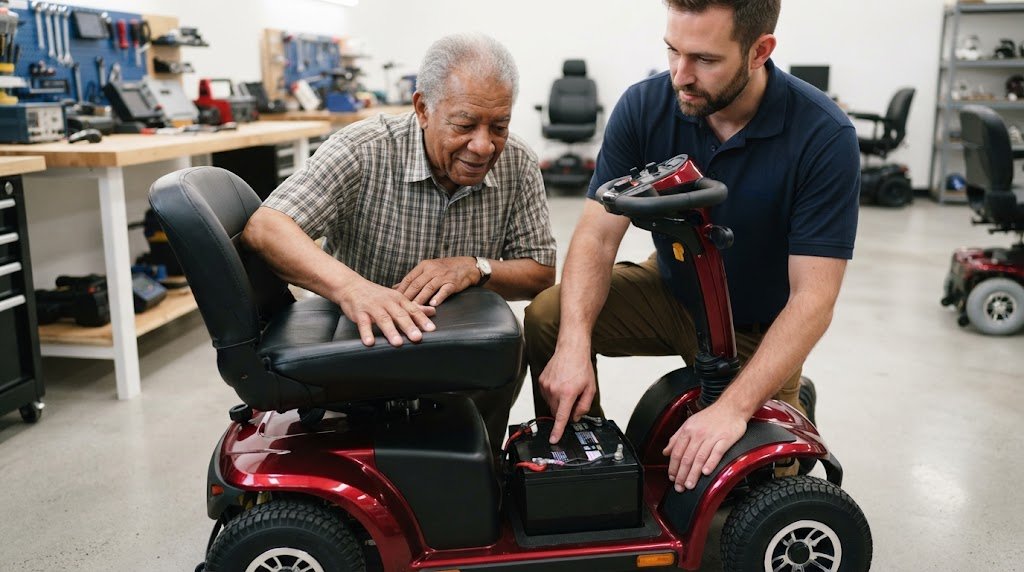
1. Battery Condition and Age
The battery is often the most expensive component to replace, so it deserves close attention.
- Ask how old the battery is and whether it’s original or replaced
- Ask how long the scooter runs on a full charge in normal use
- Look for signs of corrosion, swelling, or leakage around the battery terminals
- Ask whether the seller offers any documentation of battery testing
2. Charger Functionality
- Confirm the charger is included and is the correct one for the scooter model
- Plug it in and confirm it powers on and charges properly
- Check the charging cable and plug for fraying, cracks, or exposed wiring
3. Motor Performance
- Take the scooter for a test ride if at all possible
- Listen for unusual grinding, whining, or clicking noises
- Test acceleration from a stop and while turning
- Confirm the motor doesn’t overheat during a short test run
4. Tires and Wheels
- Check tread depth and look for cracking, flat spots, or dry rot
- Ask whether the tires are pneumatic (air-filled) or solid/foam-filled, and factor in the maintenance differences
- Spin each wheel to check for wobbling or bearing noise
5. Brakes
- Test the brakes on a flat surface and confirm they engage smoothly
- Ask whether the scooter has an automatic electromagnetic brake (common on many models) and confirm it’s functioning
- Make sure the scooter doesn’t roll unexpectedly when powered off
6. Seat Comfort and Condition
- Check the seat cushion for tears, flattened padding, or stains
- Test the seat swivel function, if applicable
- Confirm the seat height and armrests adjust properly
- Sit in it yourself, if possible, to check comfort and support
7. Weight Capacity
- Confirm the scooter’s rated weight capacity matches your needs
- Ask the seller directly for this specification rather than guessing based on similar models, since capacity varies by make and model
8. Range per Charge
- Ask the seller for the manufacturer’s original range estimate and how the current battery compares
- Keep in mind that real-world range can be affected by terrain, rider weight, and battery age
9. Maximum Speed
- Confirm the scooter’s top speed matches your comfort level and intended use (indoor vs. outdoor)
- Test the speed settings during your test ride, if available
10. Overall Frame Condition
- Inspect the frame for rust, cracks, or previous repairs
- Check that all panels and covers are securely attached
- Ask whether the scooter has ever been in an accident or stored outdoors
11. Lights and Indicators
- Test headlights, taillights, and turn signals if the model includes them
- Check the battery/charge indicator display for accuracy
- Confirm any horn or warning signal functions properly
12. Warranty Availability
- Ask whether any warranty is included, and if so, what it covers and for how long
- Get warranty terms in writing rather than relying on a verbal promise
- If no warranty is offered, factor that added risk into your decision
13. Return Policy
- Ask about the seller’s return or exchange policy before you buy
- Understand any restocking fees or time limits
- Get the policy in writing, especially for online purchases
14. Availability of Replacement Parts
- Ask whether common replacement parts (batteries, tires, chargers) are still available for this specific make and model
- Older or discontinued models can be harder — and more expensive — to service down the road
How Much Do Refurbished Mobility Scooters Typically Cost?
Pricing for refurbished mobility scooters varies widely depending on the brand, model, age, battery condition, and where you buy. Generally speaking, used mobility scooters for seniors sold privately with no inspection tend to be the least expensive option, while refurbished mobility scooters for sale through a specialty dealer or refurbisher — which typically include testing and part replacement — sit somewhere between private used sales and brand-new retail pricing.
Rather than relying on a fixed number, it’s best to:
- Compare prices across several sellers for the same or similar model
- Ask what’s included in the price (battery, charger, accessories, warranty)
- Request an itemized breakdown if the price seems unusually low, since that can be a red flag for hidden issues
Benefits of Buying Refurbished
- Lower cost compared to buying new
- Faster availability — no waiting for manufacturing or shipping of a new unit
- Environmentally friendly, since it extends the life of an existing product
- Good entry point for first-time users testing whether a scooter fits their lifestyle

Potential Disadvantages of Buying Refurbished
- Shorter remaining battery life compared to a brand-new unit
- Limited or no warranty, depending on the seller
- Cosmetic wear such as scratches or faded upholstery
- Possible difficulty finding parts for older or discontinued models
- Quality varies by seller — not all “refurbished” listings involve the same level of inspection

How to Avoid Scams and Unsafe Sellers
Unfortunately, mobility equipment resale isn’t immune to scams. Keep these tips in mind, especially if you’re shopping online:
- Buy from reputable, established sellers. Look for businesses with verifiable contact information, physical addresses, and customer reviews.
- Never wire money or pay with gift cards for equipment purchases — these payment methods are common red flags for scams.
- Ask for documentation of any refurbishing work, testing, or repairs performed.
- Request current photos and videos of the actual scooter, not stock images.
- Be cautious of prices that seem too good to be true compared to similar listings.
- Meet in a safe, public location for local in-person sales, and bring a friend or family member if possible.
- Get everything in writing, including price, condition, warranty, and return policy, before completing payment.
- Trust your instincts. If a seller is evasive about answering questions or rushes you to decide, it’s okay to walk away.
Refurbished vs. Used vs. New Mobility Scooters: Comparison Table
| Feature | New Scooter | Used Scooter | Refurbished Scooter |
|---|---|---|---|
| Cost | Highest | Lowest | Mid-range |
| Inspection/Testing | Factory tested | Usually none | Typically inspected and tested |
| Warranty | Full manufacturer warranty | Rarely included | Sometimes included (ask seller) |
| Battery Condition | Brand new | Unknown/unverified | Often tested or replaced |
| Cosmetic Condition | Like-new | Varies widely | Cleaned, may show minor wear |
| Return Policy | Standard retail policy | Often none (private sale) | Varies by seller — ask directly |
| Best For | Long-term, daily use | Budget buyers comfortable with risk | Balance of savings and reliability |
Who Should Buy a Refurbished Mobility Scooter?
A refurbished scooter tends to be a good fit for:
- First-time users who want to try a scooter before committing to a new one
- Occasional users who need a scooter for specific outings rather than daily, all-day use
- Budget-conscious shoppers looking for affordable mobility scooters for seniors without sacrificing basic safety checks
- Caregivers and family members shopping on behalf of a loved one who want a reliable option without the full cost of a new unit
A refurbished scooter may be less ideal for someone who depends on a scooter for daily, long-distance, or heavy-duty use, where a new unit’s full warranty and battery life may offer more long-term peace of mind.
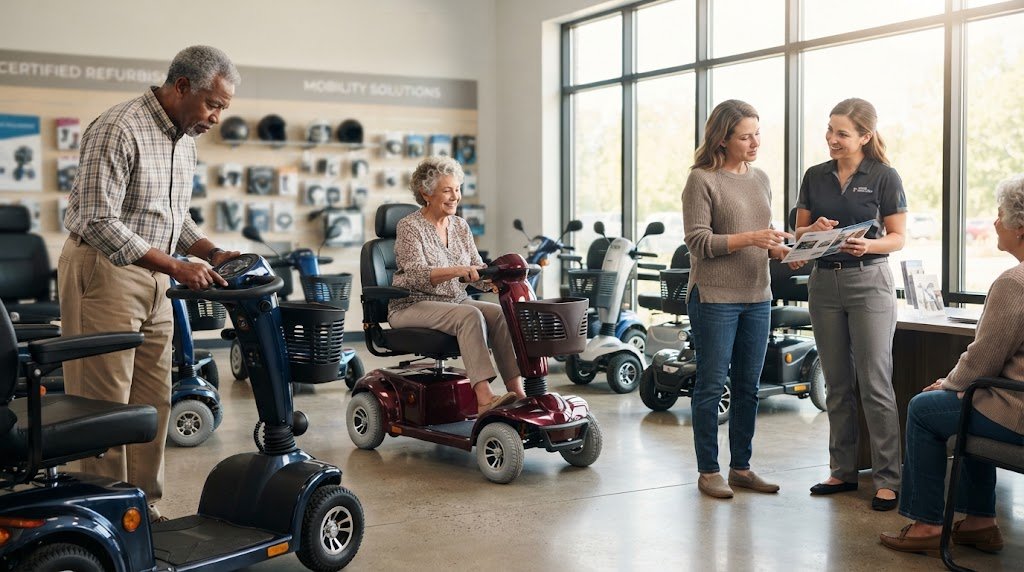
Frequently Asked Questions
1. Are refurbished mobility scooters safe to use? A refurbished scooter can be a safe option when it has been properly inspected and tested, and when you personally verify the checklist items above — battery, brakes, tires, and frame condition especially. Always confirm the seller’s inspection process before buying.
2. How long do refurbished mobility scooter batteries typically last? Battery lifespan depends on the battery’s age, how it was maintained, and usage patterns. Ask the seller directly about the battery’s age and current performance rather than assuming it matches a new battery’s expected lifespan.
3. Can I get a warranty on a refurbished mobility scooter? Some sellers offer a limited warranty on refurbished units, while others sell strictly as-is. Always ask about warranty coverage before purchasing, and get the terms in writing.
4. What’s the difference between a refurbished and a used mobility scooter? A used scooter is typically resold without formal inspection or repair, while a refurbished scooter has usually been inspected, cleaned, and had worn parts addressed by the seller or a specialist. Always confirm exactly what work was done.
5. Where can I buy a reputable refurbished mobility scooter? Look for established medical equipment resellers, mobility specialty stores, or refurbishers with verifiable reviews and clear return policies, rather than relying solely on unmoderated online marketplaces.
6. Should I have a professional inspect a used scooter before buying? If you’re unsure about evaluating the mechanical and electrical condition yourself, asking a mobility equipment technician or knowledgeable family member to review the scooter — or to review the seller’s documentation — can add an extra layer of confidence before you buy.
7. Will insurance or Medicare cover a refurbished mobility scooter? Coverage rules vary by provider and individual circumstances. Contact your insurance provider or Medicare directly to ask about coverage for refurbished or pre-owned mobility equipment.
Mobility Scooter safety guidelines
Final Thoughts: Buying Advice for Seniors and Caregivers
A refurbished mobility scooter can be a genuinely smart way to regain independence without overspending — but only when you take the time to inspect it thoroughly and buy from a trustworthy source. Use the checklist in this guide every time you shop, whether you’re comparing pre owned mobility scooters locally or browsing refurbished mobility scooters for sale online.
Take your time, ask questions, get answers in writing, and don’t be afraid to walk away from a listing that doesn’t feel right. The right scooter is out there — and a little diligence now can mean years of safe, comfortable mobility ahead.
Ready to explore more options? Browse our other senior mobility and independent living resources to compare equipment types, learn about home safety modifications, and find more tips for aging in place comfortably and confidently.