

If you’ve noticed a parent, spouse, or even yourself walking a little more cautiously lately, you’re not alone. Balance changes are one of the most common parts of getting older, and they can turn a simple walk to the mailbox into something that feels risky. That’s where rollator walkers come in. They’ve quietly become one of the most popular mobility aids in the country, and for good reason — they offer stability without sacrificing independence.
This guide walks you through everything you need to know about rollator walkers: what they are, who they help, how to pick the right one, and how to use one safely every day.
What Is a Rollator Walker?
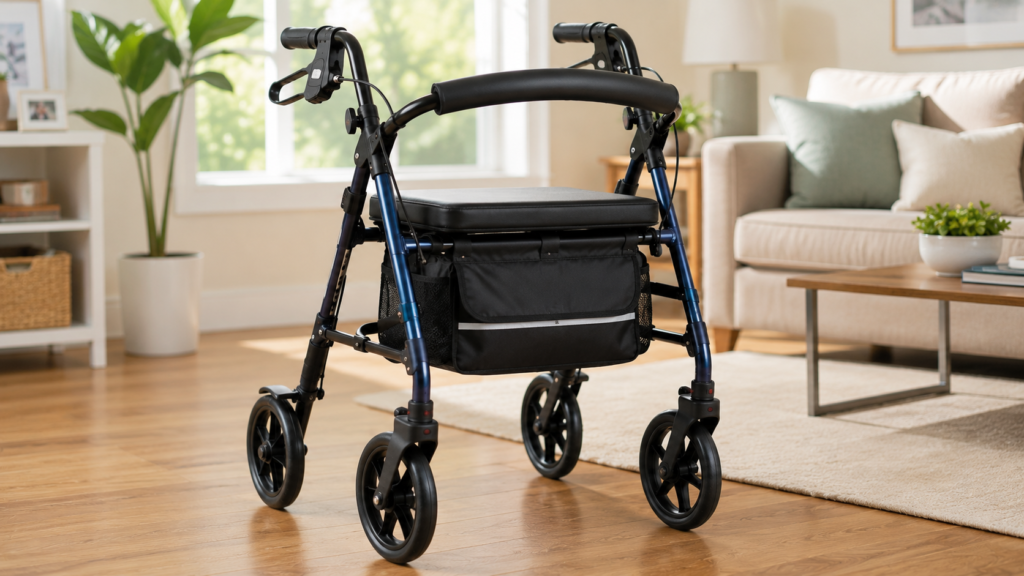
A rollator walker, sometimes just called a “rollator” or a rolling walker, is a wheeled mobility aid designed to provide support while walking. Unlike a traditional walker that has to be lifted with each step, a rollator rolls smoothly along the ground on three or four wheels, making movement feel far more natural.
Most rollator walkers also include a built-in seat, hand brakes similar to those on a bicycle, and a small storage pouch or basket. That combination means a rollator isn’t just something to lean on — it’s a portable rest stop, a stability tool, and a bit of extra freedom all in one.
How Does a Rollator Walker Work?
The design is simple but clever. Handlebars at the top let the user guide the walker forward while supporting some of their body weight. Hand brakes, mounted just below the grips, let the user slow down or lock the wheels in place, which is especially helpful when standing still or sitting down on the seat.
Because the wheels roll rather than requiring the walker to be picked up and set down, a rollator allows for a more continuous, natural walking rhythm. This can reduce fatigue and make longer walks — around the block, through a store, or across a parking lot — much more manageable.
Who Can Benefit from a Rollator Walker?

Rollator walkers tend to work best for people who need some balance support but don’t require the maximum stability of a standard, non-rolling walker. This often includes:
- Seniors recovering from hip or knee surgery
- People managing arthritis or joint pain
- Individuals with mild to moderate balance concerns
- Those with chronic conditions that cause fatigue, such as heart or lung issues
- Caregivers looking for a safer way to help a loved one stay active
If someone needs to lean heavily on a walker for full-time support, a standard walker or even a different mobility aid altogether may be a better fit — a conversation worth having with a doctor or physical therapist first.
Types of Rollator Walkers
Rollators generally fall into a few categories:
- 3-wheel rollators — Lighter and more maneuverable, great for tighter indoor spaces
- 4-wheel rollators — More stable, with a larger seat and storage capacity
- Bariatric rollators — Built with reinforced frames for higher weight capacities
- Heavy-duty outdoor rollators — Larger wheels designed for uneven terrain like gravel or grass
- Compact/travel rollators — Foldable and lightweight for easy transport in a car trunk
Benefits of Rollator Walkers

| Benefit | Why It Matters |
|---|---|
| Built-in seat | Allows rest breaks without needing a nearby bench |
| Rolling wheels | Easier, more natural walking motion than lifting a frame |
| Hand brakes | Added control on ramps, slopes, or uneven ground |
| Storage basket | Carries groceries, a purse, or personal items hands-free |
| Lightweight frames | Many models fold for easy transport in a car |
Beyond the practical features, there’s an emotional benefit too. Many caregivers say the biggest change they notice isn’t physical — it’s confidence. A parent who was hesitant to walk to a neighbor’s house may start going out more often once they trust their footing again.
Potential Limitations
Rollator walkers aren’t the right fit for everyone. A few things worth knowing:
- They require some hand strength and coordination to operate the brakes safely.
- They offer less support than a standard walker for people with significant balance loss.
- The seat is meant for short rests, not for regular sitting and pushing.
- Larger models can be harder to maneuver in small bathrooms or tight hallways.
Key Features to Consider Before Buying
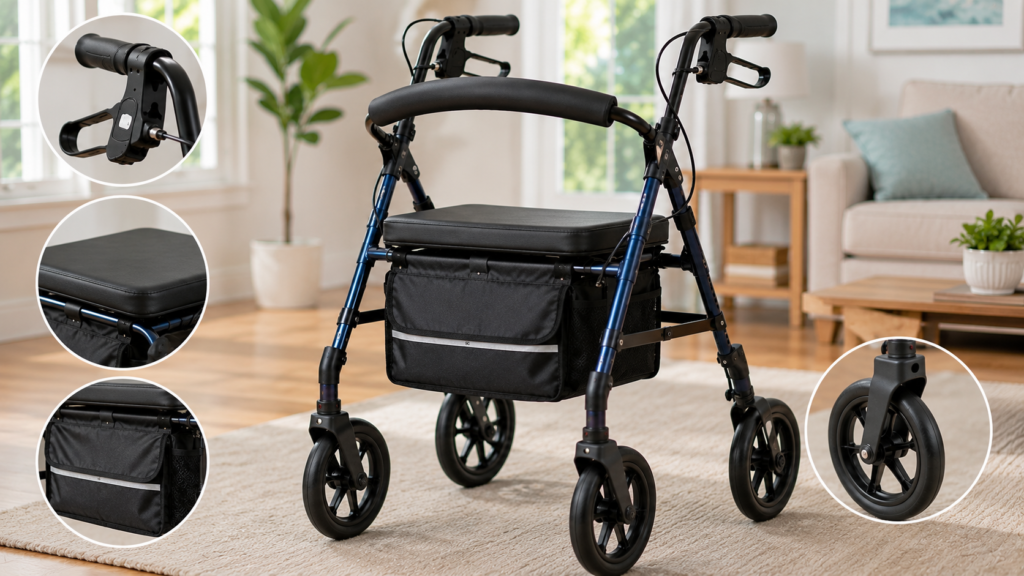
Before buying, it helps to think through:
- Weight capacity — Check the manufacturer’s listed limit and choose with some buffer room
- Wheel size — Larger wheels (8 inches or more) handle outdoor terrain better
- Seat height — Should allow feet to rest flat on the ground when seated
- Handle height adjustment — Proper height reduces strain on the back and shoulders
- Foldability — Important for anyone who travels or has limited storage space
- Overall weight — Lighter frames are easier to lift into a car trunk
Rollator Walker vs. Standard Walker
| Feature | Rollator Walker | Standard Walker |
|---|---|---|
| Movement | Rolls continuously | Must be lifted with each step |
| Stability | Moderate | Higher |
| Seat included | Usually yes | Rarely |
| Best for | Mild-to-moderate balance needs | More significant balance support |
| Indoor/outdoor use | Both | Mostly indoor |
3-Wheel vs. 4-Wheel Rollators
| Feature | 3-Wheel Rollator | 4-Wheel Rollator |
|---|---|---|
| Maneuverability | Excellent in tight spaces | Good, slightly wider turning radius |
| Stability | Moderate | Higher |
| Seat | Sometimes smaller or absent | Usually larger, more comfortable |
| Storage | Limited | More basket/pouch space |
| Best for | Apartments, narrow hallways | Longer outdoor walks, more storage needs |
How to Choose the Right Rollator Walker
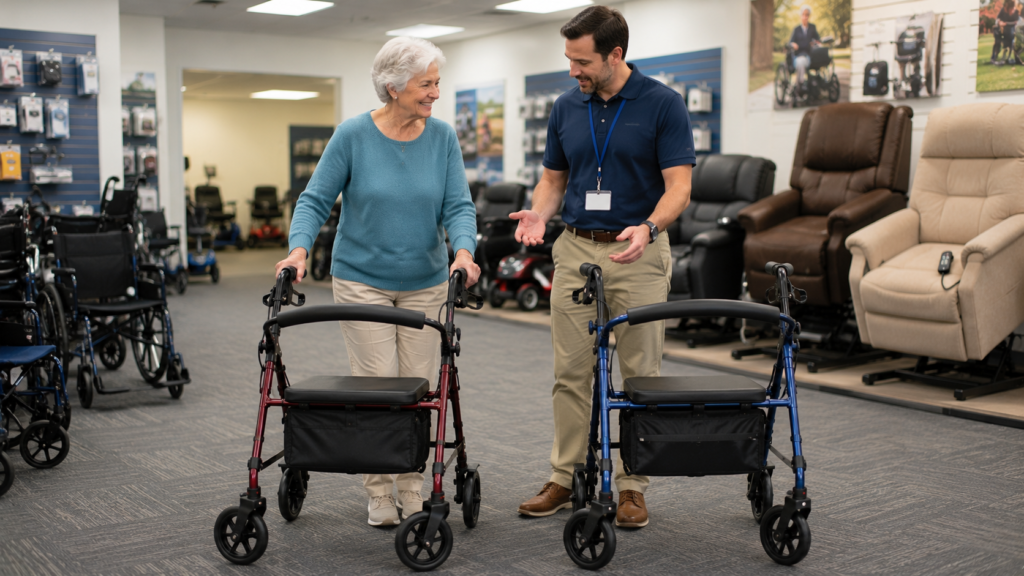
Start by thinking about where the rollator will be used most. Someone who mainly walks around a small apartment has different needs than someone heading out for daily walks around the neighborhood. It’s also worth testing the height adjustment in person, since a poorly fitted rollator can cause slouching or strain over time.
If possible, involve a physical therapist or physician in the decision. They can assess balance, strength, and daily routines to recommend the most appropriate type — whether that’s a lightweight 3-wheel model, a sturdier 4-wheel rollator, or a different mobility aid such as a standard walker, walking cane, or even a mobility scooter for longer distances.
Safety Tips
- Always lock the brakes fully before sitting on the seat.
- Avoid using the rollator on stairs — it isn’t designed for that.
- Keep both hands on the grips while walking, rather than pushing it out ahead.
- Check tire condition and brake responsiveness regularly.
- Wear supportive, non-slip shoes rather than slippers or sandals.
Maintenance and Care
A little upkeep goes a long way. Wipe down the frame regularly, especially after outdoor use, and check that wheels roll smoothly without wobbling. Brake cables can loosen over time, so it’s worth testing them monthly and tightening or replacing them if the stopping power feels weaker than usual. Storing the rollator somewhere dry helps prevent rust on metal parts.
Frequently Asked Questions
Is a rollator walker covered by Medicare? Rollators may be covered under Medicare Part B as durable medical equipment if a doctor documents medical necessity. Coverage details vary, so it’s best to confirm with Medicare or a supplemental insurer directly.
What’s the weight limit on a typical rollator? Standard models usually support 250–300 pounds, while bariatric versions can support 400–500 pounds or more.
Can a rollator walker be used outdoors on grass or gravel? Yes, but models with larger wheels (8 inches or more) handle uneven outdoor terrain more comfortably than smaller indoor-focused wheels.
How do I know if I need a rollator instead of a standard walker? If you need continuous rolling movement and occasional rest breaks, a rollator often works well. If you need to lean your full weight on the walker for stability, a standard walker may be safer — a doctor or physical therapist can help confirm.
Are rollator walkers hard to fold and transport? Most modern rollators fold in seconds with a simple pull or push mechanism, and many fit easily into a car trunk or backseat.
Do rollators work well in small homes or apartments? 3-wheel rollators are generally easier to maneuver through narrow hallways and tight turns than bulkier 4-wheel models.
How often should I replace a rollator? With regular care, a quality rollator can last several years. Watch for worn brake cables, wobbly wheels, or a frame that no longer folds securely as signs it may be time for a replacement.
Conclusion

Choosing a rollator walker isn’t just about picking a mobility aid — it’s about making it easier to keep doing the things that matter, whether that’s a morning walk, a trip to the grocery store, or simply feeling steady on your feet at home. With the right fit, a rollator can offer real support without getting in the way of daily life.
If you’re still weighing your options, our Walker Buying Guide covers additional considerations, or you can explore related mobility aids like manual wheelchairs, electric wheelchairs, transport wheelchairs, and lift chairs to find the best match for your needs.