
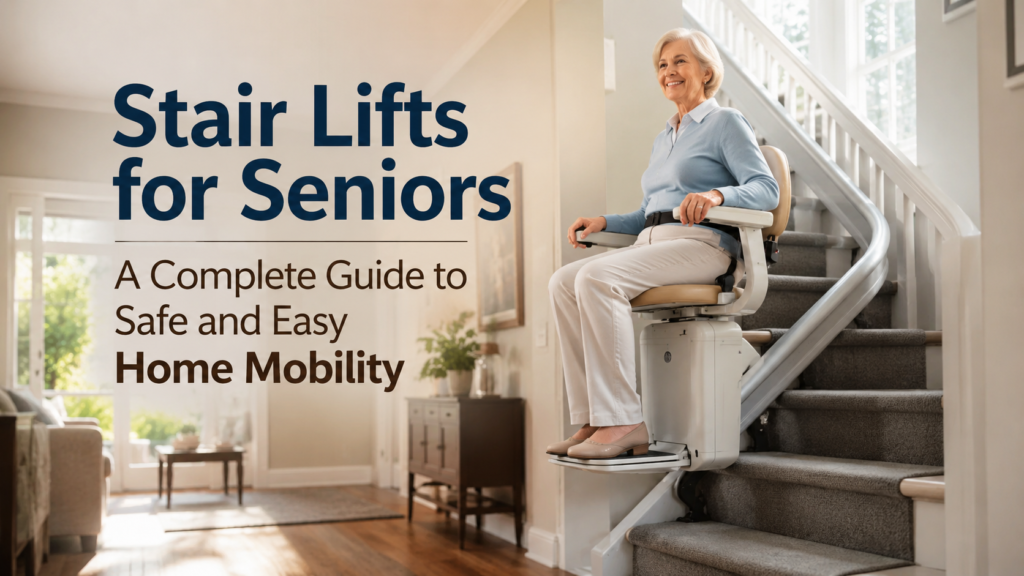
Climbing stairs can become one of the biggest daily challenges for older adults. Whether it’s arthritis, balance issues, recovery from surgery, or simply the natural effects of aging, stairs can turn from a minor inconvenience into a genuine safety risk. That’s where stair lifts for seniors come in.
A stair lift is one of the most effective, affordable, and non-invasive ways to help older adults stay safe and independent in their own homes. In this guide, we’ll walk through everything you need to know — from how stair lifts work, to types and costs, to how to choose the right one for your loved one.
1. What Is a Stair Lift?
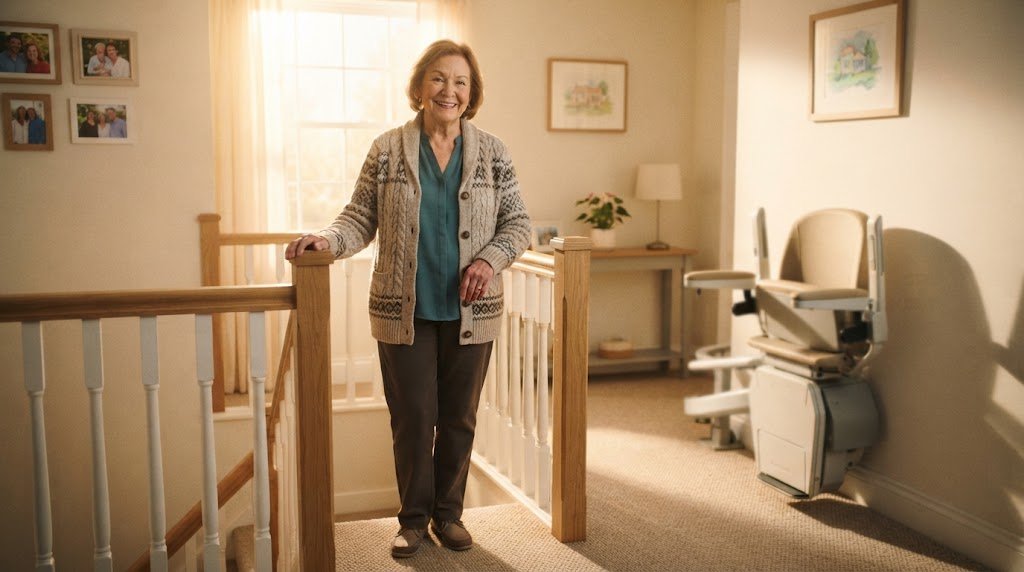
A stair lift (sometimes called a stair chair lift) is a motorized seat that travels along a rail mounted to your staircase, carrying a person up and down the stairs without them needing to walk. The user simply sits down, buckles a seatbelt, and uses a simple control to move smoothly from one floor to another.
Modern stair lifts are compact, quiet, and designed to blend into the home rather than stand out. Most fold up against the wall when not in use, keeping the staircase clear for other household members.
At their core, stair lifts exist to solve one problem: helping people safely navigate stairs when walking them independently is no longer safe or comfortable.
2. How Stair Lifts Help Seniors Stay Independent
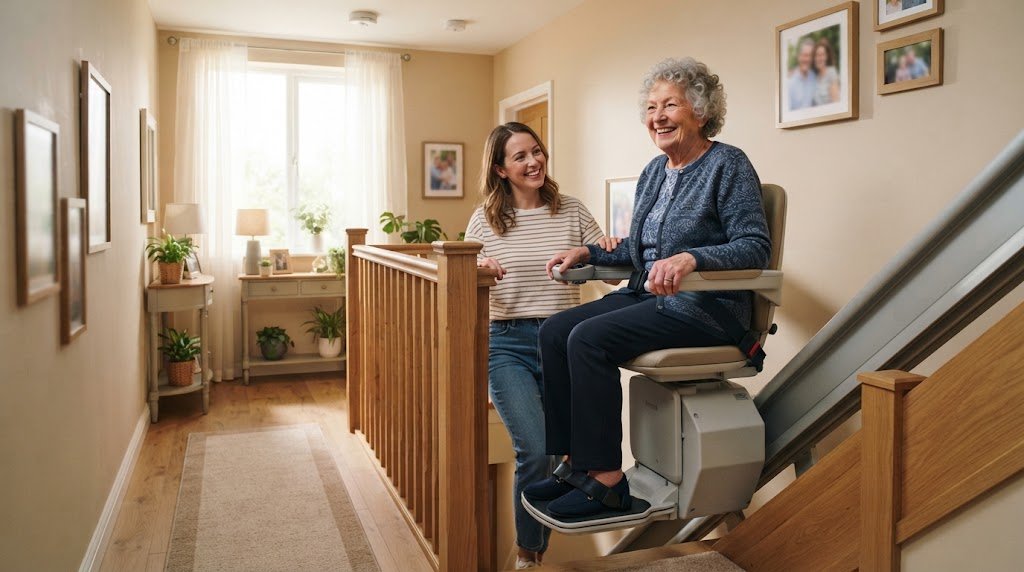
Falls on stairs are one of the leading causes of injury among older adults, and fear of falling often keeps seniors from using the upper or lower levels of their own homes. A stair lift for elderly individuals can change that dramatically.
Here’s how stair lifts support independence and quality of life:
- Reduced fall risk — Seniors no longer have to balance on steps or grip railings with unsteady hands.
- Access to the whole home — Bedrooms, bathrooms, and living spaces upstairs (or basement laundry rooms) become usable again.
- Less strain on joints and heart — Climbing stairs can be tough on people with arthritis, COPD, or heart conditions.
- Confidence and peace of mind — Both seniors and their families worry less about daily stair use.
- Support for aging in place — Instead of moving to a single-story home or assisted living facility, many seniors can comfortably stay in the home they love.
This makes stair lifts a key part of senior home accessibility and a practical aging in place solution.
3. Types of Stair Lifts for Seniors
Not all staircases are the same, so stair lifts come in a few different configurations to match different homes and needs.
Straight Stair Lifts
Designed for staircases with no curves, corners, or landings. These are the most common and generally the most affordable option, since the rail doesn’t need custom shaping.
Best for: Simple, single-flight staircases.
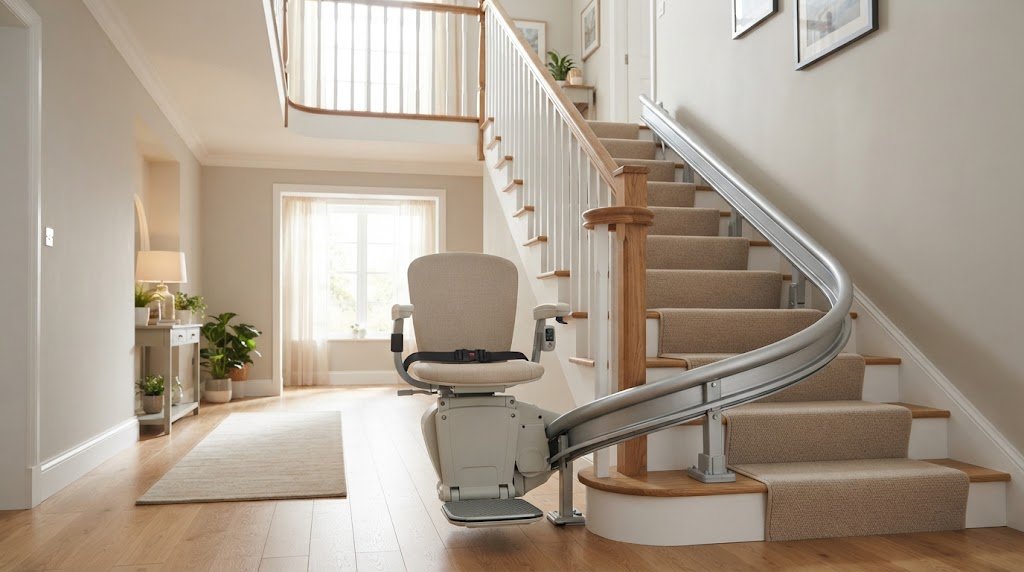
Curved Stair Lifts
Built for staircases with bends, curves, spiral sections, or multiple landings. The rail is custom-measured and manufactured to match the exact shape of the staircase.
Best for: Homes with more complex stair layouts.
Note: Curved lifts typically cost more due to custom fabrication and installation.
Outdoor Stair Lifts
Weatherproof stair lifts built to handle rain, snow, heat, and humidity. These are designed for exterior steps, such as a porch, deck, or entryway.
Best for: Seniors who need help accessing their home from outside, such as from a driveway or garden-level entrance.
Outdoor stair lifts typically include weather-resistant covers, rust-proof components, and battery backup to handle power outages.
4. Key Features to Look For
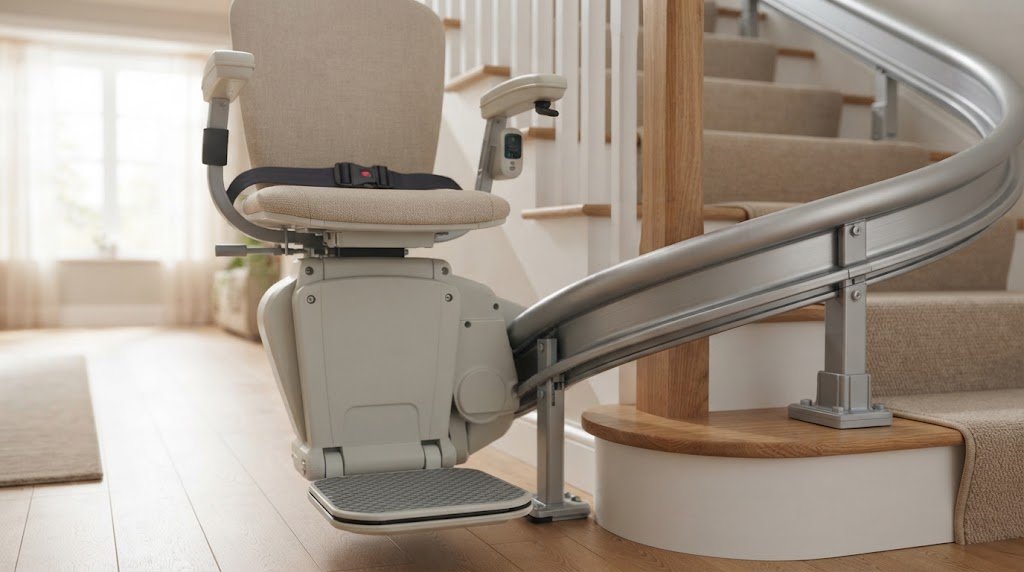
When comparing options, it helps to know what separates a basic stair lift from a well-designed one. Look for:
- Battery backup power — Keeps the lift working even during a power outage.
- Swivel seat — Rotates at the top of the stairs for safer, easier entry and exit.
- Adjustable seat height and armrests — Important for comfort and proper fit.
- Weight capacity — Standard lifts usually support 300–350 lbs, with heavy-duty models supporting more.
- Folding rail or seat — Keeps the staircase accessible for others in the home.
- Remote controls — Allows the lift to be called to a different floor.
- Smooth start-stop technology — Prevents jerky movement that can be uncomfortable or unsettling.
5. Stair Lift Safety Features
Safety is the entire point of a stair lift, so manufacturers build in multiple layers of protection. Common safety features include:
- Seatbelts to keep the user securely in place
- Obstruction sensors that stop the lift if something blocks the track
- Locking mechanisms to prevent movement when not in use
- Slow, controlled speed rather than fast or abrupt motion
- Emergency stop button for immediate control
- Non-slip footrest to keep feet stable during the ride
When shopping, always confirm these safety features are included — they’re non-negotiable for elderly users.
6. How Much Does a Stair Lift Cost?
Stair lift cost for seniors varies depending on the type of staircase, features, and whether the lift is new or reconditioned.
| Stair Lift Type | Estimated Price Range |
|---|---|
| Straight stair lift | $2,000 – $5,000 |
| Curved stair lift | $6,000 – $15,000+ |
| Outdoor stair lift | $3,000 – $8,000 |
| Reconditioned/used lift | $1,500 – $3,500 |
Additional cost factors include:
- Installation complexity
- Custom rail length or shape
- Add-on features (extra remotes, power swivel seats, etc.)
- Warranty length and service plans
Tip: Many companies offer free in-home assessments and quotes, so it’s worth comparing a few local providers before deciding. Searching “stair lifts near me” is a good starting point to find local installers who can evaluate your specific staircase.
7. Stair Lift Installation and Maintenance
One of the advantages of a home stair lift is that installation is usually fast and non-invasive.
Installation basics:
- Most straight stair lifts can be installed in half a day to a full day.
- Curved stair lifts take longer since the rail is custom-built, often requiring a wait of a few weeks for manufacturing.
- Installation typically does not require structural changes to the staircase — the rail is mounted directly to the steps, not the wall.
Maintenance tips:
- Schedule annual inspections to check the battery, motor, and track alignment.
- Keep the rail clean and free of dust or debris.
- Test the seatbelt and safety sensors periodically.
- Keep the batteries charged, especially if the lift isn’t used daily.
Most reputable companies offer maintenance plans or warranties that cover parts and service for several years.
8. Stair Lift vs. Home Elevator
Some families consider a home elevator instead of a stair lift. Here’s how they compare:
| Feature | Stair Lift | Home Elevator |
|---|---|---|
| Average cost | $2,000–$15,000 | $20,000–$50,000+ |
| Installation time | Days to a few weeks | Weeks to months |
| Structural changes | Minimal | Often significant |
| Best for | Seniors who can sit and transfer safely | Wheelchair users or multi-person households |
| Space needed | Minimal | Requires a shaft or hoistway |
Bottom line: For most seniors, a stair lift offers a faster, more affordable, and less disruptive solution. A home elevator may make sense for larger households or those needing to move wheelchairs or mobility scooters between floors.

9. How to Choose the Best Stair Lift for an Elderly Person
Finding the best stair lifts for seniors comes down to matching the product to the person and the home. Consider:
- Staircase shape — Straight, curved, or outdoor determines your basic options.
- User’s mobility level — Can they sit down and stand up independently, or will they need extra support like a power seat?
- Weight and size requirements — Make sure the lift’s capacity comfortably fits the user.
- Home layout — Measure stair width to confirm the lift won’t block the passage for others.
- Budget — Compare new vs. reconditioned units, and ask about financing or payment plans.
- Warranty and support — Choose a company with reliable local service and a solid warranty.
- Trial period — Some companies offer rental units, which can be a great option for short-term needs (like post-surgery recovery).
Pros of stair lifts:
- Affordable compared to elevators or home renovations
- Fast installation
- Increases safety and independence
- Works for a wide range of staircases
Cons of stair lifts:
- Only carries one person at a time
- Curved models can be a significant investment
- Requires enough space at the top and bottom of the stairs for a landing
10. Frequently Asked Questions
Is a stair lift covered by Medicare or insurance? Original Medicare typically does not cover stair lifts, since they are classified as home modifications rather than durable medical equipment. Some Medicare Advantage plans, VA benefits, or long-term care insurance policies may offer partial coverage — check with your provider.
How long does it take to install a stair lift? Straight stair lifts can often be installed in a single day. Curved stair lifts take longer due to custom manufacturing, sometimes a few weeks from order to installation.
Can a stair lift be installed on any staircase? Most staircases can accommodate a stair lift, including curved, narrow, or outdoor stairs. A professional in-home assessment is the best way to confirm compatibility.
Are stair lifts safe for seniors with dementia? Stair lifts can be safe for seniors in early stages of cognitive decline, especially with a companion present. For more advanced dementia, a caregiver should closely supervise use, and a locking key control (to prevent unsupervised operation) is recommended.
Do stair lifts work during a power outage? Yes — most modern stair lifts include battery backup, allowing normal operation even if the power goes out.
Can I rent a stair lift instead of buying one? Yes, many companies offer rental or reconditioned units, which are ideal for temporary mobility needs, such as recovering from surgery.
11. Final Thoughts
A stair lift can make an enormous difference in a senior’s daily life — restoring access to their whole home, reducing fall risk, and offering real peace of mind to both seniors and their families. Whether you’re comparing a straight stair lift, a curved stair lift, or an outdoor stair lift, the right choice depends on your staircase, your budget, and the specific needs of the person using it.
Before making a decision, it’s worth getting a few in-home assessments, comparing costs, and asking about warranties and maintenance plans. With the right stair lift in place, aging in place becomes not just possible, but genuinely comfortable and safe.
If you’re ready to explore options, reach out to a trusted local provider for a personalized assessment of your home and mobility needs.
Learn More About Aging in Place and Home Accessibilityhttps://www.nia.nih.gov/health/aging-place?utm_source=chatgpt.com