
Travels don’t have to stop when mobility becomes a problem. For many older adults, the greatest obstacle that prevents them from visiting their families, going on a long overdue vacation, or just enjoying a day out is not lack of interest – but rather stamina and mobility. And here travel mobility scooters can help. These small and portable scooters are especially designed to provide older adults with ease of movement inside the airport, hotel, cruise ship, and even on the streets without the need of using bulky regular mobility scooters.

If you are an older adult planning your next travel, caregiver looking for an assistance for a loved one in maintaining independence or someone researching possibilities for future trips, this article will cover all the important information about travel mobility scooters – how they function, how to choose them, and how to travel safely with them.
Table of Contents
What Are Travel Mobility Scooters?
How Do They Work?
Key Features
Types of Travel Mobility Scooters
Benefits
Potential Limitations
Who Can Benefit?
Safety Tips
Travel Tips
Maintenance Tips
Common Mistakes to Avoid
Frequently Asked Questions
Conclusion
What are Travel Mobility Scooters?
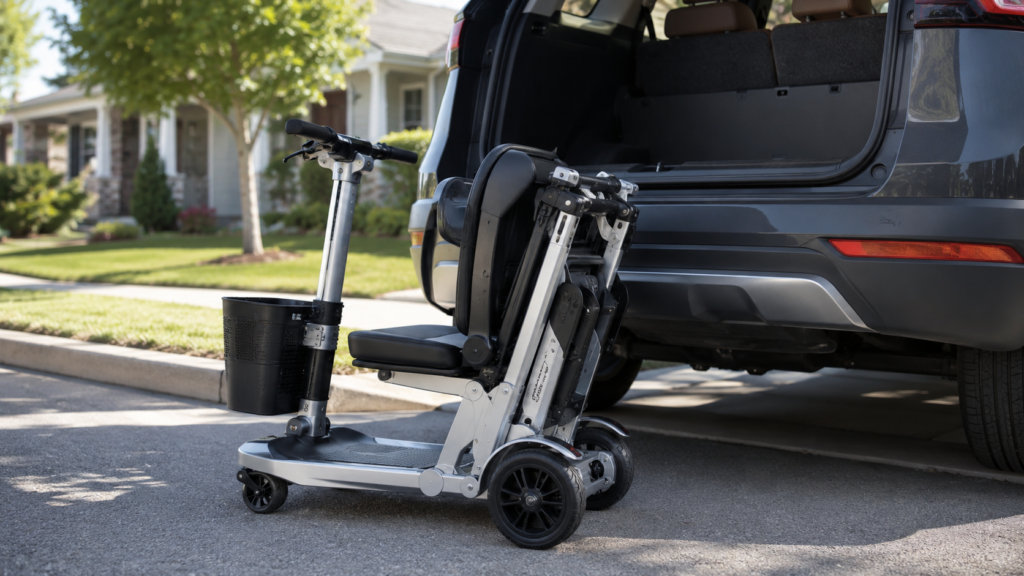
A travel mobility scooter is a portable, folding, and light scooter designed for easy transportation. In contrast to regular mobility scooters that are relatively heavy and used both at home and outside permanently, travel mobility scooters are designed in a way that they can fit into a car trunk, airline overhead compartments, and cruise ship cabin closets.
These scooters are smaller in size, easier to assemble or disassemble into two or three parts, and may have a case or rolling suitcase to transport the scooter. Travel mobility scooters allow seniors the opportunity to travel and continue to benefit from their scooters in other places.
How Do They Work?
Travel mobility scooters operate on rechargeable batteries, most commonly lithium-ion batteries. The control of the scooter is performed via a tiller-style handlebar like on bicycles. A throttle lever on the handlebar regulates the speed, and a brake system, which may be automatic and start once the throttle lever is not engaged anymore, stops the scooter.
Scooters usually can be folded into smaller pieces without the need for special tools.
Key Features
Portability
The most defining feature of travel scooters is their ability to become highly portable through folding down into a compact size. Many are able to fold down within seconds and roll like luggage.
Frame Construction
The frames are made using either aluminum or lightweight alloys to make them light enough for easy handling by caregivers or airport workers during transportation.
Batteries Used
The majority of travel scooters use lithium ion batteries due to their reduced weight compared to conventional lead acid batteries, although some still use the latter.
Small Seating Size
Seating is normally designed to be compact in design rather than being big and comfortable like other scooters.
Folding Handles & Armrests
Travel scooters are usually designed in a way that allows handles and armrests to fold and be adjustable.
Travel Mobility Scooter Types
3 Wheel Travel Scooters – Have a smaller turning radius and thus easier to handle in small hallway spaces, airport corridors, or crowded stores. However, they might not be as steady when used outdoors on an uneven ground surface.
4 Wheel Travel Scooters – More stable, especially when used outdoors or on an uneven ground surface, though having a bigger turning radius.
Fold-up Scooters – Folds up as one piece without needing to be taken apart, useful to those people who prioritize speed and convenience over reduced weight of the individual pieces.
Disassemble Mobility Scooters – Can be broken down into several pieces which weigh less, though might be difficult to reassemble when setting up in a new location.
Benefits
- It allows seniors to travel independently while shopping or going out
- Helps avoid exhaustion from walking long distances
- Can fit into car trunks, airplanes, trains, and cruise ships
- Generally weighs less than regular mobility scooters, making it easy to carry around for caregivers
- Enables senior citizens to actively participate in their family vacations
- Eases physical effort since battery operated rather than manually powered wheelchairs
Potential Limitations
Travel mobility scooters are not for everyone. Here are some points you should consider before making your decision:
- With smaller batteries, there is less driving distance than that of a full-sized mobility scooter
- Less robust frames will have smaller carrying capacities
- A smaller seat will be less comfortable for sustained use
- The assembly and disassembly process might be physically challenging for certain caregivers
- Designed for smooth paved surfaces only
Given the different health conditions of individuals, it would be wise to seek advice from your doctor or an occupational therapist before settling on a travel mobility scooter.
Who Can Benefit?
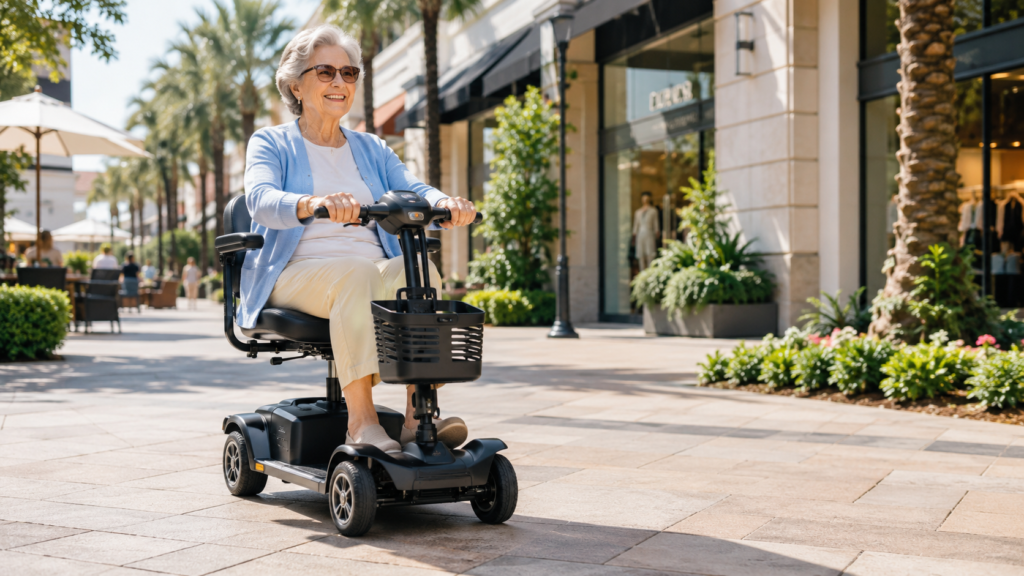
- Active senior citizens who wish to remain mobile and independent despite low energy levels and joint pains.
- People who have to take care of another individual and transport them from one place to another but require something light and portable.
- People planning trips such as air travel and cruises but looking for an easily-stored mobility aid for those journeys.
- Individuals suffering from a disability who require mobility assistance but not for all day, everyday use.

Travel Tips
Mobility scooters require some preparation in order to travel, yet the results of such efforts will be greatly rewarding.
- Airports: The requirements regarding the need to inform an airline about your mobility device and passing it through security are subject to the individual policies of each airline company. It is recommended to find out what you should do from the airlines before purchasing the ticket.
- Airlines: Depending on the size and type of lithium batteries used in your scooter, different restrictions might apply. Always consult the airline ahead of time to get information on your specific case.
- Cruise Ships: As with other vehicles, there may be particular requirements set up by the cruise line regarding scooter dimensions and charging facilities onboard. Inquire about them in advance.
- Hotels: Most hotels usually provide accessible rooms which may be equipped with enough space for a mobility device. It would be good to make such reservation beforehand and to learn about charging points nearby the bed and seats.
- General Vacation Information: Prior to your vacation, investigate the situation regarding the local environment. The mobility scooter should be suitable for local weather and ground conditions.
- Because policies differ by airline, cruise line, and battery type, always confirm current requirements directly with the airline, cruise operator, or hotel before you travel.
Tips for Maintenance
- Charge the battery to full capacity before and after each ride
- Keep the scooter in a cool and dry environment when not in use
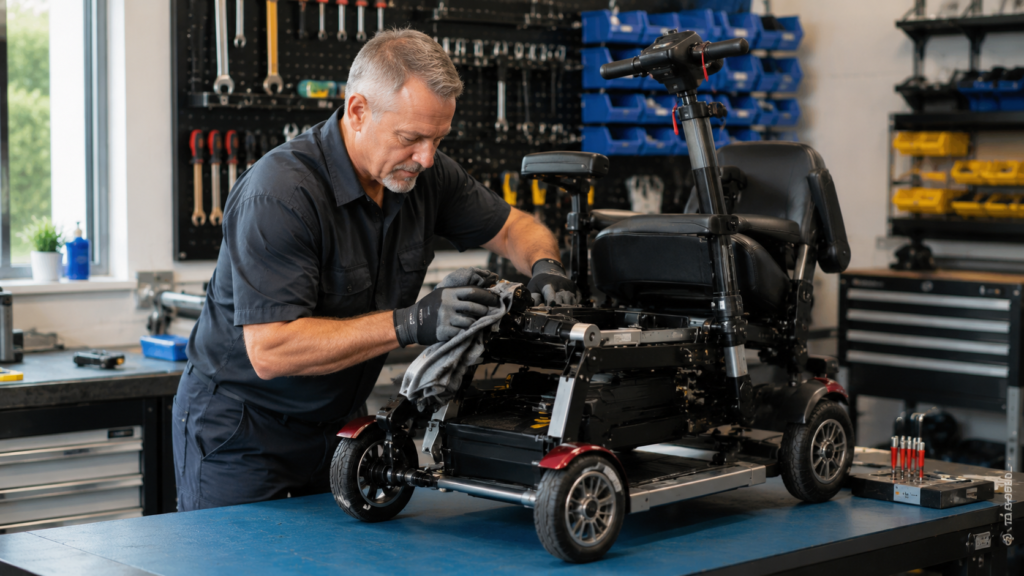
- Check the condition of the tires or wheels periodically, especially before trips
- Clean the scooter’s body after usage outside in order to avoid accumulation of dust or moisture
- Make sure that all the folding mechanism parts do not become loose
- Keep the owner’s manual for help in case of problems
- Schedule visits to a specialist on mobility equipment periodically
Common Mistakes to Avoid
- Leaving it till the last minute to look into airline/cruise line scooter rules
- Loading too much onto the scooter basket that exceeds its weight limit
- Not practicing folding/unfolding the scooter before your trip
- Running the battery down without any plans to charge on travel days
- Getting a scooter just because it is cheaper without considering its weight capacity or portability requirements
- Forging to take the charger/manual along when you go traveling
Frequently Asked Questions
What is a travel mobility scooter?
It is a scooter that has been modified to have light-weighting and folding mechanisms to be able to facilitate portability. It is easy to transport in a car, plane, and even on a cruise ship.
How heavy is a travel mobility scooter?
There are various models of travel scooters, which are of different weights from one another depending on the brand. They are designed to be lighter than standard scooters to make transportation easier.
Can I fly with my travel mobility scooter?
Yes. However, it all depends on the battery of your scooter, its weight, and the airline you are planning to use.
Are there cruise ships that accept travel mobility scooters?
Yes, there are. However, there will be restrictions on cabin space and charging facilities on some cruise ships.
How far can I go with the travel scooter?
The distance you can cover depends on the model of the scooter, the kind of road surface, and your weight.
What are the differences between a travel scooter and a mobility scooter?
Conclusion
Utilizing a travel mobility scooter gives you increased freedom, regardless of the kind of destination that you are going for, including the airport. The choice of the appropriate mobility scooter would be based on your individual needs concerning battery capacity, weight capacity, transport, as well as storage of your equipment.
Because of the various regulations surrounding the use of mobility scooters on airplanes, cruise ships, and hotels, it is important to find out about the policies prevailing at the destination of your holiday before the start of your vacation. Additionally, if you are not sure of the mobility scooter that would suit your health condition, you should consult a physician.
With proper planning and the right travel mobility scooter, older adults can continue exploring new places, visiting loved ones, and enjoying vacations with greater comfort and independence. Understanding how travel scooters work, following airline and cruise policies, and maintaining the scooter properly will help ensure a safer and more enjoyable travel experience.