
Table of Contents
Introduction
What Is a Standard Cane?
How Does It Work?
Key Features
Types of Standard Canes
Benefits
Who Can Use It?
Pros and Cons Chart
Possible Drawbacks
Uses in Daily Life
Safety Considerations
Care and Maintenance
FAQ
Conclusion
Related Articles
Introduction
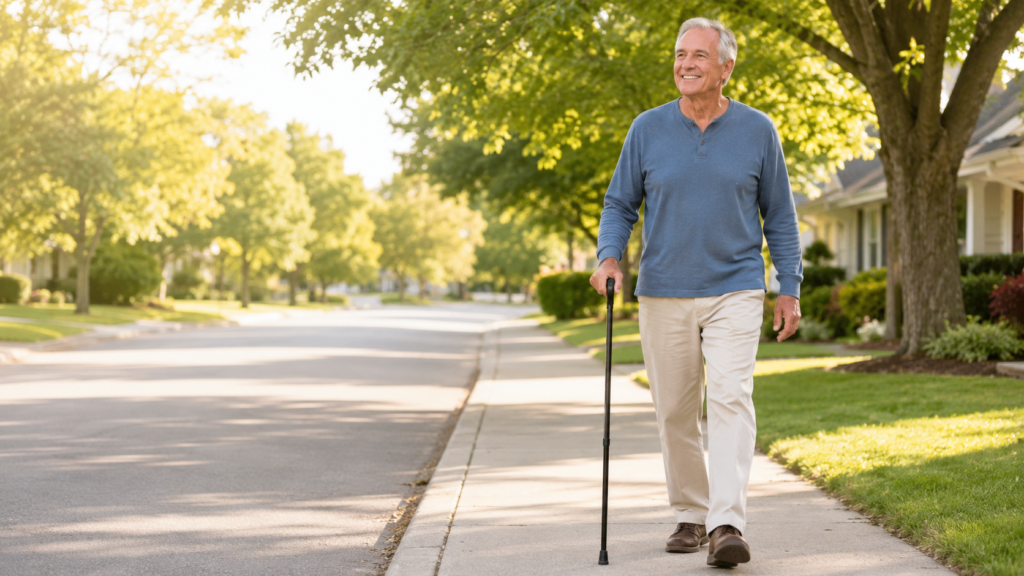
With age, balance gets worse, so seniors seek convenient devices to help maintain their balance. The first mobility device that comes to mind when it comes to helping seniors walk and maintain their balance is a standard cane, which is also known as a single-point or straight cane. It is a light and simple device that provides a small amount of balance assistance.
In this article, we will discuss a standard cane: what it is, how it works, and what to pay attention to while researching this particular mobility device.
What is a Standard Cane
A single-point cane is another name for the standard cane as it has only one leg, and there is a rubber foot attached to the bottom of the leg. The standard walking cane is very popular among walking sticks for senior citizens and may be made of aluminum or wood.
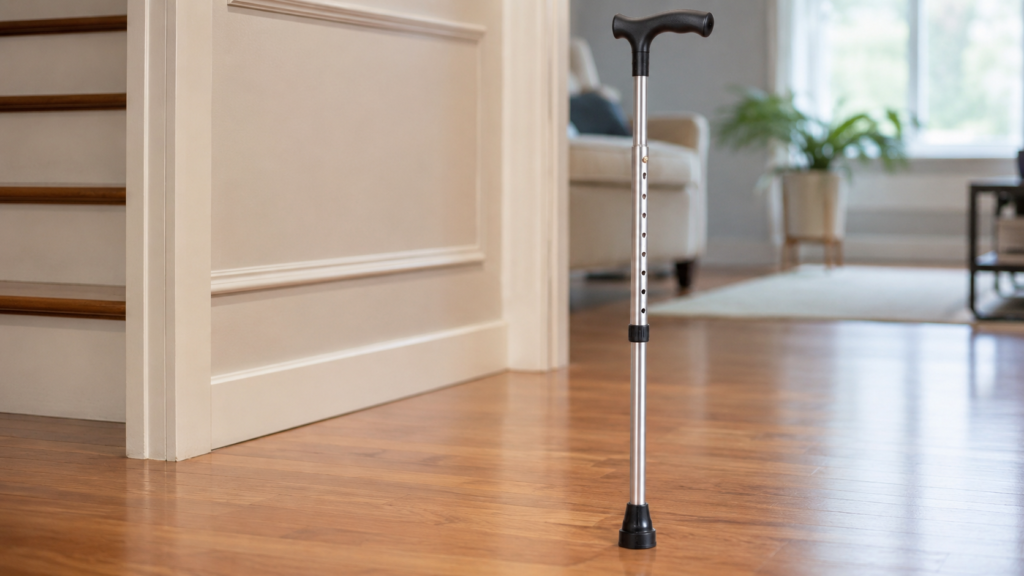
As compared to the quad cane, which has four legs to ensure stability, the single-point walking cane has no additional contact points, and hence, it is more challenging to handle the standard walking stick than the multipoint cane.
The standard walking stick is appropriate for individuals who require balance assistance during walking rather than the weight-bearing walking aid.
How Does a Standard Cane Work?
The working principle of the standard walking cane is based on the additional contact point with the ground.
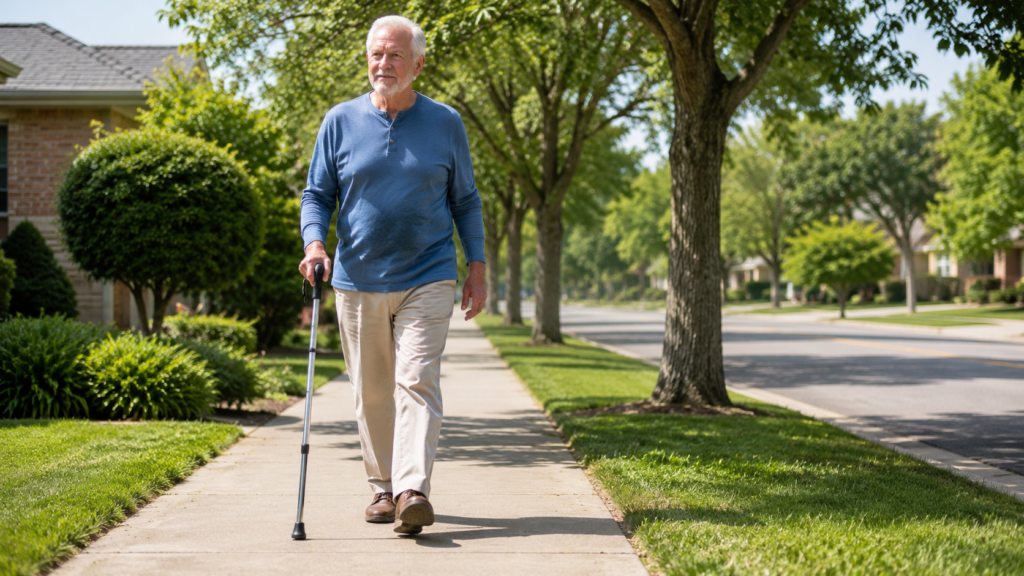
Here’s the basic mechanism:
- The person holds the cane in the hand which is on the other side of the weaker leg.
- By advancing the weaker leg, there will be an advancement of the cane also, thereby increasing the base of support.
- The rubber tip helps to have a grip on the surface so that it does not slip away.
- Some weight is put on the cane by the person which reduces the load on his legs.
Due to its simple design, the cane becomes highly useful for many old people.
Key Features
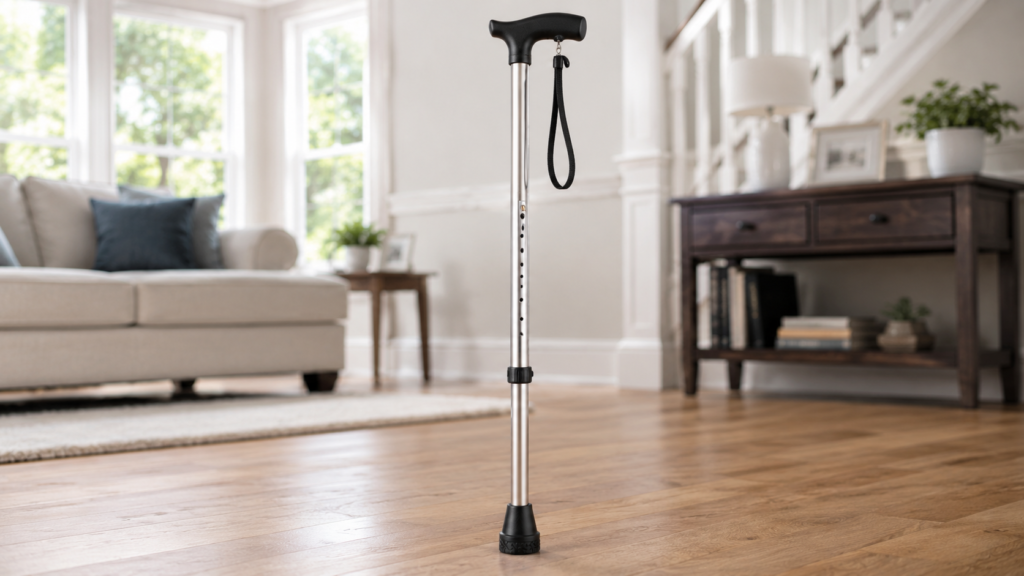
A number of common characteristics are shared by most conventional walking canes, even though some variations do exist from one model to another:
- One-point base with a non-slip rubber tip
- Height adjustability in most cases, known as a height adjustable cane
- Ergonomically-designed or offset handle for ease of handling
- Construction of lightweight materials such as aluminum and wood
- In some cases, there is a wrist strap
- Certain canes have a folding feature
All these features combine to make the use of a cane more convenient.
Types of Standard Canes
Not all standard canes have the same features. Here are some examples:
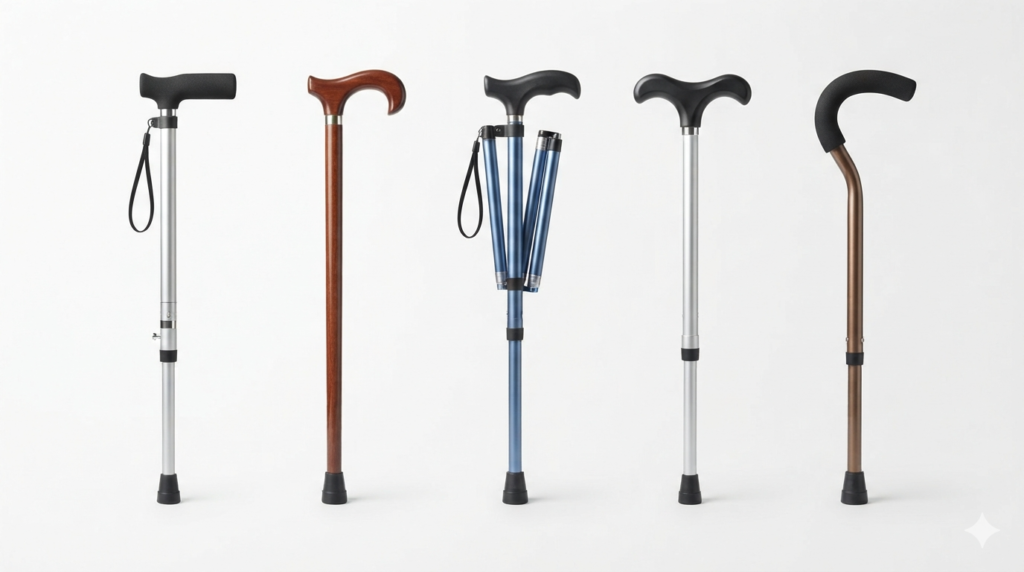
- Adjustable walking cane – This type is adjustable in height according to the measurements of the person who uses it.
- Aluminum walking cane – It is lightweight and usually adjustable. It is popular among people because of its daily use characteristics.
- Wooden walking cane – It is strong but not usually adjustable.
- Folding walking cane – It is easy to collapse for storage.
- Ergonomic handle cane – Has an ergonomic handle which means that it can lessen the effort needed by the hands.
- Offset handle cane – The handle of this type of cane is offset a bit forward from the shaft.
These can be chosen according to the physical comfort of the person and the strength of their hands.
Benefits
- A properly designed standard cane may bring the following benefits:
- Better balance while walking
Decreased chance of falling on even or slightly irregular terrain - Lower stress on the joints
Enhanced security while walking around the house or community - Compact and lightweight structure that is easy to transport
- Assistance in retaining independence in regular activities
The ease and simplicity of using a standard cane make it more convenient for elderly people than other bulky devices.

Who Can Benefit?
A regular cane can help people who need only some balance assistance but no additional weight bearing assistance. Some of them are:
- Seniors having balance problems because of aging
- A person having minor injury or surgery
- People suffering from minor joint pain or arthritis
- Somebody who feels unsteady during staircases climbing and walking over rough terrain
- Relatives who want to give minimal assistance to their relatives
It should be noted that regular cane won’t be beneficial for those who need weight-bearing assistance. They should think about other devices like quad cane or walker.
Pros & Cons Table
| Pros | Cons |
| Lightweight and easy to carry | Offers less stability than a quad cane |
| Simple to use with minimal learning curve | Requires some hand and arm strength |
| Affordable and widely available | Not suitable for significant weight-bearing needs |
| Compact storage, especially folding models | Can be less stable on uneven terrain |
| Wide range of styles and handle designs | May need frequent tip replacement with heavy use |
Possible Limitations
Whereas a traditional cane is useful in providing everyday assistance, it does have its possible limitations including:
- It has a single contact point with the surface and thus lacks the stability associated with multi-point canes.
- Its use might not be adequate for those individuals who experience poor balance.
- Proper fitting and correct use are very crucial; otherwise, the wrong size could lead to increased chances of falling down.
- One must have reasonable gripping skills in order to use the cane effectively.
- It cannot hold a lot of weight of the body over time.
Anyone in doubt regarding whether a traditional cane would suit him/her well needs to consult a physical therapist or doctor.
Common Everyday Uses
The normal cane can be commonly used in daily life activities like:

- Strolling inside the house or flat
- Wandering around in the locality
- Exploring grocery stores or mall
- Going to doctors’ appointments
- Walking on the sidewalk, in the park, or any other community gathering place
The portable and light weight of this cane make it a suitable option for senior citizens who are still fairly active.
Safety Tips
A correct way of using the regular cane is more than just taking the cane and going ahead. Take into account the following safety guidelines for cane usage:
- Always use the cane in your hand opposite to the weaker side of the body.
- Make sure that the height of the cane will allow bending the elbow angle about 15-20 degrees.
- Regularly check whether the rubber cap of your cane is in good condition or it is smooth and broken; if yes, you should replace it immediately.
- Use the cane in combination with moving the weaker leg at the same time.
- Do not walk with a cane in case of wet, slippery, or uneven floor surface without additional care.
- Keep your paths in your house free from all obstacles.
- Discuss your correct cane height and walking posture with your physical therapist.
Following these basic tips can significantly increase your safety and improve your walking experience.
Maintenance and Care
As any other item, it is important to maintain your cane well, as indicated below:
- Ensure you check the rubber tip on the cane once per month and change it once it gets worn out.
- Keep the shaft clean by doing cleaning regularly especially in the case where you have an aluminum cane in order to prevent dust from accumulating.
- Inspect wooden canes for cracks.
- Inspect all height adjusting locks and ensure that they are fastened properly.
- Store the cane in dry places to prevent warping and rusting.
- Inspect the wrist band if your cane is accompanied by one.
Frequently Asked Questions
- When should I get a regular cane?
A regular cane can be used by someone with minor balance problems or the need for additional support while walking. It is best to seek advice from a professional about it. - How high should my regular cane be?
The general rule says that the top of your cane should reach the crease of your wrist while holding your arm along your body with a little bend in your elbow. - In which hand should I hold the cane?
Normally, the cane is held in the hand that is opposite to the weaker leg. - Is aluminum or wooden cane better?
It is impossible to say which one is better since they have their pros and cons. - Should a regular cane be used on the stairs?
Yes, but with extra caution because the user needs to hold onto a handrail and lean on his stronger side.
Conclusion
The use of a standard cane may turn out to be quite an easy and reliable way of staying balanced and independent for many elderly people when they perform their daily routine. Even though it is not intended for weight bearing, it provides some degree of assistance to those who have some troubles with their balance.
When using a mobility device, one should consider such aspects as its fitting and proper handling along with regular maintenance. Consulting a physician or a physiotherapist will assist in making the appropriate decision.
Related Articals
- Standard Canes
- Quad Canes
- Folding Canes
- Adjustable Canes